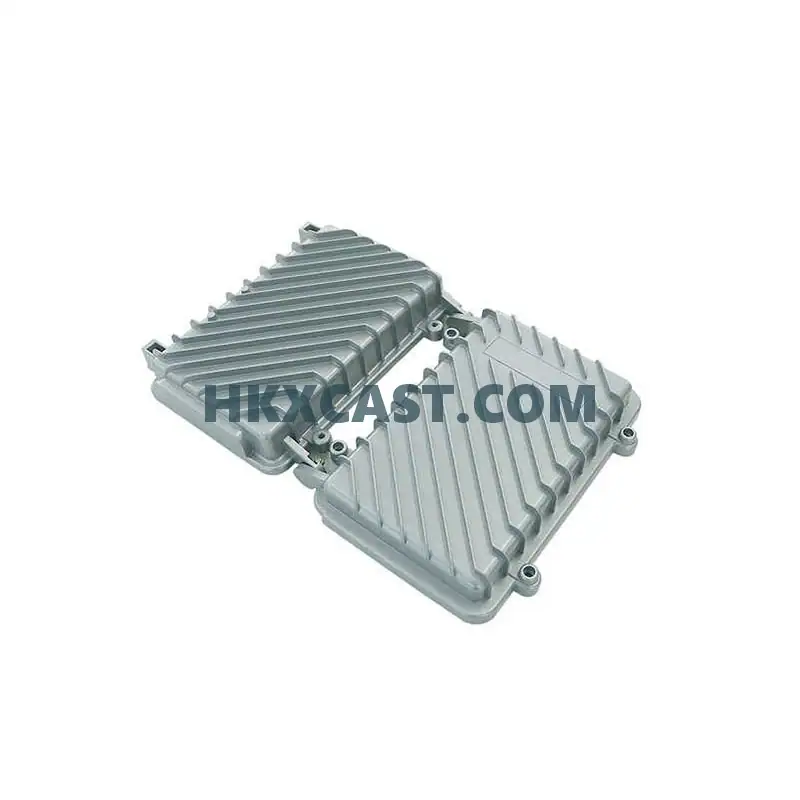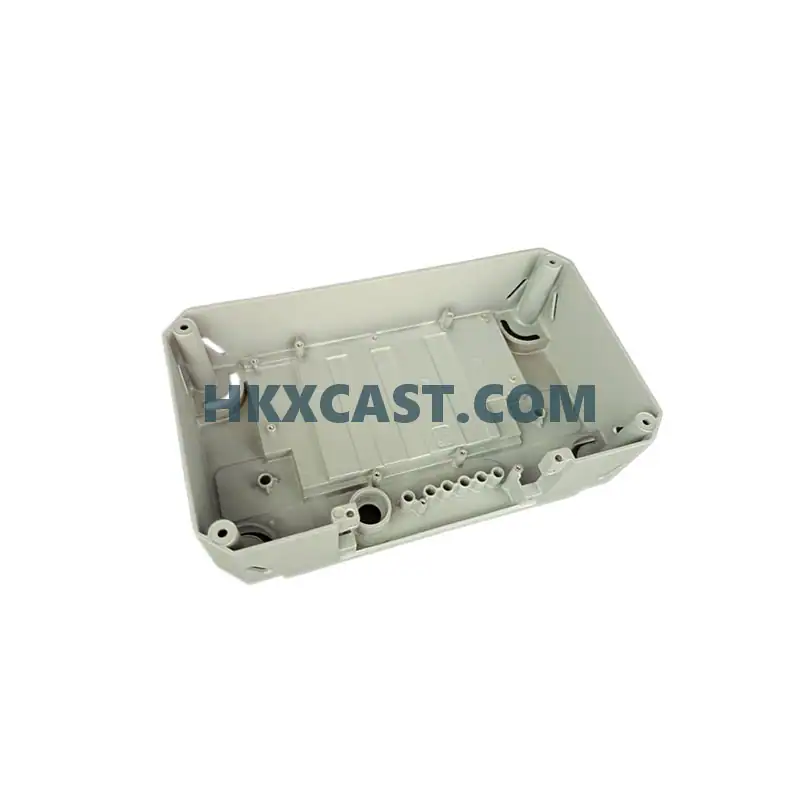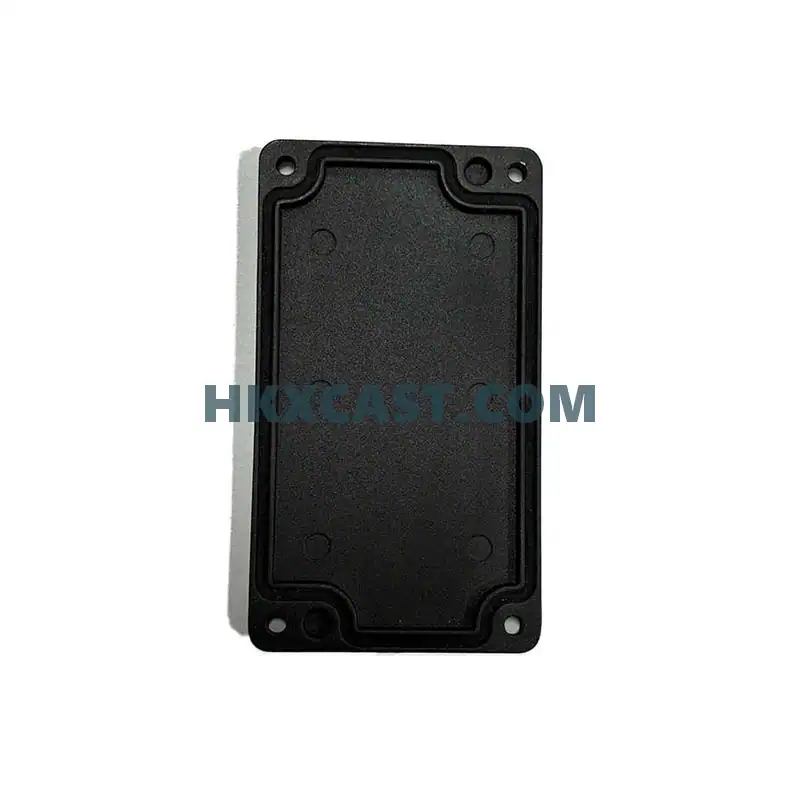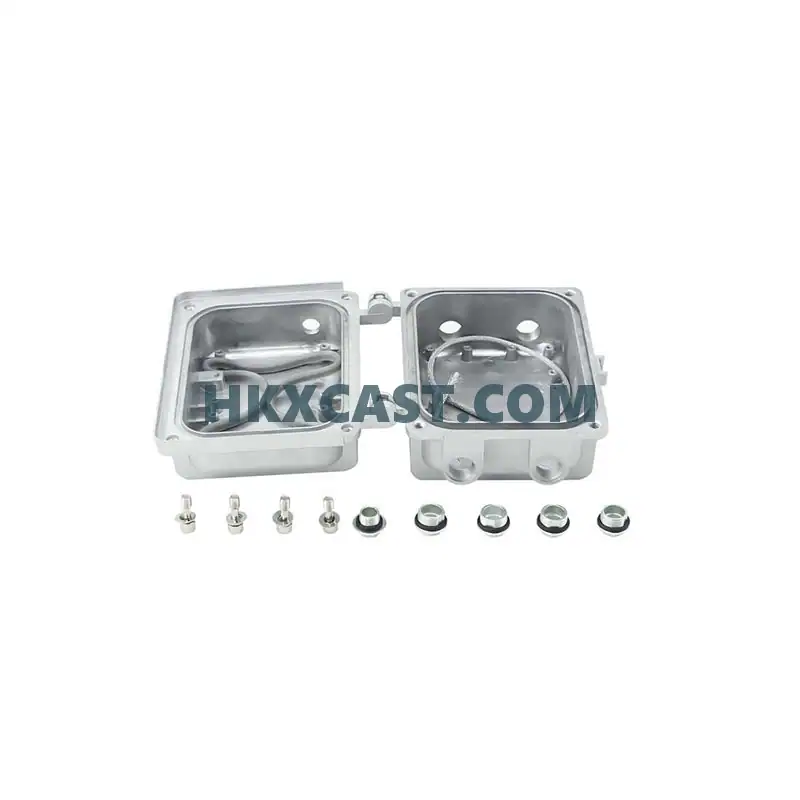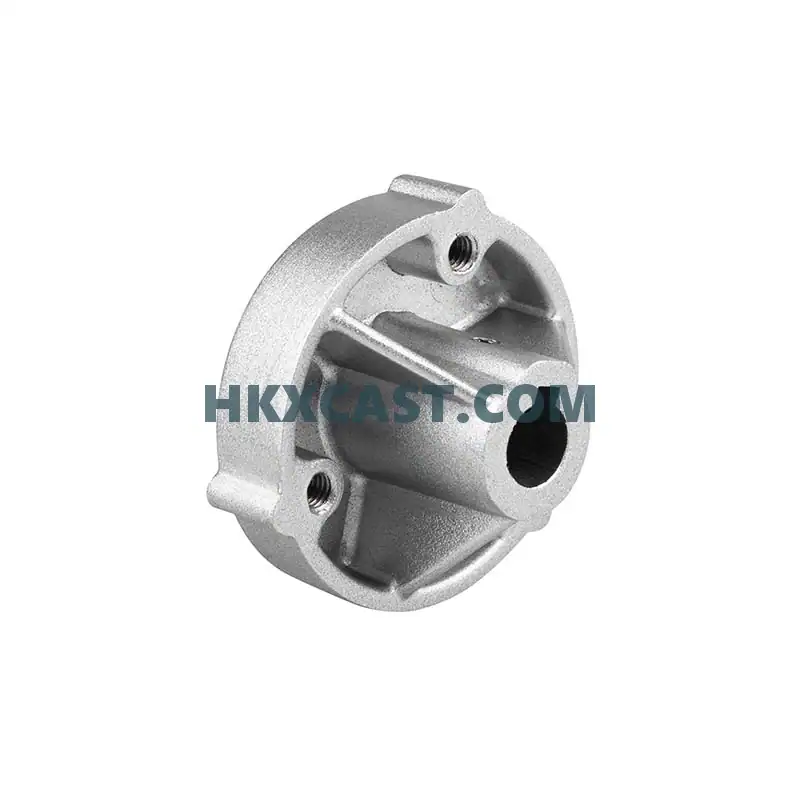
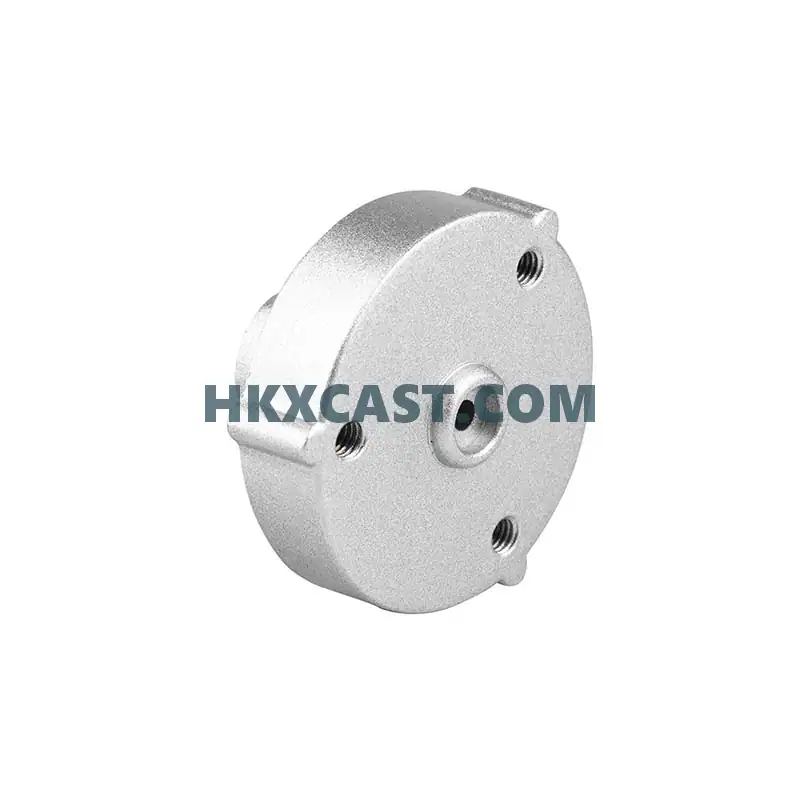
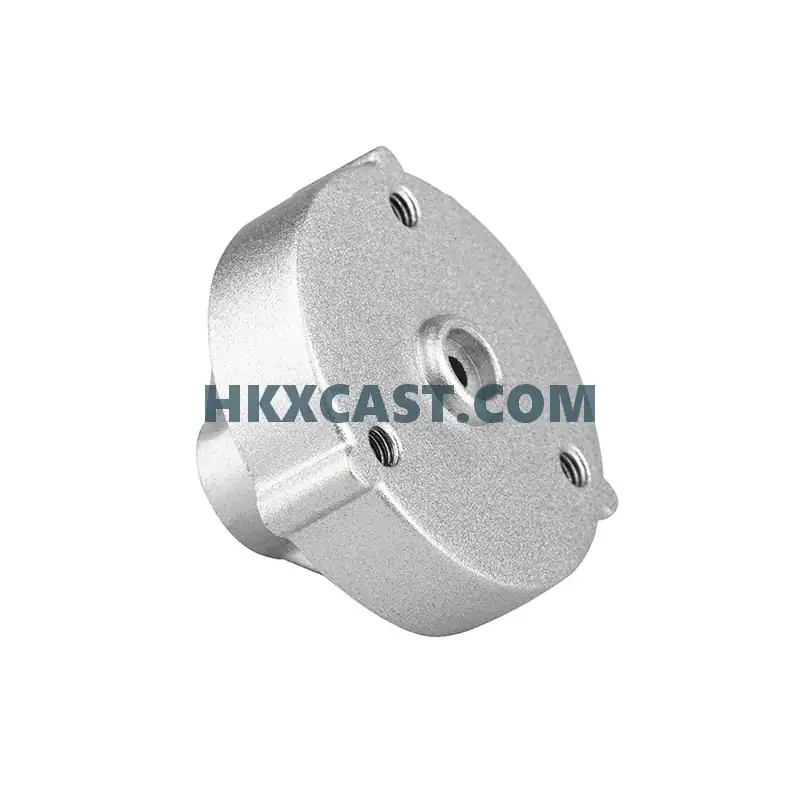
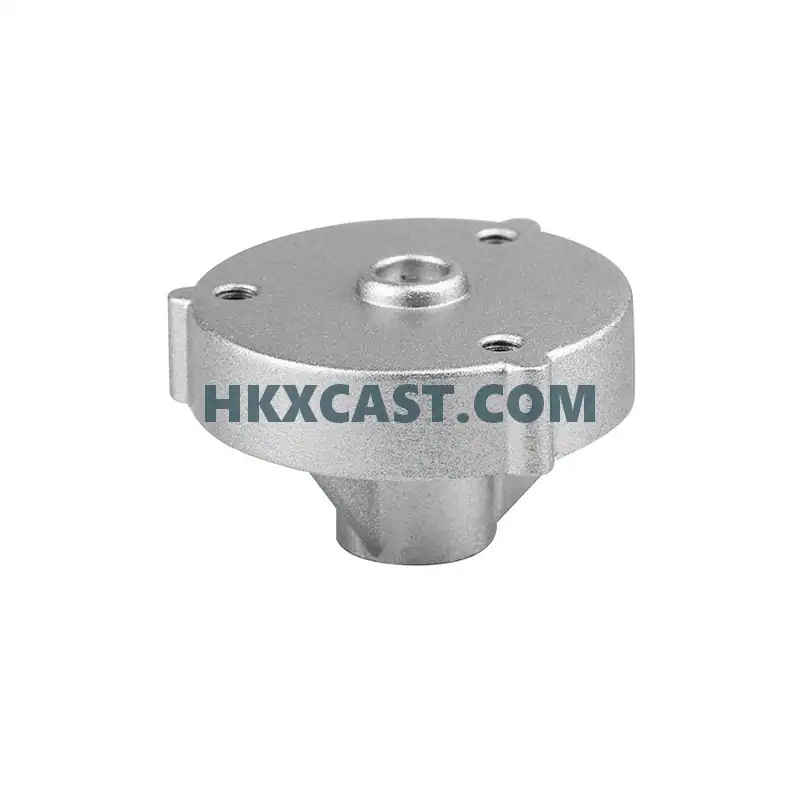
An electronic door handle is a die-cast shell that has to carry three things at once: the credential reader on the outside face, the motor or clutch inside the body, and the battery plus controller in the tail. HKX casts and machines that shell — the electronics, firmware and certification stay with you.
That makes it a different product from a passive handle. A mechanical handle only has to survive a pull load; an electronic handle has to survive a pull load and keep water out and let a radio signal through and hold a sensor window flat to a tenth of a millimetre. This page is about those requirements. For plain lever and pull handles, see die cast door handles.
What the casting has to do that a mechanical handle does not
- Keep water out. A continuous gasket groove around a two-part shell, machined — not cast — so the seal has a flat land to sit on.
- Let the signal through. Metal blocks 13.56 MHz NFC and 2.4 GHz BLE. The antenna area needs a thin wall or a plastic insert, and that decision is made at the die design stage.
- Hold a window flat. Fingerprint and card readers are bonded or gasketed onto the outer face. A 0.15 mm sink mark there becomes a leak path.
- Resist tampering. The outer shell must not be pried off with a screwdriver, which means the split line and the fasteners are inside the protected volume.
- Survive a battery change. The battery door and its hinge boss take repeated open-close cycles and are the first thing to crack on a bad design.
Housing specification
Typical values for a lever-style smart lock handle. Use them as a starting point for DFM, not as a fixed catalogue — the reader you specify will move several of these numbers.
| Feature | Typical value | Why it matters |
|---|---|---|
| 合金 | ADC12 / A380; A360 outdoors | Castability and corrosion resistance |
| 室壁厚度 | 1.8–2.5 mm with internal ribs | Below 1.8 mm the shell flexes and breaks the seal |
| Reader window flatness | ≤ 0.10 mm, Ra ≤ 0.8 µm | Adhesive bonding and gasket compression |
| Reader window thickness | 1.2–2.0 mm | Thicker kills RFID read range |
| Antenna area | Plastic insert, or ≤ 1.0 mm wall | Metal over the antenna is the classic range killer |
| Gasket groove | 1.5 × 2.0 mm (IP54), 2.0 × 2.5 mm (IP65) | Groove is CNC cut, parting line stays outside it |
| Cable channel | 4 × 6 mm | Routes reader and motor leads past the spindle |
| Battery bay | 2×AA, 4×AAA or one 18650 | Determines tail length and wall ribs |
| Threaded inserts | M3 brass, pull-out ≥ 800 N | Self-tapping screws into aluminum strip on service |
| Sealing face tolerance | ±0.05 mm machined | Gasket needs uniform compression, not average compression |
| Operating temperature | −20 to +70 °C | Battery and LCD limits, not the alloy |
Five design traps we see every month
- Full metal over the antenna. Read range drops to a few centimetres. Fix it in the die with a thin-wall window or an insert pocket, not with a bigger reader.
- Parting line across the gasket land. The flash becomes the leak. Move the split line to the inside of the seal, or machine the land afterwards.
- Porosity under the fingerprint window. Polishing opens a gas pocket and the part scraps at the last operation. Window areas need a dedicated overflow and a higher die temperature.
- Battery door hinge boss too thin. Two years of battery changes and the boss cracks. Boss wall should be at least 0.8× the screw diameter with a fillet at the root.
- Anodizing after machining the seal face. A 20 µm coating on a ±0.05 mm face changes the fit. Mask the face, or anodize before the finish machining pass.
Process route
Die casting → deburring and shot blast → CNC (reader window, gasket groove, spindle bore, insert pockets) → leak or IP test on the machined shell → anodizing or powder coating with the reader window masked → laser marking → assembly-ready packing. The machining step is what separates this part from a mechanical handle: three of the five critical features are cut, not cast.
Integration options and what we machine for each
| 功能 | Machining / die feature |
|---|---|
| RFID 125 kHz or 13.56 MHz | Reader pocket plus thin-wall or insert window |
| Fingerprint | Flat polished window, uncoated, no parting line |
| BLE / NFC phone access | Plastic antenna insert or ≤ 1.0 mm aluminum wall |
| Keypad | 3×4 key recess with 0.3 mm step and gasket land |
| Motorised latch | Gearbox cavity, H7 bearing seats, motor mount bosses |
| Mechanical key override | Euro-profile cylinder bore, drilled and reamed |
| Emergency power | USB-C cut-out with a gasketed plug seat |
| Status LED | Light pipe bore with a chamfered exit, or a masked coating window |
Testing before the shell leaves the plant
- 循环生活 — 100,000 latch cycles on the assembled handle, checking lever play and seal compression at the end.
- Ingress protection — IP54 or IP65 per IEC 60529 on a production sample, with the electronics cavity sealed and pressurised.
- 盐雾 — 96 to 480 h per ASTM B117 depending on finish, with the gasket land inspected for creep.
- Drop and impact — 1 m drop onto concrete, corner first, no crack at the battery door.
- Thermal cycling — −20 to +70 °C, then re-test the seal, because aluminum and the gasket expand at different rates.
- Lever torque — 200 N applied at the handle end, checking that the shell does not deflect enough to open the gasket land.
Mechanical or electronic: how to choose
| If you need… | Choose |
|---|---|
| Lowest unit cost, no power source, no firmware | Mechanical door handle |
| Keyless entry, audit trail, remote or app control | Electronic door handle (this page) |
| Hotel or multi-tenant access with cards | Electronic, with RFID reader window |
| Outdoor gate or coastal site | Electronic in A360, or mechanical in A360 if no reader is needed |
| Retrofit onto an existing mortise lock | Electronic shell designed around that lock body, not a generic lever |
常见问题解答
Do you supply the electronics too?
No. We cast, machine, finish and test the shell, and we can assemble your PCB, reader and motor into it. The electronics design, firmware and the certifications that go with them stay with you — that is usually cheaper and faster than having a casting supplier subcontract the electronics.
Can you keep my antenna window within tolerance?
Yes, but it has to be designed in. A cast thin wall drifts by ±0.1 mm over a production run, which is enough to shift read range. We either machine the window to a fixed thickness or mold a plastic insert into a machined pocket. Both are decided before the die is cut.
What IP rating can a die-cast shell actually hold?
IP54 is routine with a machined gasket groove and a single O-ring. IP65 is achievable with a wider groove, a second seal at the battery door and a machined sealing face. IP67 on a two-part cast shell is possible but the sealing cost usually exceeds the casting cost, so most customers stop at IP65.
继续阅读
- Die cast door handles — mechanical levers, alloys, finishes and tolerance tables.
- Aluminum die casting — process, alloys and applications.
- Die casting tolerances — what HPDC holds on sealing faces and bores.
- Surface finishes — anodizing, powder coating and masking options.