AlSi10Mg for Structural & T6 Heat-Treated Castings
Most casting alloys are chosen for how well they pour. AlSi10Mg is chosen for what it becomes after casting. This low-copper Al-Si-Mg grade responds to heat treatment, so it reaches strength levels that ordinary 压铸 alloys cannot match. For structural parts that carry real loads, AlSi10Mg opens doors that A380 keeps shut. It also brings good corrosion resistance, solid machinability, and reliable welding. The catch is process. Only some casting methods let AlSi10Mg survive a T6 cycle without blistering. This guide covers the alloy, its as-cast and heat-treated properties, and how to specify it for structural work that has to hold up.
关键要点
- AlSi10Mg is a low-copper Al-Si-Mg alloy that can be heat treated to T6 strength.
- It beats standard die casting grades on strength-to-weight, corrosion resistance, and weldability.
- The alloy suits structural brackets, nodes, and housings that carry real service loads.
- T6 needs vacuum-assisted die casting or low-pressure casting to prevent gas blistering.
- As-cast, this alloy is already useful. A T6 cycle unlocks its full mechanical strength.
What Makes AlSi10Mg Heat-Treatable
Heat treatment needs a way to strengthen metal after it cools. In aluminum, that means a soluble element that forms fine precipitates during aging. Magnesium plays that role in AlSi10Mg. It dissolves during solution treatment and later forms hardening phases that raise strength.
Copper matters too, but in reverse. Grades like A380 pack in copper for as-cast strength. That same copper makes them hard to heat treat cleanly. AlSi10Mg keeps copper very low and leans on magnesium instead. The result is an alloy that stays ductile in the as-cast state and responds well to a T6 cycle.
Low iron helps as well. Tight iron control keeps brittle needles from forming in the microstructure. Fewer needles mean better ductility and fatigue life. That combination of low copper, controlled iron, and magnesium is what makes this alloy a structural-grade choice rather than a general one.
The T6 cycle has two stages. First comes solution treatment near 540 degrees Celsius, which dissolves the hardening phases. A rapid quench locks them in place. Then artificial aging near 160 to 180 degrees Celsius forms fine precipitates. Those precipitates block dislocation motion and raise strength. The whole cycle takes several hours, and control at each step decides the final properties.
AlSi10Mg Properties: As-Cast and T6
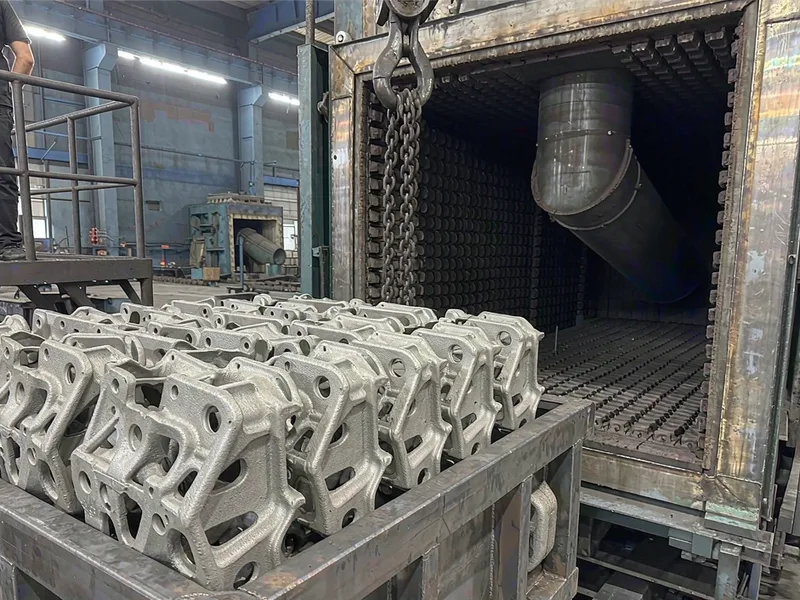
The table compares typical as-cast (F) values with T6 values for the same alloy. Numbers are typical for well-controlled castings. Your results depend on section size, gas content, and the exact heat treatment cycle.
| Property | As-cast (F) | T6 heat-treated |
|---|---|---|
| 抗拉强度 | ~240 MPa | ~310 MPa |
| Yield strength | ~140 MPa | ~260 MPa |
| Elongation | ~4% | ~6% |
| Hardness | ~65 HB | ~100 HB |
| Fatigue strength | Moderate | High |
| Corrosion resistance | High | High |
The jump is clear. Yield strength nearly doubles from F to T6. Hardness climbs about 50 percent. Elongation actually improves in a well-run cycle, because the treatment relieves internal stress. AlSi10Mg gains strength without turning brittle, which is rare in aluminum.
Corrosion resistance stays high in both states. With so little copper, the alloy resists salt and moisture far better than A380. Thermal conductivity is strong too, near 150 watts per meter-kelvin. That helps structural parts that also need to dump heat.
Machinability holds up well in both conditions. The alloy cuts cleanly and takes a good finish, so secondary operations run smoothly. Weldability is another strength. Parts join to extrusions or other castings without the cracking that plagues high-copper grades. That mix of cast, machine, and weld behavior is why engineers trust it on complex assemblies.
Where the Alloy Fits: Structural Parts
Structural castings carry load, and load invites fatigue. A380 can crack under repeated stress because its ductility is low. AlSi10Mg handles cycling far better, especially after T6. That is why it appears in automotive and industrial parts where safety matters.
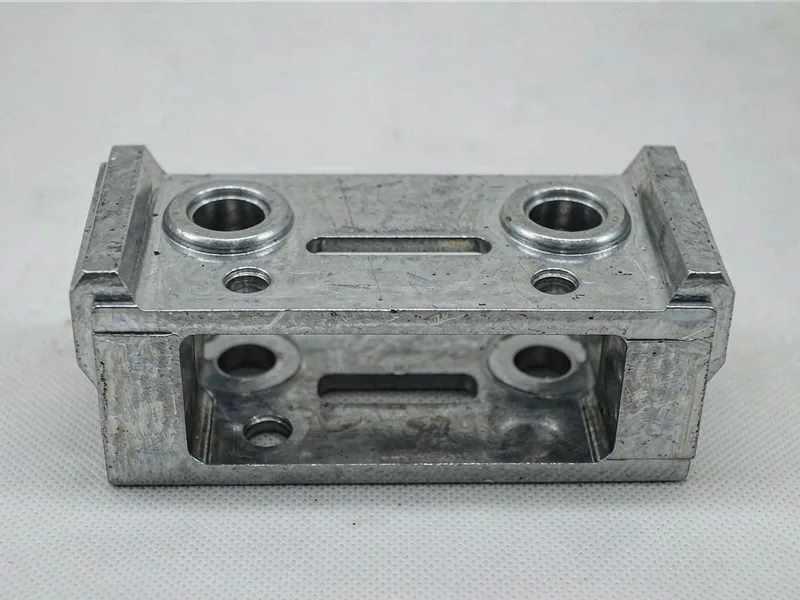
Common parts include suspension brackets, battery housing nodes, chassis mounts, and frame connectors. Electric vehicles lean on AlSi10Mg heavily. These parts replace steel, cut weight, and still meet crash and fatigue targets. Lighter parts mean more range from the same battery.
Industrial uses follow the same logic. Robot arms, machine frames, and lifting hardware benefit from high strength and low weight. AlSi10Mg also welds well, so builders can join castings to extruded profiles without cracking. That flexibility saves assembly steps and cost.
Designers also like the alloy for crash structures. Controlled ductility lets parts bend instead of shatter under impact. Engineers can tune ribs and wall thickness to steer how a part deforms. That control is hard to get from a brittle high-copper grade. It is another reason structural programs keep returning to this material.
Casting Methods That Allow T6
Heat treatment fails when gas is trapped inside the part. In ordinary high pressure die casting, the shot drives gas into the metal. Heat that part to T6 temperature and the gas expands, blistering the surface. So standard HPDC and T6 do not mix.
Vacuum-assisted die casting fixes the problem. Pulling a vacuum from the cavity removes most of the gas before the shot. That lets a high volume process deliver AlSi10Mg parts that survive a full T6 cycle. It is the fastest route to heat-treated die cast structural parts.
Low-pressure and gravity casting also work well. These processes fill slowly and trap less gas, so the alloy takes T6 without trouble. They run slower than HPDC, but they suit larger structural parts where cycle time matters less. Many automotive structural parts are cast this way.
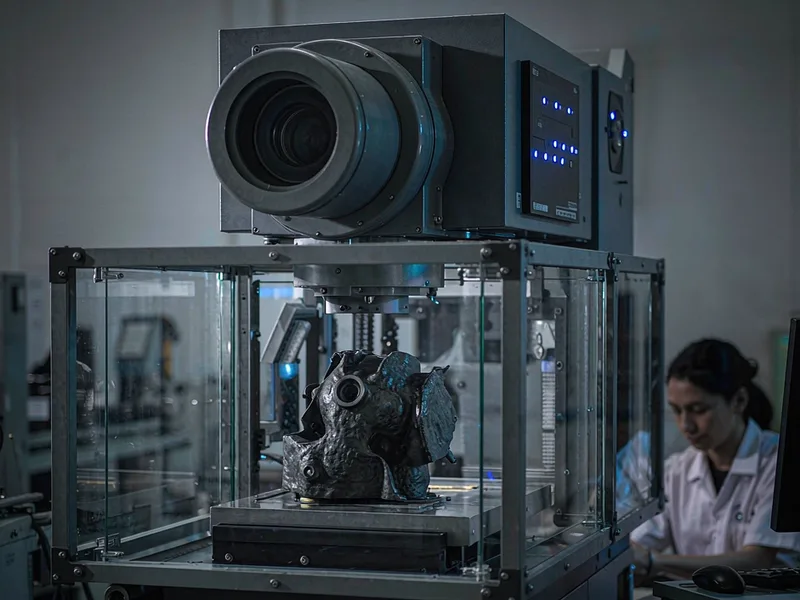
Whatever the method, control porosity before you heat treat. X-ray or CT scanning confirms gas content before parts go into the furnace. A low-porosity casting becomes a strong T6 part. A gassy one becomes scrap, or worse, a cracked field failure.
Alloy selection is only half the job. The heat treatment recipe matters just as much. Solution time, quench speed, and aging temperature all shift the result. Work with your caster to lock a recipe and test it on real parts. A verified cycle turns a promising alloy into a reliable structural component.
Program planning should start early. Structural parts often need coupon testing, fatigue data, and a proven process window before they enter production. Budget time for those steps at the design stage. The earlier the caster joins the project, the more the part can be tuned for fill, strength, and cost. Late changes to a structural program are always the expensive ones.
外部链接
- ASM International — reference data on heat-treatable aluminum casting alloys such as AlSi10Mg.
- ASTM B85 — standard specification for aluminum-alloy die castings, covering alloy chemistry and mechanical properties.
- ASME Y14.5 — the dimensioning and tolerancing standard used on structural casting drawings.
常见问题解答
What is AlSi10Mg used for?
It suits structural parts that carry load. Typical uses include suspension brackets, chassis nodes, battery housings, and robot frames. It also serves electronics and thermal parts that need strength plus heat flow.
Can AlSi10Mg be heat treated to T6?
Yes, that is its main advantage. T6 raises yield strength from near 140 MPa to about 260 MPa. The part must be low in trapped gas, so use vacuum-assisted or low-pressure casting.
Is AlSi10Mg better than A380?
For structural and heat-treated work, yes. This grade wins on ductility, fatigue life, corrosion resistance, and weldability. A380 stays cheaper and easier for simple, non-structural parts.
Why does AlSi10Mg blister during heat treatment?
Trapped gas expands at T6 temperature and blisters the surface. Standard high pressure die casting traps gas. Switch to vacuum-assisted die casting or low-pressure casting to remove it.
Does AlSi10Mg corrode in outdoor service?
No, it resists corrosion well. Its low copper content prevents the galvanic pitting that weakens A380. That makes it a strong fit for wet and outdoor structural parts.