Short answer: for aluminum 压铸 EV components, three numbers decide the project before alloy is discussed. Wall thickness sets the process. Sealing class sets the porosity budget. Annual volume sets whether a die is justified at all. A 2.5 mm motor housing with an IP67 coolant jacket belongs on a vacuum-assisted cold chamber machine of 1,250 t or more, in ADC12, with a documented leak test. A 3.5 mm structural bracket belongs on the same process with squeeze pins and a radiographic acceptance level. A 10 mm mounting block at 2,000 pieces a year does not belong in a die at all.
关键要点
- Motor housings, inverter shells and reducer covers run 2.0-3.5 mm wall in ADC12 or A380 on 800-2,500 t cold chamber machines.
- Sealing class drives the process more than strength does; IP67 and IP6K9K parts need vacuum assistance or an agreed impregnation fallback.
- Structural brackets and battery frames need elongation, so low-iron alloys such as AlSi10Mg replace ADC12 and the heat treatment changes with them.
- Cooling jackets are cast around a core, which makes wall concentricity and core shift the first quality variable, not surface finish.
- A die for an EV housing usually justifies itself above 20,000 parts a year; below that, low-pressure or gravity routes compete.
- Every EV program should state a porosity acceptance level, a leak test pressure and a decay limit in the RFQ, not after PPAP.
The EV Part Families and What Each One Demands
An EV replaces an engine and a fuel tank with a motor, an inverter, a battery pack and a thermal circuit. Each subsystem needs aluminum housings, and each housing carries a different dominant requirement. Buying them as one commodity package is where programs get into trouble, and the casting rules for a stator housing and a mounting bracket barely overlap.
The table below is the working map HKX applies to 铝压铸 EV components. It groups parts by what the casting has to guarantee, then names the alloy, the wall range and the process adjustment that follows.
| EV part family | Typical alloy | Wall range | Sealing / thermal requirement | Process note |
|---|---|---|---|---|
| Drive motor housing (stator can) | ADC12, A380 | 2.5-3.5 mm | IP67 static seal, jacket decay tested at 1.5-2.0 bar | Vacuum assist; jacket core shift held under 0.3 mm |
| Inverter / onboard charger shell | A380, ADC10 | 1.8-2.5 mm | IP6K9K, EMI gasket groove, flat mating flange | Flange flatness 0.15 mm; groove machined after casting |
| Reducer / gear cover | ADC12 | 2.5-3.5 mm | Oil tightness, 0.5-1.0 bar air decay | Vacuum plus impregnation fallback on 3-5% of output |
| Cold plate / thermal housing | ADC12 | 5-8 mm base, 1.2-1.8 mm fins | Burst 3-5 bar, thermal path through the base | High-vacuum die; fin tips vented or accepted as short |
| Structural bracket / mount arm | A380, A360, AlSi10Mg | 2.5-4.0 mm | Fatigue life, no sealed cavity | Squeeze pins at thick nodes; elongation stated on the drawing |
| Battery module frame / end plate | AlSi10Mg, A356-T6 | 2.5-3.5 mm | Adhesive bonding, crash load path | Low iron for ductility; T6 only on the low-pressure route |
| Charging port and connector shell | ADC12 | 1.5-2.2 mm | IP67, cosmetic Class A on the visible face | Thin wall plus slide; ejector marks kept off the front face |
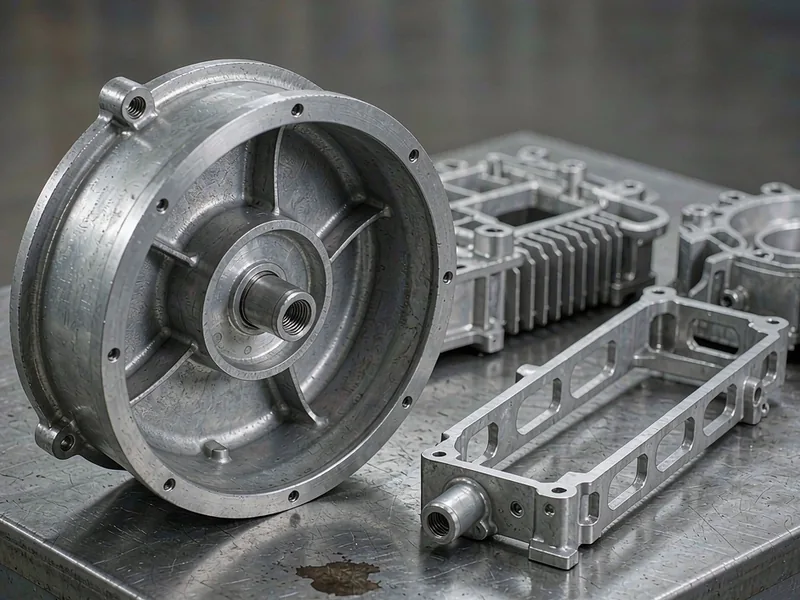
Read the first and last rows together and the commercial logic appears. The motor housing is a thin-wall sealing problem, so porosity control and core stability dominate its cost. The charging port shell is a cosmetic problem, so surface and ejector layout dominate. Quoting both from one blended rate per kilogram hides that difference, which is why itemized quotes matter more on EV programs than on single-part orders.
Wall Thickness and Tonnage Decide the Quote
Wall thickness is the first constraint because it limits flow length. Molten aluminum at 30-80 m/s gate speed fills a thin section quickly, but it also freezes quickly, so a long thin path needs higher metal temperature, a faster shot and a die that can absorb the thermal load. A 2.0 mm wall across a 300 mm flow path is a different project from a 2.0 mm wall across 90 mm.
Projected area, not part weight, sizes the machine
Buyers often size a machine by part weight and get surprised. The figure that matters is projected area multiplied by cavity pressure, typically 600-900 bar for a sealed housing. A large shallow motor housing can weigh 2.4 kg and still need a 1,600 t machine, while a compact 4 kg bracket fits a 1,000 t cell. HKX sizes tonnage from the projected area of the part plus runners and overflows, with a 15-20% margin for intensification. This is the step that most often exposes a low quote for 铝压铸 EV components, because an undersized machine shows up as flash, cold shuts and a short die life rather than as a lower price.
Where the wall range actually comes from
The practical floor for a production housing is 2.0 mm, and 2.5 mm is the comfortable number when the part must hold pressure. Below 2.0 mm, cycle-to-cycle variation in die temperature shows up as cold shuts on the last-fill edge. Above 4.0 mm, thick sections become hot spots that feed shrinkage porosity from the wrong direction, and the fix moves from gating to squeeze pins or a different process. The geometry limits are covered in more depth in the guide to minimum wall thickness in 铝压铸.
Draft angle sits on the same decision. A 1.5° draft on a 60 mm deep stator bore releases cleanly; a 0.5° draft at the same depth produces scuffing and pulls die coating. According to NADCA, draft and fillet practice should be fixed on the product drawing rather than negotiated at tryout, because both change tooling steel and cycle time once the die exists.
Sealing, Cooling Jackets and the Thermal Path
An EV motor housing is usually two functions in one casting: a structural shell and a coolant jacket. The jacket is formed by a core, so the wall between the water channel and the outside world is a cast wall with a machined sealing face. That geometry makes three variables critical, and none of them is surface roughness.
The first is core shift. A core that moves 0.4 mm turns a 3.0 mm jacket wall into 2.6 mm on one side, and the leak test finds it months later. HKX fixtures jacket cores and verifies wall thickness by sectioning the first three shots, then by X-ray sampling at a fixed rate. The second is die thermal balance: a housing with a long core runs hot in the middle and cold at the flanges, so die temperature controllers are split into zones, typically 180-220 °C on the core and 220-260 °C on the flange, with spray timing set per zone rather than per shot.
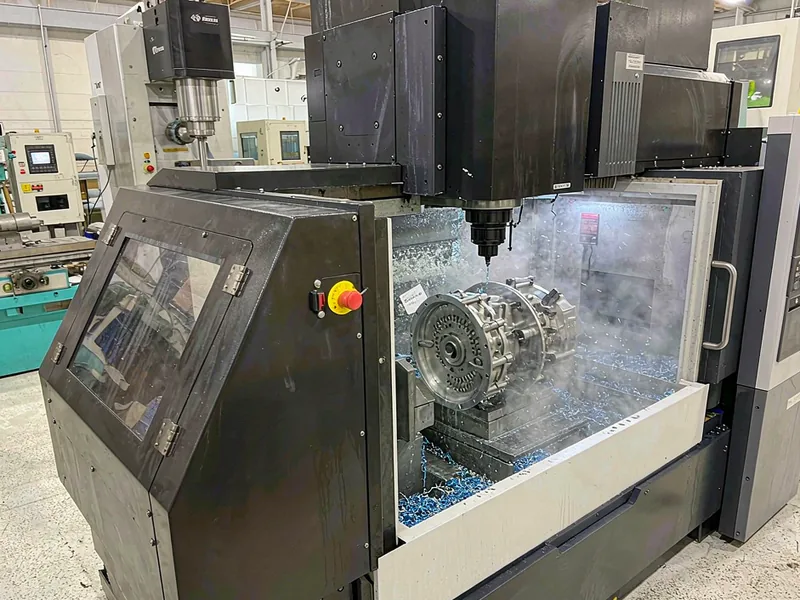
The third variable is the pressure test itself. A decay limit is meaningless without a stabilization time and a reference volume. A housing tested at 1.5 bar with a 30-second stabilization and a 0.3 bar decay limit rejects differently from one tested at 2.0 bar with a 0.1 bar limit, on identical parts. Write the test into the drawing as a specification, not as an inspection note. More disputes over 铝压铸 EV components trace back to an undefined test than to a genuine casting defect.
Vacuum, squeeze pins or impregnation
Three tools reduce porosity, and they solve different problems. Vacuum evacuation to 50-150 mbar removes gas from the cavity before the shot and cuts large voids. Squeeze pins apply local pressure to a thick section while it is still semi-solid and close shrinkage porosity at a boss or rib junction. Impregnation seals a leak path after machining and is a recovery step, not a design solution. A housing that needs all three usually has a wall thickness problem, so check the section before adding process.
Alloy choice interacts with all of this. ADC12 holds the widest castability window with 10.5-12% Si and 1.5-3.5% Cu, which is why it dominates sealed housings. A380 offers slightly higher strength with less fluidity. Where elongation matters, low-iron AlSi10Mg moves the part toward a heat-treatable route and often toward low-pressure casting, as described in the comparison of high-vacuum structural alloys. The composition limits for the die casting grades are published in ASTM B85/B85M, and they are the reference an auditor will use.
Structural Brackets: Ductility Overtakes Stiffness
A bracket does not hold fluid, so the porosity argument changes. What it needs is predictable behavior under cyclic load, which means elongation and fatigue strength rather than a leak limit. Standard ADC12 in the F temper delivers roughly 1-3% elongation. That is too little for a crash-relevant mount, which is why structural 铝压铸 EV components move to low-iron alloys.
Two routes fix it. The first keeps high-pressure die casting and moves to a low-iron alloy with a T5 temper, which lifts elongation into the 4-7% band on a well-fed part. The second moves to low-pressure die casting with A356-T6 and accepts a longer cycle for 7-10% elongation and full heat treatment. Neither is universally correct. A bracket at 80,000 units a year with moderate load goes to the first route; a suspension-linked bracket at 8,000 units goes to the second.
Design rules that decide which one you get
Fillet radius at the load transfer point should be at least half the adjacent wall, and equal to the wall where the bracket sees load reversal. Rib intersections need a wall no thicker than 1.2 times nominal, or the node becomes a shrinkage reservoir. Bolt bosses should be cored rather than solid, with the boss wall kept near nominal and a drafted transition into the web. These are geometry decisions, and they settle the casting route before any supplier quotes.
Fatigue claims also need a test basis. Ask for the acceptance level in writing and reference it to a published radiographic standard, for example ASTM E505 for aluminum castings. A bracket accepted on visual inspection has no fatigue story, because the voids that matter sit below the skin.
Most EV brackets land between 800 t and 1,600 t depending on projected area and cavity count. A two-cavity die doubles output but doubles projected area, so it often forces a larger machine and a larger die base. The trade-off follows the same arithmetic that governs any die casting machine tonnage decision, and it should be resolved before the RFQ leaves the buyer’s desk.
How HKX Runs an EV Housing Program
At HKX, an EV housing moves through the Ningbo plant in a fixed sequence, and the sequence is what makes the sealing numbers repeatable. Chemistry is confirmed on a direct-reading spectrometer before the melt is released, and ADC12 is held inside a narrow window of 10.5-11.5% Si, 2.0-3.0% Cu and 0.6-1.0% Fe, because copper at the top of the range raises strength while it drops ductility. Die temperature runs in four to six zones, with the jacket core set 20-30 °C cooler than the flange to keep the wall from soldering. Vacuum valve opening is timed to the shot curve, closing at 85-92% fill, and a 0.5-0.8 s delay before intensification lets the gate freeze before pressure peaks. Release agent is sprayed on a 25-40 shot cycle and masked off the sealing face. Inspection is priced as a deliverable: the first ten shots of a new die are X-rayed at 100%, then sampled at one part per hour per cavity to ASTM E505 level 2. CMM programs are built from the drawing datum scheme, not from the die. Every sealed housing is leak tested to the agreed decay limit, and each lot carries heat lot traceability back to the spectrometer record. When a jacket leaks, the report shows which cavity, which shift and which heat.
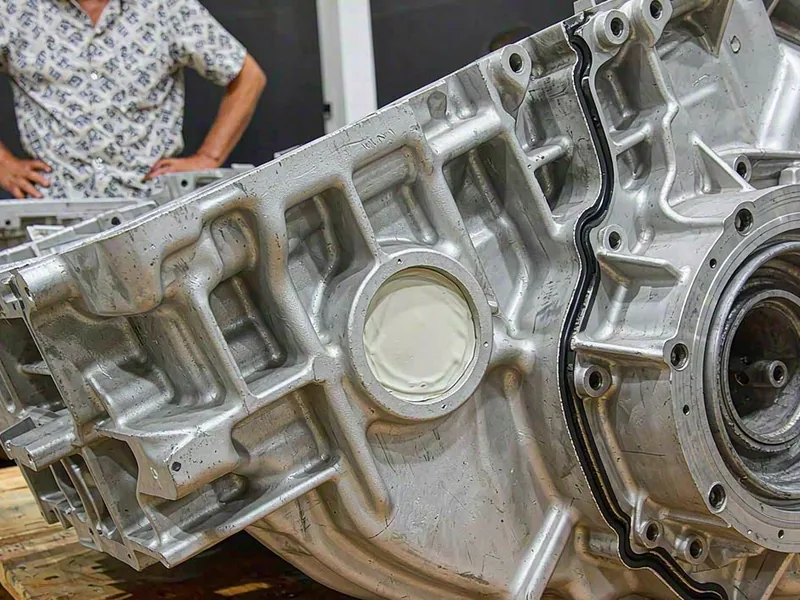
That sequence is also the audit trail. When a customer visits, the same records are pulled in front of them, and retrieval takes minutes rather than a day.
The RFQ Lines That Move the Price
An RFQ for 铝压铸 EV components produces comparable quotes only when the specification lines are identical across bidders. Most price spread on EV housings comes from four lines that buyers leave open: porosity acceptance, machining stock, leak test definition and tooling ownership. Each one is a range, and each bidder picks a different point inside it.
| RFQ line | What a usable statement looks like | Risk if left open |
|---|---|---|
| Porosity acceptance | “ASTM E505 level 2 on the sealing face, level 3 elsewhere; no visible porosity on machined gasket groove” | Lots rejected on visual judgement with no measurable appeal route |
| Machining stock | 0.4 mm on sealing faces, 0.6 mm on bores, datum scheme attached | Either extra machining passes or a casting that cannot clean up |
| Leak test | Media, pressure, stabilization time, decay limit, test area masked | Supplier tests to a looser limit and passes parts the buyer rejects |
| Tooling | Ownership, shot life estimate, maintenance split, transfer terms | Die stays with the supplier and transfer becomes a negotiation |
| Heat treatment | Named temper with cycle parameters and hardness verification | Distortion and property drift discovered at first article |
| Documentation | FAI report, dimensional report, material certificate, leak test record, heat lot traceability | Buyer pays a third party to recreate what should ship with the lot |
Two more lines belong on the list for EV work specifically. State the cosmetic class for any visible surface, since a Class A requirement changes ejector layout and polishing time. State the coating system and its adhesion test, because a powder coat over a porous skin fails at the blister test rather than at the booth. Both are cheap to specify and expensive to retrofit, and both are covered in the plant’s overview of surface finishes.
Volume assumptions deserve a sentence of their own. A quote built on 50,000 parts a year and a die sized for 100,000 shots implies a two-year die life, and the buyer should know that before signing. Ask for the assumed annual volume and the die life behind the tooling price. If the two numbers do not reconcile, the tooling line is a placeholder.
经常问的问题
What wall thickness should an EV motor housing be designed to?
Plan on 2.5-3.0 mm for the structural shell and 2.5-3.5 mm for the coolant jacket wall. Thinner walls fill but leave little margin for core shift, and a shifted jacket wall is the most common cause of a failed leak test on a new die.
Can aluminum die casting EV components be heat treated to T6?
Conventional high-pressure castings trap gas, and solution treatment at 500 °C or above blisters the skin. Vacuum-assisted and pore-free variants can be qualified on the actual geometry. Where T6 is mandatory, low-pressure casting with A356 is the lower-risk route.
Which alloy is best for an EV structural bracket?
A380 or A360 works for moderate loads with a T5 temper. For crash-relevant parts, low-iron AlSi10Mg or A356-T6 gives 5-10% elongation, which is what a fatigue or impact calculation needs. Standard ADC12 at 1-3% elongation rarely qualifies.
How is an EV housing leak tested?
Usually by pressure decay with air, at 0.5-2.0 bar depending on the cavity, with a defined stabilization time and a decay limit stated on the drawing. Helium is used for very small leak rates. The specification must name pressure, time and limit, or results are not comparable.
What annual volume justifies a die for an EV housing?
Above roughly 20,000 parts a year, high-pressure die casting usually wins on landed cost. Between 3,000 and 20,000, low-pressure casting often competes. Below 3,000, gravity casting or a machined billet is usually cheaper than a die.
How do I compare quotes from three EV casting suppliers?
Three quotes for 铝压铸 EV components can only be compared on one basis. Require itemized lines for casting, machining, finish, inspection, packaging and tooling, plus the process assumptions behind each. Then compare on the same porosity level, the same leak test and the same documentation package. A single blended price cannot be compared to anything.
Author: HKX Engineering Team
HKX — Ningbo Hexin Mould Co., Ltd., an aluminum die casting manufacturer in Ningbo, China, with 30+ years of tooling experience, in-house machining and finishing, ISO 9001 and IATF 16949 certification, and customers in more than 20 countries.
与 HKX 工程团队交谈
Send a drawing for 铝压铸 EV components with the wall thickness, the sealing class and the annual volume, and HKX returns a written process review before a quotation: alloy and chemistry window, machine tonnage, vacuum strategy, porosity acceptance level, leak test definition and machining stock. Buyers who need evidence get it with the samples, including a first article report, a dimensional report against drawing datums and a leak test record. Programs built around aluminum motor end covers start the same way. To begin, contact our engineering team and include the target volume and the inspection standard the part must meet.