Aluminum Ingot Pricing: How LME Moves Your Part Cost
The aluminum ingot price LME traders watch each morning is the single largest moving part in your 压铸 quote. Metal makes up roughly 40 to 60 percent of the piece price on a typical aluminum casting. When the exchange price jumps 10 percent, your part cost moves with it — not next year, but within one pricing cycle. Many buyers treat this as noise. Smart buyers treat it as a manageable input with structure behind it. This guide explains how the London Metal Exchange sets the reference, how premiums and alloy spreads stack on top, and how contract structures pass that risk to you or shield you from it. You will finish with questions that make any quote easier to compare.
关键要点
- The LME sets a global reference for primary aluminum, not your alloy — premiums and alloy spreads do the rest.
- Secondary die casting alloys like A380 trade at a discount to primary, typically 5 to 15 percent.
- Metal is 40 to 60 percent of piece price, so a 10 percent metal move moves your part about 5 percent.
- Fixed-price, monthly-average, and surcharge contracts shift risk in very different directions.
- Lighter parts and clean scrap returns are the only levers that cut metal cost permanently.
What the LME Actually Sets — and What It Does Not
The London Metal Exchange publishes forward prices for high-grade primary aluminum. The three-month contract is the number quoted on trading screens and news feeds. It reflects global supply, demand, inventories, and speculative money. It does not name A380, ADC12, or any die casting alloy.
Two layers separate that number from your ingot. The first is the regional premium. Buyers in the US pay the Midwest premium on top of the LME price. European buyers reference duty-paid Rotterdam. Asia works from CIF ports in Asia. These premiums move on local supply, tariffs, and freight — sometimes against the LME itself.
The second layer is the alloy spread. Aluminum ingot price LME quotes apply to pure metal, while secondary alloys trade at a discount that widens when scrap flows freely and narrows when primary tightens. During the 2021 to 2022 squeeze, that discount collapsed for months. Buyers who assumed a fixed spread saw costs climb even as the LME fell.
Timing adds a final wrinkle. Foundries buy metal on rolling schedules, not on the day your order lands. A 30-day average price tracks reality better than any single daily print. That is why we reference averages in contracts instead of spot fixes.
From Exchange Price to Your Quote
A die casting quote has four blocks: metal, conversion, tooling, and logistics. Conversion covers melting, casting, trimming, machining, and quality control. Tooling is amortized into the price or billed separately. Logistics includes packaging and freight to your dock.
Only the metal block moves with the market. That is why a supplier who quotes a single blended number hides the very thing that changes. Ask for the metal weight, the alloy, and the reference price behind every quote. Reputable die casters provide all three without prompting.
Scrap works in your favor here. Runners, overflow, and trimmed flash return to the furnace. On a part with 60 percent yield, the paid metal weight is far less than the gross shot weight. Every gram you remove from the design cuts metal cost twice — once in the shot and once in the melt loss.
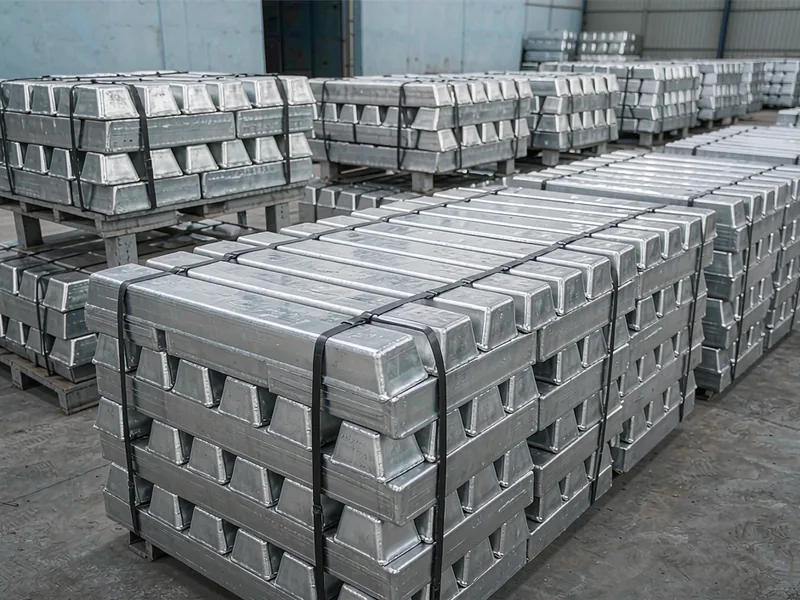
The Price Stack, Layer by Layer
The table below shows a realistic breakdown of what you pay per kilogram of A380 delivered to a Midwest foundry. Ranges reflect recent market history, not a prediction.
| Price component | 典型范围 | Volatility | What drives it |
|---|---|---|---|
| LME 3-month aluminum | $2,100–2,700 / tonne | High, daily | Global supply, demand, inventories |
| Midwest premium (US) | $0.20–0.40 / lb | High, months | Tariffs, regional supply, freight |
| Alloy conversion to A380 | 5–15% below primary | Medium | Scrap availability, smelting capacity |
| Foundry handling and melt loss | $0.05–0.12 / lb | 低 | Energy, furnace efficiency |
| Scrap return credit | 20–40% of metal cost | Tracks LME | Part yield, runner design |
Add the rows and the picture clarifies. An aluminum ingot price LME headline of $2,400 per tonne tells you about half the story. Premiums and conversion decide the rest, and they move on different clocks.
Hedging, Surcharges, and Contract Structures
Three structures dominate purchase agreements. A fixed-price contract locks metal and conversion for 12 months. You get budget certainty and the supplier carries hedge cost in the price. You also pay for that certainty, usually 2 to 4 percent.
A monthly-average contract resets metal each month at the LME settlement average. Conversion stays fixed. This mirrors how the foundry buys, so the markup shrinks. Your piece price moves, but predictably and transparently.
A surcharge contract quotes a low base price and adds a metal surcharge line each month. It is transparent, but it moves fully with the market. We use it for programs where the customer hedges on their own side and wants the raw exposure.
Whichever structure you pick, ask when the supplier last re-quoted. A quote older than 90 days carries embedded metal risk that someone will pay for later.
How Buyers Can Reduce Metal Price Risk
Design cuts metal cost permanently. Wall thickness, cored bosses, and ribbed stiffness reduce shot weight with no sacrifice in function. A 10 percent lighter part costs 10 percent less metal forever, regardless of where the LME trades.
Yield matters just as much. Ask how much of each shot returns to the furnace. Shorter runners and balanced gating raise yield and shrink the metal bill. This is a DFM conversation, and it pays every month the program runs.
Finally, match the contract to your own exposure. If your customer prices in quarterly steps, a monthly-average metal clause on your side fits naturally. An honest aluminum ingot price LME adjustment clause aligned with your sales cycle removes argument from every review. Send us your drawing and annual volume, and we will show the metal math line by line.

外部链接
- North American Die Casting Association (NADCA) — publishes alloy cost data and purchasing guidance for North American die casting buyers.
- International Organization for Standardization (ISO) — source of ISO 3522, which defines aluminum casting alloy designations used across purchase orders.
- ASTM B85 — standard specification for aluminum-alloy die castings, tying alloy chemistry to the grades quoted against metal indices.
常见问题解答
How does the aluminum ingot price LME reference affect my die cast part cost?
Metal is 40 to 60 percent of piece price, so a 10 percent move in the exchange price shifts your part cost roughly 4 to 6 percent. The exact number depends on part weight, yield, and alloy.
Why does A380 cost less than the LME aluminum price?
A380 is a secondary alloy made largely from scrap. It trades at a 5 to 15 percent discount to primary aluminum, though the discount narrows when scrap supply tightens or primary demand spikes.
What is the Midwest premium and why do I pay it?
The Midwest premium covers delivery, import duties, and regional supply cost on top of the exchange price. It is set by the US spot market and can move opposite to the LME.
Should I sign fixed-price or index-linked metal contracts?
Fixed price buys budget certainty at a 2 to 4 percent premium. Index-linked contracts track the market transparently and cost less over time if you can absorb monthly movement. Match the structure to your own sales pricing.
Can design changes really lower metal cost?
Yes, permanently. Thinner uniform walls, cored bosses, and higher yield from shorter runners cut paid metal weight. Unlike hedging, those savings survive every market cycle.