Solution Heat Treatment Temperatures by Alloy (Chart)
Getting solution heat treatment aluminum temperatures right separates a casting that reaches full T6 strength from one that sags, blisters, or simply stays soft. In this guide we list the working temperature ranges we use for the common cast alloys. We explain how time and quench rate change the result. We also show why the aluminum used for high pressure 压铸 usually cannot be treated at all. Every number here is a starting point for a qualified heat-treat procedure, not a replacement for one. We also flag the traps: over-solutioning, slow quench, and treating an alloy that was never designed for it. Read the chart, then talk to your heat treater before you commit a furnace load. The goal is simple — full dissolution with zero melting.
关键要点
- Most heat-treatable cast alloys such as A356, A357, and C355 solution treat near 1,000–1,010 °F (538–543 °C).
- Copper-rich alloys such as 319.0 run cooler, around 940–950 °F (505–510 °C), to avoid incipient melting.
- Soak time ranges from 4 to 12 hours and tracks the thickest section, not the average wall.
- Quench rate protects the strength gain. A slow quench wastes the whole treatment.
- HPDC alloys like A380 and ADC12 are not solution treatable; trapped gas makes them blister.
What Solution Heat Treatment Does
In a solution heat treatment aluminum cycle, the furnace does one job: it dissolves the hardening elements back into the solid metal. In cast alloys those elements are magnesium and silicon, sometimes copper. The furnace heats the part until hard Mg2Si particles fully dissolve. A fast quench then traps them in place. Aging later precipitates them as fine particles that block dislocations and raise yield strength.
Temperature is the main lever. Too low, and the particles never fully dissolve, so the aging response stays weak. Too high, and low-melting phases at the grain boundaries begin to melt. That defect is called incipient melting. It turns a sound casting into scrap with no visible warning on the outside.
The window is narrow, often only 15 to 20 °F. That is why the chart below lists ranges instead of single points. It is also why a calibrated furnace and fast thermocouples matter more than any other piece of equipment in the cell.
One more point: the soak is only half the story. The quench must follow within seconds of the furnace door opening. A part that cools slowly in the doorway loses a large share of its strength. Then aging, usually at 310 to 360 °F, finishes the job.
Solution Heat Treatment Temperatures by Alloy
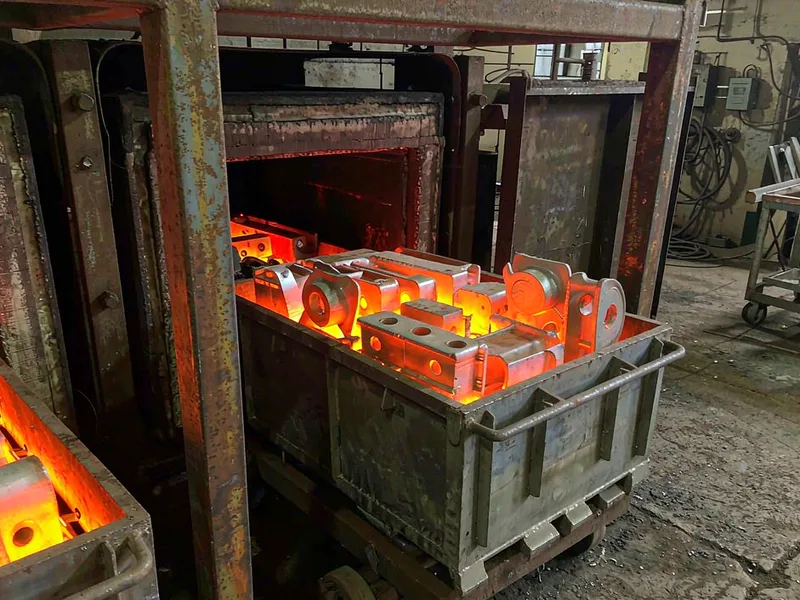
The table reflects typical practice for solution heat treatment aluminum castings. Treat it as a starting range, not a fixed recipe. Your heat treater may trim the numbers for your part’s section size and chemistry. Always confirm the final cycle against a written procedure such as AMS 2771 or ASTM B917.
| 合金 | Composition type | Solution temp | Soak time | Quench medium |
|---|---|---|---|---|
| A356.0 | AlSi7Mg | 1,000–1,010 °F (538–543 °C) | 6–12 小时 | Warm water, 150–180 °F |
| A357.0 | AlSi7Mg0.6 | 1,000–1,010 °F (538–543 °C) | 6–12 小时 | Warm water, 150–180 °F |
| C355.0 | AlSi5Cu1.3Mg | 995–1,005 °F (535–540 °C) | 4–12 小时 | Warm water, 150–180 °F |
| 354.0 | AlSi9Cu1Mg | 1,005–1,010 °F (540–543 °C) | 4–10 h | Warm water, 150–180 °F |
| 319.0 | AlSi6Cu4 | 940–950 °F (505–510 °C) | 4–12 小时 | Water, 130–180 °F |
| B390.0 | AlSi17Cu4Mg | 900–950 °F (482–510 °C) | 2–6 h | Water, 130–180 °F |
Values are typical published ranges for cast alloys. Confirm them with your heat treater and the governing specification before production.
Time at Temperature and Section Thickness
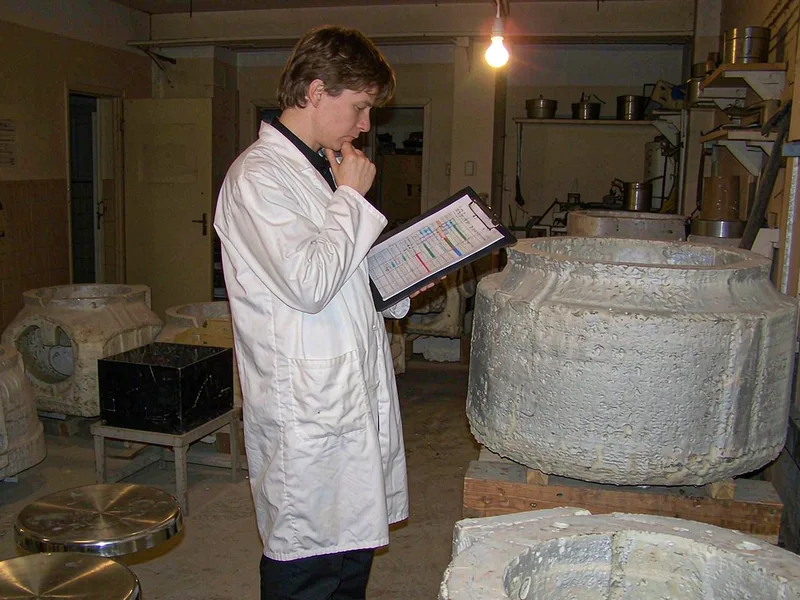
Hours are not arbitrary. Heat must soak all the way to the core of the thickest section. A common rule is one hour per inch of section, plus a safety margin. A 3 mm wall may be ready in four hours. A 40 mm boss may need twelve.
Under-soaking leaves undissolved particles in the center. The part then tests soft at the core while the skin looks fine. Over-soaking grows the grains and coarsens the microstructure. Both problems are expensive to find after machining.
How you stack the load changes the answer again. A dense basket heats far slower than a loose one. Use load thermocouples to prove that the coldest part of the load reached the set point.
Record every soak with a chart or data logger. A treatment without a traceable record is hard to defend when a customer questions final strength. The record also helps you repeat a good cycle on the next run.
Quench Rate Decides the Result
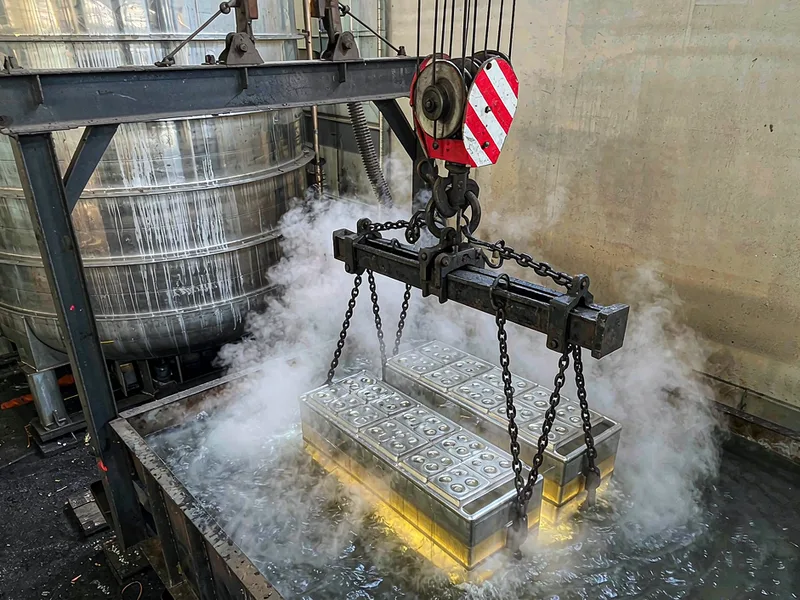
Quench rate controls strength almost as much as temperature does. After the soak, the alloy must cool fast enough to hold the dissolved elements in solution. If cooling is too slow, coarse particles form right away. The later aging step cannot recover that loss.
For solution heat treatment aluminum parts, the medium is usually water held between 150 and 180 °F. Cold water quenches faster but raises distortion and residual stress. Warm water trades a little speed for straighter parts and fewer quench cracks.
Thick and thin sections cool at different rates. That mismatch explains why a heavy casting often measures lower strength than the thin test bar from the same heat. Agitation and part orientation are your main controls here.
Why Die Cast Alloys Are a Special Case
Not every aluminum casting can be heat treated. High pressure die casting alloys such as A380, ADC12, and A383 carry trapped gas from the fast cavity fill. Heat them to solution temperature and that gas expands. The skin lifts into blisters, and internal voids grow.
That is the main reason most HPDC parts ship as-cast or with a low-temperature T5 stress relief. We cover the blister problem and its fixes in our companion guide on HPDC and T6.
So check the alloy before you plan any treatment. If your part is a permanent-mold or 砂铸造 in A356 or A357, the chart above applies. If it is a die casting in A380, the answer is usually no.
If a structural die casting must reach T6, the fix is not a hotter furnace. It is a different process. Vacuum-assisted die casting pulls trapped gas out of the cavity before the shot, so the part can survive the soak without blistering.
外部链接
- North American Die Casting Association (NADCA) — industry references covering alloy selection, casting design, and heat treatment limits for die castings.
- ASTM B85 — standard specification for aluminum-alloy die castings, defining chemistry and mechanical properties.
- ASM International — handbook data on solution treatment, aging, and the metallurgy behind cast aluminum heat treatment.
常见问题解答
What temperature is used for solution heat treatment aluminum?
Most cast alloys run near 1,000 °F (538 °C). Copper-bearing alloys like 319.0 run cooler, around 940–950 °F, to avoid incipient melting. Always follow the alloy maker’s specification.
How long should a casting soak at temperature?
Plan on about one hour per inch of the thickest section, then add margin. Thin walls may finish in four hours. Heavy bosses can take twelve hours or more.
Can I solution treat a high pressure die casting?
Usually no. Trapped gas in A380, ADC12, and similar alloys expands during the soak and blisters the surface. Those parts ship as-cast or with a low-temperature T5 relief.
Why does quench rate matter so much?
The quench holds the dissolved elements in solution. A slow quench lets coarse particles form, and the later aging step cannot restore full strength. Warm water quench balances speed against distortion.
What happens if the temperature is too high?
Low-melting phases at the grain boundaries start to melt. This is incipient melting. It weakens the casting and often shows up only after machining, so the whole load can be lost.