铸铝合金的热处理:T5、T6及更多
Heat treatment cast aluminum parts rarely ship in the condition they leave the die. The casting that drops out of the machine is soft, stressed, and full of internal structure that decides how it performs later. A controlled thermal cycle changes that structure. It dissolves hard phases, redistributes them, and locks in the strength your drawing demands. Engineers reach for a controlled cycle when a part must carry load, resist wear, or hold tight tolerances after machining. This guide explains the tempers we run most often, what each cycle does inside the metal, and where the process stops being worth its cost. You will also see the working numbers we use on real programs. We cover the failure modes that catch teams who skip the basics, plus the alloy limits that rule out the strongest tempers on die cast parts.
关键要点
- T5 ages a part without a solution step; T6 adds solution treatment and a quench before aging.
- T6 delivers the highest strength but also the highest distortion risk on thin, complex parts.
- High-pressure 压铸s usually stop at T5 because trapped gas causes blistering during a hot soak.
- Solution treatment runs near 500–540 °C for hours; aging runs near 150–180 °C.
- Verify every cycle with hardness plus real tensile bars, not hardness alone.
Why We Heat Treat Cast Aluminum Parts
Castings come out of the die with a microstructure shaped by fast cooling. Rapid solidification traps alloying elements in solution and leaves the metal uneven. That as-cast structure is weak and unpredictable. Hardness can shift across a single part. Machining then releases locked-in stress, and the part moves on you.
A heat treatment cast aluminum cycle fixes these problems on purpose. The goal is simple. You want a fine, uniform spread of strengthening particles through the metal. You also want stress relieved before finish machining. A well-run cycle delivers both, and it stabilizes dimensions so the part stays where your CMM put it.
Not every casting needs the furnace. Many A380 and ADC12 die castings serve fine as-cast. If your part carries light loads and loose tolerances, skip the step. The decision comes down to strength, wear, and stability.
T5 vs T6: Reading the Temper Codes
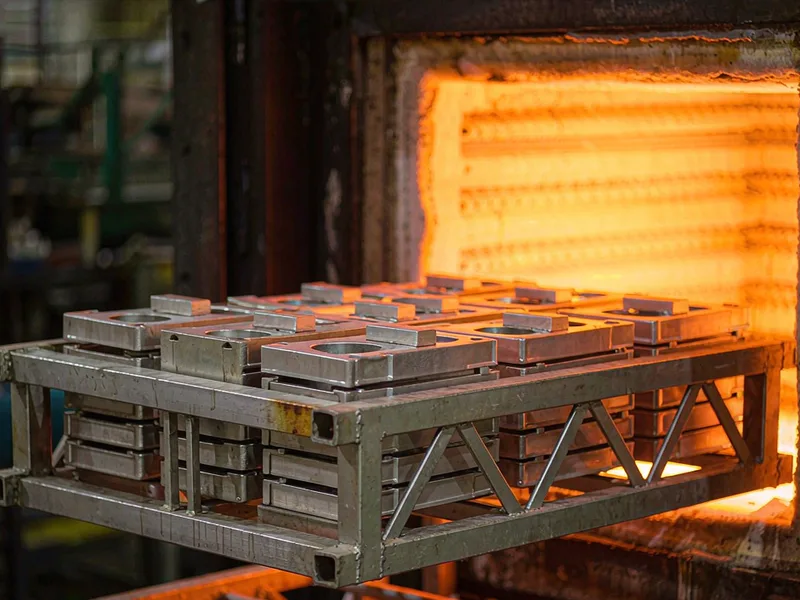
Temper codes tell you how the metal was treated after shaping. The letter and number come from a standard system that every supplier reads the same way. T5 means cooled from shaping and then artificially aged. T6 means solution treated, quenched, and then artificially aged.
That one digit carries real weight. T5 skips the high-temperature solution step and the quench. T6 includes both. The extra work buys higher strength, but it also adds distortion risk and cost.
| Temper | Process steps | Solution treat | Quench | 老化 | Typical UTS (MPa) |
|---|---|---|---|---|---|
| F | As-cast, no thermal treatment | — | — | — | 165–180 |
| T4 | Solution treated, quenched, naturally aged | 对 | 对 | Room temperature | 220–230 |
| T5 | Cooled from the die, then artificially aged | 没有 | 没有 | 4–6 h at 155–180 °C | 260–310* |
| T6 | Solution treated, quenched, artificially aged | 对 | 对 | 4–8 h at 150–180 °C | 250–280 |
| T7 | Solution treated, quenched, overaged | 对 | 对 | Longer, higher temperature | 235–255 |
*Values are typical ranges. F through T7 rows reflect A356 permanent-mold properties. The T5 row reflects common die-cast alloys such as A360.
Choose the temper that matches the real load case. A housing that holds a bracket does not need T6. A structural node with fatigue loads usually does. Ask the design team which loads the part actually sees, then pick the lowest temper that covers them.
The T6 Cycle Step by Step
Solution treatment comes first. The part soaks at 500 to 540 °C for several hours. That soak dissolves the alloying elements back into the aluminum matrix. Time and temperature must stay inside a tight window. Too cool, and the elements never fully dissolve. Too hot, and you risk melting at the grain boundaries.
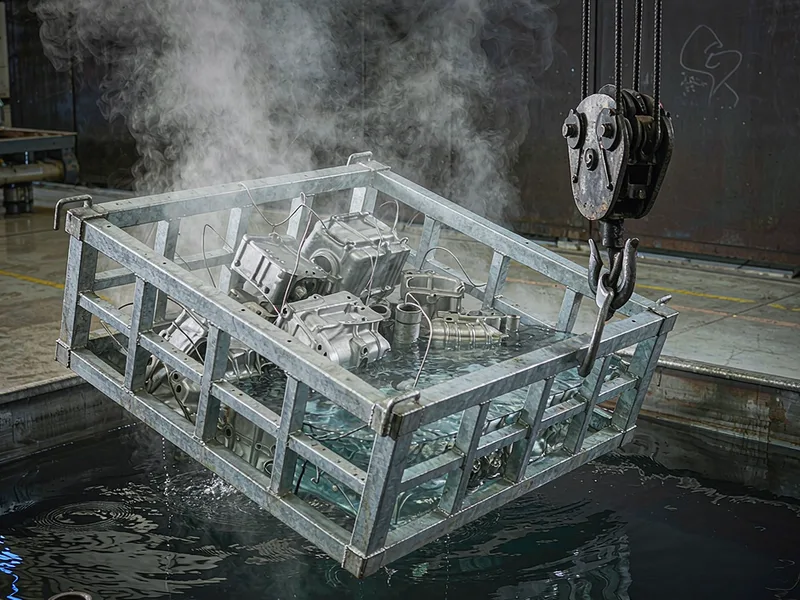
The quench follows fast. Warm water or a polymer bath pulls heat out quickly and holds the elements in solution. This is the moment that decides distortion. A slow quench keeps the part straight but drops strength. A violent quench raises strength but warps thin sections.
Aging finishes the job. The part sits in a second furnace at 150 to 180 °C for four to eight hours. Fine particles precipitate and block dislocation movement. That is where the hardness comes from. Every good schedule balances these three steps against the geometry in front of you.
Which Alloys Respond to Heat Treatment
Not every aluminum alloy responds. Heat-treatable grades carry copper, magnesium, silicon, or zinc in amounts that form strengthening phases. A356, A357, 319, and the 6061 family all respond well. Alloys without those elements stay soft no matter how long you soak them.
Die casting changes the rules. High-pressure die castings trap gas during fill. A high-temperature soak expands that gas and blisters the surface. So most HPDC parts stop at T5 or stay as-cast. Vacuum-assisted filling cuts the trapped gas and opens the door to T6.
Your alloy choice sets the ceiling for the whole program. Pick the alloy and the temper together. Confirm both with your caster before you freeze the drawing, because switching later means new tooling or a new process window.
Getting Results: Hardness, Strength, and Distortion Control
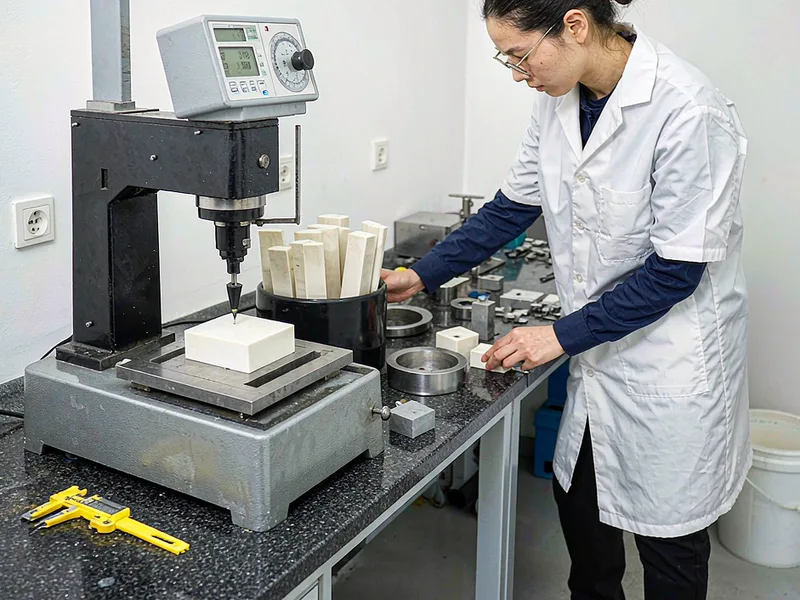
Verify every heat treatment cast aluminum run with test bars from the same lot. Measure hardness on a sectioned sample, and pull tensile bars per the standard. Hardness alone can mislead you, so back it up with real tensile data.
Control distortion with fixtures and quench direction. Support thin walls while the part cools. Quench symmetrical parts evenly so one side does not beat the other. Straighten before aging, not after, because aged parts resist movement.
Track a few numbers on every run. Record solution temperature, soak time, quench rate, and aging time. Small drifts in any one of them show up as scattered hardness later. When the numbers stay tight, the parts stay consistent.
外部链接
- North American Die Casting Association (NADCA) — industry guidance on casting alloys, tempers, and the process limits that shape die cast heat treatment.
- ASTM B85——铝合金压铸件的标准规范,涵盖化学成分和力学性能。
- ASM International — reference source for aluminum alloy metallurgy and heat treatment practice.
常见问题解答
Does heat treatment cast aluminum always raise strength?
Only when the alloy is heat-treatable and the cycle is right. A356 and A357 respond strongly. Non-heat-treatable grades stay soft, and a poor cycle leaves the metal no stronger than as-cast.
Can you run T6 on a high-pressure die casting?
Rarely, and only with vacuum assist. Standard HPDC parts trap gas that blisters during the solution soak. Most die casters stop at T5, which ages the part without a high-temperature step.
What temperature does heat treatment cast aluminum use?
Solution treatment runs near 500 to 540 °C for hours. Aging runs near 150 to 180 °C for four to eight hours. T5 skips the solution step and goes straight to aging.
Why do T6 parts distort so much?
The fast quench pulls heat unevenly, so thin walls cool faster than thick ones. Uneven cooling builds stress that warps the part. Fixtures, balanced quench flow, and even wall design all reduce it.
How do we confirm the cycle worked?
Cut a sample for hardness and pull tensile bars from the same lot. Compare results against the spec for your alloy and temper. Do not rely on hardness alone, because it can pass while elongation fails.