The questions Chinese die caster buyers should ask before tooling are not about price. They are about who owns the die, what steel it is cut from, how many shots it is warranted for, and what happens when the first samples miss the drawing. Twenty questions, asked in one sitting and answered in writing, remove most of the risk from an offshore tooling program. The answers also tell you which supplier is worth a second meeting.
关键要点
- Ask for die ownership in writing before any deposit; the document matters more than the promise.
- Die steel grade, mill certificate and heat treatment records predict tool life better than any quoted shot count.
- A supplier who cannot name the machine and tonnage for your part has not yet engineered the job.
- Porosity acceptance, scrap allowance and inspection coverage belong in the quote, not in a later email.
- Red-flag answers are usually fast, confident and vague; good answers are slower and come with a document.
- Score the answers instead of ranking the price, and the cheapest quote usually stops looking cheapest.
Why a Question List Beats a Quotation
A quotation is a single number produced under assumptions you cannot see. Two suppliers can quote the same drawing and land far apart because one assumed a two-cavity die in H13 with a 100,000-shot warranty and the other assumed a single cavity in a softer steel with no warranty at all. The number looks comparable. The deliverable is not.
The list below is built around that gap. Each question maps to a cost, a schedule risk or an exit risk, and each one has an answer that can be checked later. That last property is what separates a useful question from a polite one. “Do you have good quality?” cannot be checked. “Which spectrometer do you use, and do you record chemistry every melt?” can be checked in ten minutes on a plant walk.
Timing matters as much as content. Ask before the die is cut, while the answers can still change the design. Once the steel is ordered, every answer becomes a change order, and the supplier’s incentive shifts from solving your problem to protecting the schedule. Buyers who run this list at the RFQ stage get a quotation they can audit. Buyers who run it after T1 get a negotiation. The questions Chinese die caster buyers ask late rarely change the design, only the invoice. A die quote for a high-pressure 压铸 program carries the same fixed cost whether or not the assumptions are written down.
Why the answers belong in an appendix
One more reason to formalize it: the answers become the appendix to the purchase order. A supplier who writes “die life 100,000 shots, warranted against heat checking and cracking, excluding damage from foreign objects” has given you a clause. A supplier who says “long life, very good” has given you a conversation you will have again in eighteen months.
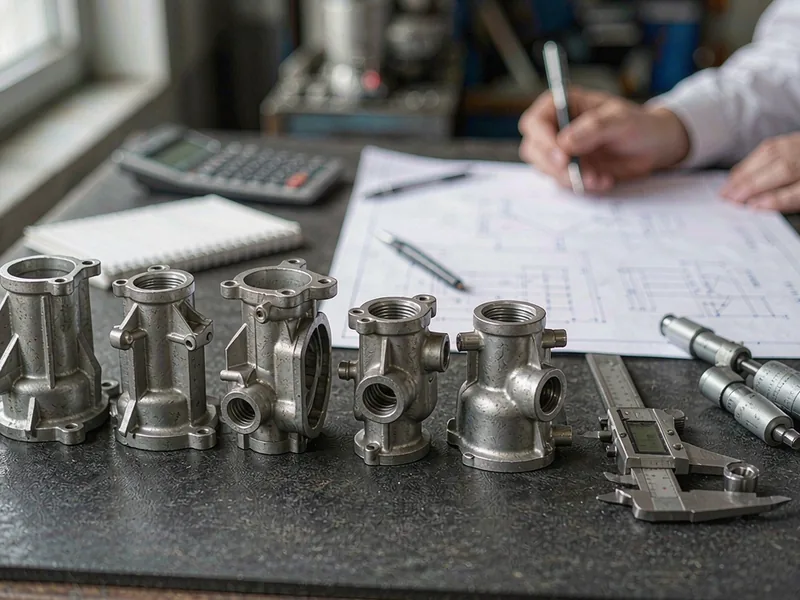
The 20 Questions to Ask a Chinese Die Caster
Group the questions Chinese die caster buyers ask by risk rather than by department. Tooling questions decide whether you own an asset in two years. Process questions decide whether the part can be made at the quoted rate. Quality questions decide whether it can be shipped. Commercial questions decide what happens when any of the first three go wrong.
| # | Question | Risk it controls | Document to request |
|---|---|---|---|
| 1 | Who owns the die, and in which document is that stated? | Loss of tooling if the relationship ends | Tooling ownership clause and die identification plate photo |
| 2 | Which die steel, from which mill, with what certificate? | Premature heat checking and cracking | Mill certificate for H13, 1.2344 or DAC55, plus heat treatment record |
| 3 | How many cavities, and what drove that number? | Piece price and die cost mismatch | Layout drawing with cavity and runner layout |
| 4 | What die life is warranted, in shots, and what is excluded? | Unbudgeted replacement die in year three | Written warranty with exclusions listed |
| 5 | What is the trial plan: T0, T1, T2 dates and samples per stage? | Schedule slip discovered too late | Tooling schedule with milestone dates |
| 6 | Who pays for engineering changes after die approval, and at what rate? | Change orders that erase the price advantage | Change rate schedule by type of modification |
| 7 | When do I get DFM feedback, and who signs it? | Design flaws frozen into steel | Written DFM report with named engineer |
| 8 | Which machine and tonnage will run my part? | Quoted cycle that no machine can repeat | Machine list with tonnage and shot capacity |
| 9 | Is that machine dedicated, and how is capacity booked? | Queue time added to every repeat order | Capacity plan or booking confirmation |
| 10 | What vacuum capability and porosity acceptance level apply? | Leak failures found at your test station | Porosity standard reference and sampling plan |
| 11 | How is alloy chemistry verified, and how often? | Strength and fluidity drift between lots | Spectrometer records and ingot certificates |
| 12 | What scrap rate is built into the quote, and who absorbs the excess? | Hidden cost transferred back to you | Scrap assumption stated as a percentage |
| 13 | Which operations are in-house and which are subcontracted? | Lost visibility on coating and heat treatment | Process flow with subcontractors named |
| 14 | What is the inspection plan and PPAP level? | First article rejection and launch delay | Control plan, first article report, CMM program |
| 15 | How are parts packed, and who bears transit damage? | Cosmetic rejects on arrival | Packaging drawing and Incoterms in the contract |
| 16 | What is the payment schedule, and is tooling tied to milestones? | Full payment before a proven part exists | Payment terms linked to T1 acceptance |
| 17 | If I leave, how do I get the die, and at what cost? | Hostage tooling and lost production time | Exit clause covering crating, documents and timing |
| 18 | What is the lead time for a repeat order versus the first order? | Stock-outs after a successful launch | Quoted lead times in working days |
| 19 | Which certifications are current, and what is the audit scope? | Certificates that do not cover your process | ISO 9001 and IATF 16949 certificates with scope |
| 20 | Who is my single contact, and what is the escalation path? | Weeks lost in translation chains | Named contact, response time and escalation list |
Print the table and take it to the meeting. A supplier who answers fourteen of twenty and commits the rest to writing beats one who answers all twenty in prose and produces nothing. For a deeper look at the tooling line items behind questions 3, 4 and 6, the guide to 压铸 tooling cost in China breaks the same assumptions into numbers.
What a Good Answer Sounds Like, and What a Red Flag Sounds Like
Experienced buyers listen for shape rather than content. A good answer is specific, bounded and usually a little dull: a grade, a number, a document name, a date. A red flag answer is broad, enthusiastic and unfalsifiable. According to the North American Die Casting Association, tool life and internal soundness are the two items most often left vague in a purchase order, which is why the questions Chinese die caster quotations leave unanswered usually concern exactly those two.
| Topic | Good answer | Red flag answer |
|---|---|---|
| Die steel | “H13 ESR from a named mill, certificate with the die, nitrided after first trial” | “Best quality steel, imported, no problem” |
| 模具寿命 | “100,000 shots warranted, heat checking excluded, we log every shot” | “Over 500,000 shots, never had a complaint” |
| DFM | “Report in four working days, with wall, draft and gate comments, signed by the tooling engineer” | “Our engineer will check it when we get the drawing” |
| Porosity | “Level 2 gas on sealing faces, vacuum assist, 100% fluoroscopy of that zone” | “No porosity, our castings are very dense” |
| Scrap | “3% assumed in the quote, we absorb up to 5%, above that we review the process” | “Almost zero scrap after the first week” |
| 机 | “800 t cold chamber, currently free from the 12th, cycle 78 seconds” | “We have many machines, we will find one” |
| Capacity | “Two cells, one shift free, second shift available at 30 days notice” | “We can make any quantity you need” |
| Changes | “Modifications to the cavity: quoted per change, typically three to five days” | “Changes are free, we are flexible” |
| Certification | “ISO 9001 and IATF 16949, scope includes 压铸 and machining, certificate numbers on request” | “We have all certificates, CE, ISO, everything” |
| Exit | “Die release within ten working days of final payment, crated, drawings included” | “Why would you ever leave? We are partners” |
Listen for boundaries, not enthusiasm
The pattern is consistent: the red flag removes the boundary. No scrap, no porosity, unlimited capacity, free changes. Boundaries are what make a contract work, so a supplier who will not state one is telling you that the boundary will be set later, by them, at the worst moment. Give extra weight to any answer that names a number and a document in the same sentence.
Tooling Ownership, Payment and Exit Terms
Question 1 and question 17 are the same question asked at opposite ends of the relationship, and they carry more financial risk than the rest of the list combined. These are the questions Chinese die caster contracts must answer in a single clause, because a die for a mid-size housing is a substantial asset. If ownership is ambiguous, the buyer has funded a tool that sits on someone else’s floor.
The ownership clause should state four things: that the die is the buyer’s property, that it carries a permanent identification plate with the buyer’s part number and the die number, that the supplier will maintain it and record maintenance, and that it will be released on request under stated conditions. Ask for a photograph of a die plate from a current project.
Payment structure is the second lever. A schedule tied to milestones protects both sides: deposit on order, a second payment on T1 sample approval, the balance on first article acceptance and PPAP submission. A supplier who wants the full tooling payment before trial is asking you to fund an unproven asset. A supplier who accepts milestone payments is usually confident about the trial.
Exit terms deserve the same precision. Specify crating, transport responsibility, the drawings and process sheets that travel with the die, the condition standard on return, and the working days allowed for release. Buyers who skip this clause discover that a die can be technically theirs and practically immovable. For contract language that has held up in practice, see tooling ownership in China.
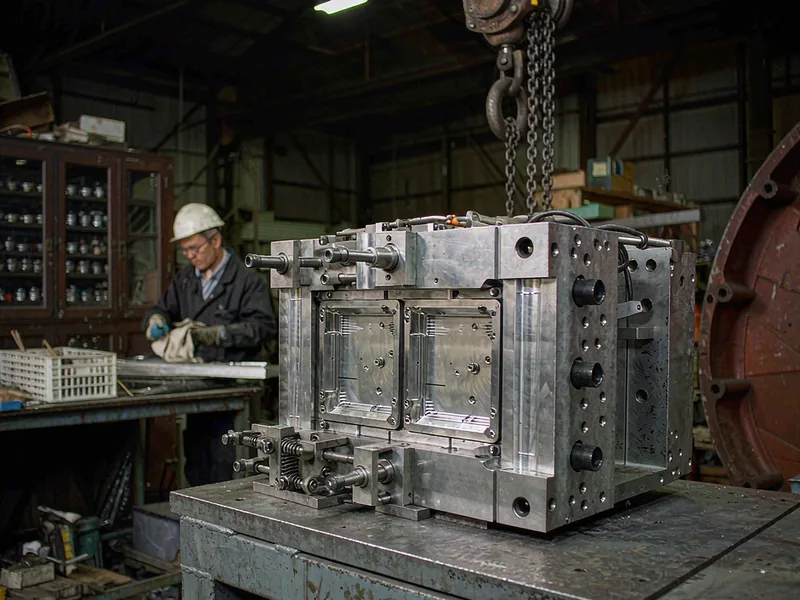
How HKX Answers These Questions
At HKX, the questions Chinese die caster buyers raise are answered in one document, before tooling starts. A new project begins with a DFM review at the Ningbo plant: wall thickness against flow length, draft by feature, gate position, ejector layout and machining stock are marked up on the customer drawing and returned within four working days. Drawings are read to ASME Y14.5, so a position callout means the same thing in Ningbo as it does in Detroit. The report names the engineer who signed it, so follow-up questions reach the person who made the call.
Die steel arrives with a mill certificate, and HKX keeps the certificate, the heat treatment record and the die plate photograph in the project file. Every shot is counted on the machine, which is why a die life statement can be supported rather than estimated. Cold chamber machines from 160 to 2,500 t are assigned by tonnage and shot size, and the machine number appears on the quotation, so capacity is a commitment rather than an intention.
Process control is recorded rather than described. Chemistry is confirmed by direct-reading spectrometry before each melt, with the silicon and copper window for ADC12 checked against the ingot certificate. Die temperature runs in zones on oil heaters, and the vacuum valve timing is set per die. Sealing faces on automotive housings are fluoroscopically scanned at 100%, film is pulled on a sampling basis, CMM datums come from the drawing, and pressure decay limits are agreed with the customer before the first lot.
Documentation follows the parts: first article report, control plan, material certificates, radiographic records and dimensional data, all tied to the heat number. The full sequence sits in the manufacturing process overview. HKX casts industrial gear reducer housings and automotive covers under ISO 9001 and IATF 16949, and the same document set is issued for both.
From Answers to a Scorecard
Twenty answers do not rank themselves. Convert them into a weighted score before the second meeting, and the comparison stops depending on who presents better. Weight tooling and quality heavily for a first program, and weight capacity and lead time heavily for a repeat program on an existing die.
| 类别 | Weight | What earns full marks |
|---|---|---|
| Tooling and ownership | 25% | Named steel with certificate, written warranty in shots, ownership clause and die plate in place |
| 过程能力 | 20% | Machine and tonnage named, cycle and cavity count justified, vacuum route stated |
| Quality system | 20% | PPAP level agreed, control plan supplied, porosity standard referenced, CMM data format shown |
| Communication | 15% | DFM turnaround in days, named engineer, one contact with a stated response time |
| Commercial terms | 12% | Scrap allowance stated, change rate published, milestone payment schedule |
| Exit and logistics | 8% | Die release terms, packaging drawing, repeat lead time in working days |
Evidence beside every score
Score each category out of five, multiply by the weight, and write one sentence of evidence beside every score. A supplier who scores well but cannot produce tooling documents has rehearsed the answers. One who scores moderately and hands over certificates, control plans and a die plate photo is usually the safer partner for a first program.
The questions Chinese die caster buyers ask most often cluster around tooling, which is why that category carries the heaviest weight. Walk the tool room, look at the die storage racks, and ask to see the maintenance log for a die that has run for three years. What you see there is the answer to question 4, whether or not anyone says it out loud.
经常问的问题
How many suppliers should I send this list to?
Three is usually enough to establish a range. Send the same twenty questions to each and require written replies before any quotation. Score unanswered gaps as zero rather than excluding the supplier.
Should I ask these questions before or after the RFQ?
Before, or attached to it. The questions Chinese die caster teams answer most reliably are the ones with a document behind them, and asking early lets a weak answer change the design instead of the schedule.
What if the supplier refuses to warrant die life?
Then price the die as a consumable and plan for replacement. A refusal is information, not an insult: some shops will not warrant life on a part with thin walls or difficult gating. Ask instead for the maintenance interval and the cost of a cavity insert replacement, and budget for it.
Is a lower price ever the right reason to choose?
Only when the answers are equivalent. A price gap between two equal suppliers usually maps to a scrap allowance, a die steel grade or a warranty exclusion. Once those are on the table, the gap explains itself.
Do I need to visit the factory in person?
A visit is worth more than any document set for tooling and capacity questions. If travel is not practical, ask for a live video walk of the tool room, the die storage area and the inspection room.
How do I verify certification scope?
Ask for the certificate and read the scope statement, not just the logo. Confirm that die casting and machining are inside the scope and that the certificate is current. The ISO standards catalog lists what each management system standard covers, which makes the scope line easier to read.
作者:HKX 工程团队
HKX — 宁波合信模具有限公司,一家铝压铸件 中国宁波的制造商,拥有 30 多年的工具 经验,内部加工和精加工,ISO 9001和IATF 16949认证,以及20多个国家的客户。
与 HKX 工程团队交谈
Send the drawing and the twenty questions together, and HKX will return written answers with the documents attached: DFM report, die steel certificate, tooling schedule, control plan and inspection method for each critical feature. These are the same questions Chinese die caster project teams should settle before a deposit, and they are answered here in writing rather than in a sales call. Nothing in that pack is a promise about a number in a catalog; it is the same planning material used on the shop floor. Buyers who compare suppliers on documents rather than on adjectives reach production with fewer surprises, and they usually spend less on change orders. To put the list in front of an engineer, contact our engineering team with the part number, the annual volume and the date you need samples.