What Is Annealing? Process, Types & Applications
Annealing is a heat treatment that softens metal, removes stress, and rebuilds its internal structure. You heat the part to a set temperature, hold it long enough for the structure to change, then cool it on a controlled schedule. The approach works on steel, aluminum, copper, and brass alike. Foundries use it to make castings machinable. Machine shops use it to reset parts that work-hardened during forming. What is annealing worth in a real plant? It lowers hardness so tools last longer, it removes stress so parts hold size, and it restores ductility so metal bends instead of cracking. This guide breaks down the cycle, the main types, and the places where annealing pays off. You will also learn where it differs from normalizing, tempering, and the aging steps used on cast aluminum.
Key Takeaways
- Annealing has three stages: heat to temperature, hold, then cool on a controlled schedule.
- The goal is soft, stress-free metal with a stable, uniform grain structure.
- Full anneal gives maximum softness; stress-relief anneal only removes residual stress.
- Aluminum castings usually get a low-temperature stress-relief anneal, not a full anneal.
- Slow cooling is what separates annealing from normalizing and quenching.
What Is Annealing and What Happens Inside the Metal
At its core, what is annealing asks is simple: how do you make hard, stressed metal soft and calm again? The answer is heat plus time. Heating gives atoms enough energy to move. They rearrange into new, strain-free grains. Those new grains replace the deformed ones that formed during casting, rolling, or machining.
Three things happen as the temperature rises. First, stress relaxes as dislocations untangle. Second, new grains nucleate and grow, a step called recrystallization. Third, if you keep heating, those grains grow larger. Bigger grains mean softer, more ductile metal, but also lower strength.
Cooling then decides the final structure. Slow cooling keeps the soft, stable grain structure you just created. Fast cooling locks in stress and can defeat the whole cycle. This is why furnace cooling is the norm for a full anneal.
So what is annealing doing to the grain structure, step by step? It replaces broken grains with clean ones, then lets them settle. Grain structure drives every property you measure later. A coarse, even grain set gives predictable ductility. A mixed structure gives scatter in hardness and elongation. The anneal is not only about softness. It is about making the metal behave the same way every time you cut, bend, or load it.
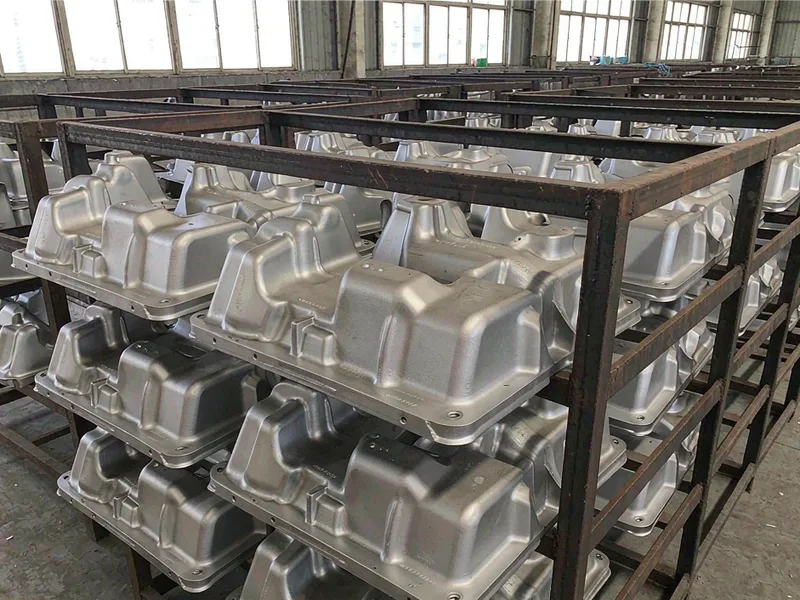
The Annealing Cycle: Heat, Hold, Cool
Every annealing schedule follows the same shape. You ramp up to the target temperature, hold for a set time, then cool at a controlled rate. Each stage has its own job, and each one can ruin the result if you rush it.
Heating rate matters for thick or complex parts. A fast ramp builds a temperature gap between the surface and the core. That gap creates stress instead of removing it. A slow, even ramp keeps the whole section together.
Hold time scales with section thickness, not just part weight. A thick boss needs longer at temperature than a thin wall. Cooling rate then sets the final hardness and grain size.
Atmosphere and fixturing matter just as much. Air inside the furnace can oxidize the surface or build scale, so many shops run a protective atmosphere or a controlled vacuum. Racks and fixtures hold parts flat while they sit at temperature. A part that sags in the furnace never comes back, no matter how good the schedule looks on paper.
| Type | Typical temperature | Purpose | Common materials |
|---|---|---|---|
| Full anneal | Just below melting, slow furnace cool | Softest structure, maximum ductility | Steel, aluminum |
| Process anneal | Below the lower critical temperature | Relieve work hardening between forming steps | Low-carbon steel, copper |
| Recrystallization anneal | 200–400 °C (aluminum) | Replace deformed grains with new ones | Aluminum, brass |
| Spheroidizing anneal | Around 700 °C, long hold | Round carbides for better machinability | High-carbon steel |
| Stress-relief anneal | 200–350 °C (aluminum) | Remove residual stress, stabilize size | Castings, weldments |
Types of Annealing and Where Each Fits
Full annealing produces the softest metal and the most uniform grains. It suits parts that must be formed or machined heavily afterward. The trade-off is time and energy, because furnace cooling is slow.
Process annealing sits lower on the temperature scale. It targets work hardening from bending, drawing, or rolling. When a part cracks on the second forming pass, a process anneal usually fixes it.
Stress-relief annealing avoids recrystallization entirely. It runs cool enough to leave the grain structure alone. The only goal is to relax locked-in stress. Machined castings and weldments use this type so they hold tolerance after cutting.
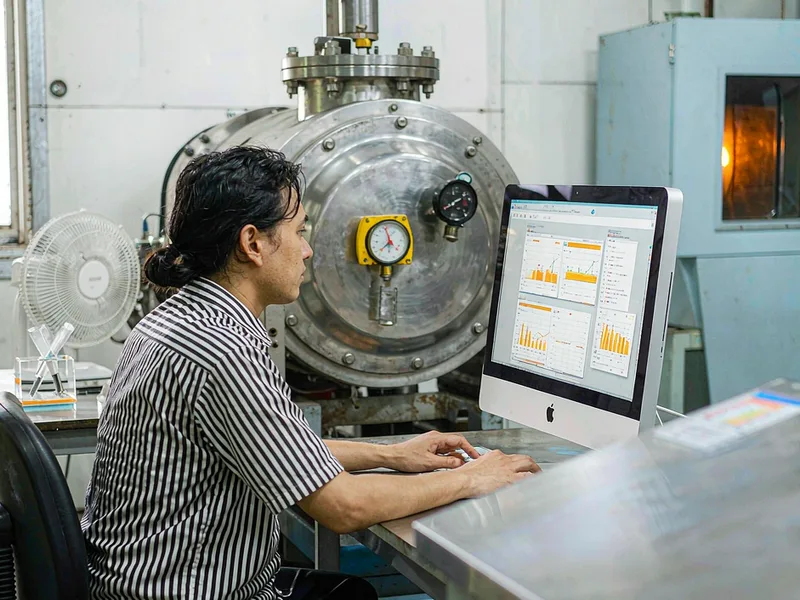
Applications in Castings and Machining
Castings arrive from the die with internal stress. Even cooling is not perfect, so thick and thin sections shrink at different rates. That leftover stress shows up later as warping during machining. A stress-relief anneal before finish cuts holds the part flat.
Aluminum die castings need special care. High-pressure castings trap gas, so a high-temperature anneal can blister the surface. Casters keep the soak low, usually between 200 and 350 °C, and hold it long enough to relax stress without expanding trapped gas.
Machining also benefits. Softer, uniform metal cuts cleaner, wears tools less, and produces fewer burrs. A shop that anneals between rough and finish passes often holds tighter tolerances with fewer reworks.
Energy and floor space set the real cost. A furnace run costs money whether it is full or half empty. Group parts of similar alloy and thickness into one load so a single schedule works for all of them. Mixing a thin bracket with a heavy housing forces one hold time, and one of them pays the price in scrap or extra cycle time.
Annealing vs Normalizing, Tempering, and Aging
These terms get mixed up, so keep them separate. Annealing softens metal and produces the most stable structure. Normalizing also heats steel above its critical temperature, but it cools in air. Faster cooling gives a finer grain and slightly higher strength than a full anneal.
Tempering follows hardening, not before it. You harden steel, then temper it to trade some hardness back for toughness. Aging is different again. It applies to metals like aluminum, where a low-temperature hold precipitates fine particles and raises strength instead of lowering it.
The choice comes down to your goal. Need soft and stress-free metal to machine? Anneal it. Need to keep hardness but add toughness? Temper it. Need more strength from a heat-treatable aluminum casting? Age it.
Written procedures keep the process repeatable. Record the ramp rate, the hold time, and the cooling method for each alloy you run. Without those records, a good result is hard to repeat and a bad one is hard to trace back to its cause.
External Links
- ASM International — the reference source for annealing temperatures, grain growth, and metallurgical fundamentals.
- ASTM B85 — standard specification for aluminum-alloy die castings, covering chemistry and mechanical properties.
- North American Die Casting Association (NADCA) — industry guidance on casting alloys, properties, and thermal treatment practice.
FAQ
What is annealing used for in manufacturing?
It softens metal so it machines or forms easily. It also removes leftover stress so parts hold their size after cutting. Foundries and machine shops both rely on it.
How long does an anneal take?
It depends on the alloy and the section thickness. Stress-relief anneals on aluminum castings can finish in a few hours. A full anneal with slow furnace cooling can take much longer.
Does annealing make metal stronger or weaker?
It makes metal softer and more ductile, so tensile strength drops. That softness is the point when you need to machine or form the part. If you need more strength, use aging instead.
Can you anneal an aluminum die casting?
You can, but keep it cool. High-pressure castings trap gas, so a hot soak blisters the surface. Most casters run a low stress-relief anneal between 200 and 350 °C.
What is annealing compared with normalizing?
No. Both heat steel above a critical temperature, but normalizing cools in air while annealing cools slowly in the furnace. Air cooling gives a finer grain and a bit more strength.