Replacing Zamak with Aluminum: Weight & Cost Trade-Offs
Zamak vs aluminum is the trade-off sheet every hardware buyer faces eventually. Zamak, the zinc alloy family behind most small die cast hardware, is heavy, dimensionally stable, and fast to cast. Aluminum is light, strong for its weight, and cheap per kilogram. Replacing one with the other is rarely a straight win. Weight drops sharply when you swap zinc for aluminum. Cost depends on the part, the volume, and what your current tooling already does well. This guide walks through both sides with real numbers. We cover the density and strength comparison, the cost drivers that decide payback, the applications where zinc still wins, and the checklist to run before you commit to new tooling. Read it before you ask your supplier to requote the part in aluminum. Ten minutes here can save you a very expensive mistake.
Key Takeaways
- Zinc weighs 2.4 times more than aluminum, so the same part drops roughly 60 percent in weight.
- Zamak carries higher yield strength per volume; aluminum wins on strength per kilogram.
- Zinc parts cycle faster, which offsets some of the metal cost.
- Zamak tolerates thinner walls and finer detail than aluminum in the same die class.
- Run the comparison at your annual volume, not at a per-kilogram metal price.
Why Teams Replace Zamak
Three pressures push teams toward the swap. First, weight targets. Electric vehicles and portable products count every gram. Second, metal price volatility. Zinc trades at a multiple of aluminum per kilogram, and buyers feel it on every heavy part. Third, part consolidation. Aluminum castings can carry bigger sections and integrate features that zinc hardware used to bolt on.
The push is real, but so is the pull back. Zinc casts in hot chamber machines that cycle faster and run with less machine tonnage. Its dies last longer because the melt is cooler. Before you replace anything, put both sides on one sheet.
Weight: The Numbers Behind the Swap
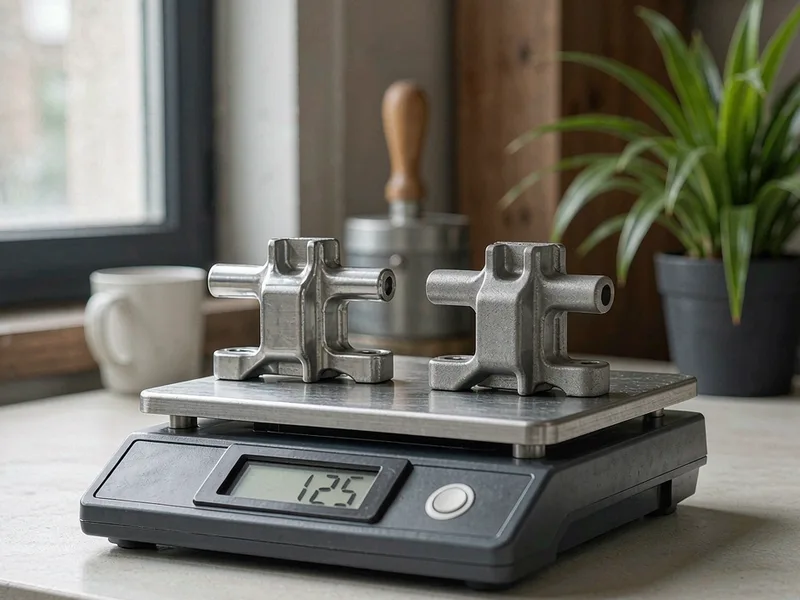
Density does most of the work. Zinc alloys weigh about 6.6 to 6.7 grams per cubic centimeter. Aluminum alloys sit near 2.7. The same volume of aluminum weighs about 41 percent of the zinc part. A 500 gram zinc bracket becomes roughly a 200 gram aluminum bracket of identical size.
| Property | Zamak 3 | Zamak 5 | A380 / ADC12 |
|---|---|---|---|
| Density (g/cm³) | 6.6 | 6.7 | 2.7 |
| Yield strength (MPa) | 199 | 262 | 159 |
| UTS (MPa) | 283 | 332 | 317 |
| Elongation (%) | 3.5 | 3.0 | 3.5 |
| Thermal conductivity (W/m·K) | 113 | 109 | 96 |
| Wall thickness, practical min (mm) | 0.5 | 0.6 | 0.8 |
Typical as-cast values per ASTM B86 (zinc) and ASTM B85 (aluminum). Same-geometry weight saving works out to about 55–60 percent.
Note the strength row. Zamak 5 yields at 262 MPa against A380’s 159 MPa. Per unit volume, zinc is stronger. Per kilogram, aluminum wins easily. That distinction decides which of your parts can actually slim down, because a lighter alloy may need ribs or thicker sections to carry the same load. This check belongs in every zamak vs aluminum weight study.
Cost: Metal Price, Cycle Time, and Machine Tonnage
Metal cost is the easy part of the zamak vs aluminum comparison. Zinc ingot costs several times more per kilogram, and your part weighs 2.4 times more in zinc. Add melt loss and returns, and material alone can dominate the piece price on a small, dense part. Scrap is a third factor. Aluminum forms more dross on its hotter melt, so recovery rates run a little lower.
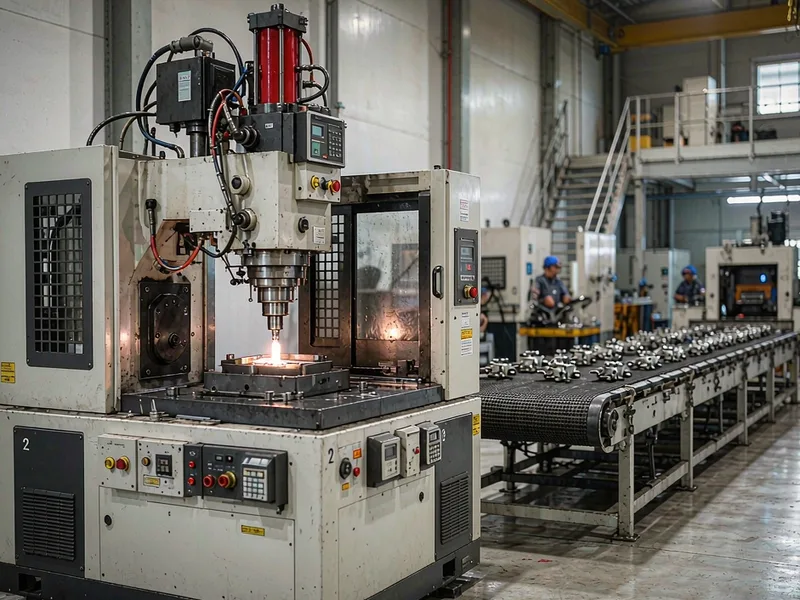
Cycle time pushes the other way. Zinc solidifies at a much lower temperature, so the die runs cooler and opens sooner. Hot chamber zinc cells routinely cycle 30 to 50 percent faster than cold chamber aluminum on comparable parts. Faster cycles mean more shots per hour and lower labor share per piece.
Machine tonnage matters too. Zinc needs less injection pressure per unit of projected area, so the same part runs on a smaller, cheaper machine. Aluminum requires cold chamber machines with higher tonnage and more maintenance. All of it lands in your hourly rate.
Where Zamak Still Beats Aluminum
Some parts should stay zinc. Small, intricate hardware — hinges, connectors, gears, decorative trim — exploits zinc’s strengths. The alloy fills 0.5 millimeter walls that aluminum cannot fill reliably. It holds sharp detail, takes plating beautifully, and machines clean threads without tapping aids.
Die life is another quiet advantage. A zinc die can run past a million shots before major rework, while an aluminum die typically needs attention far earlier. On long-running hardware, that amortized tooling difference can equal the metal premium.
Corrosion behavior can favor zinc as well. Zinc plating and chromate finishes protect small parts cheaply. Aluminum needs conversion coating or powder coat when it meets dissimilar metals. Your finishing route is part of the real comparison, so include it.
How to Run the Comparison on Your Own Part
Start with a same-function model, not the same shape. Aluminum needs slightly thicker walls to match zinc stiffness. Model that change honestly, then compare part weights, cycle estimates, and machine sizes side by side. A swap studied on the zinc drawing alone always looks better than it is.
Then multiply by volume. At a few thousand pieces a year, new aluminum tooling rarely pays back. At hundreds of thousands, the metal saving compounds fast. The crossover point usually sits where annual metal savings exceed the tooling amortization — and your supplier can calculate that line for you.

Finally, pilot the part. Run the aluminum version alongside the zinc one for a production batch. Check dimensions, finishing, and assembly fit before you scrap the old tool. We run this exercise for customers regularly — send us both drawings and the annual volume, and we will return the full zamak vs aluminum cost sheet.
External Links
- ASTM B85 — standard specification for aluminum-alloy die castings, the property baseline for the aluminum side of the comparison.
- North American Die Casting Association (NADCA) — design data covering both zinc and aluminum die casting processes and tooling life.
- International Organization for Standardization (ISO) — source of the ISO 8062 tolerance system used to compare castings across alloys.
FAQ
How much lighter is an aluminum part than a zinc one?
For the same envelope, about 55 to 60 percent lighter, because aluminum’s density is roughly 41 percent of Zamak’s. If the aluminum version needs thicker walls, the saving shrinks a few points but stays substantial.
Is zamak vs aluminum mainly a cost decision?
It is a system decision. Zinc charges more per kilogram and per part, but cycles faster, runs on smaller machines, and holds finer detail. Aluminum wins on metal price and weight. The winner depends on part size, wall thickness, and annual volume.
Can I keep the same tooling when switching to aluminum?
No. Zinc runs in hot chamber dies, while aluminum requires a cold chamber shot sleeve and plunger. Thermal balance, gate areas, and shrink factors all change. Plan for new tooling in any zamak vs aluminum conversion.
Which alloy is stronger, Zamak 5 or A380?
Zamak 5 yields at about 262 MPa versus A380’s 159 MPa per unit volume, so zinc is stronger by volume. By weight, aluminum delivers more strength per kilogram, which is why lightweight designs favor aluminum even at lower absolute yield.
What breaks first when a zinc part is converted to aluminum?
Usually detail and finish. Thin decorative ribs, sharp corners, and as-cast threads that zinc fills easily become marginal in aluminum. Zinc also carries plating finishes that aluminum cannot match cheaply. Review minimum walls, fillets, and the finishing route before the tooling is cut.