Die Casting Alloy Selection Matrix: Strength, Castability & Cost
Die casting alloy selection shapes every downstream decision in your program. It sets the strength your part can carry, the walls your die can fill, the corrosion it survives, and the price you pay per kilogram. Pick the wrong family and no amount of process tuning rescues the job. Pick well and the rest of the project gets easier. This guide lays out the matrix we use when a customer sends a drawing and asks what to cast it in. You get real numbers, the trade-offs behind them, and the questions to settle before tooling starts. Alloy choice is not a materials-lab exercise. It is a commercial decision. Every grade on the market trades one property for another. Our job is to show you which trade fits your part.
Key Takeaways
- A380 and ADC12 fit most general parts: strong, cheap, and easy to cast.
- A360 trades a little fluidity for far better corrosion resistance.
- B390 buys wear resistance with ductility — expect under 1 percent elongation.
- High-ductility grades like Silafont-36 need vacuum assist and a heat-treat cycle.
- Metal price is only part of the bill. Cycle time and scrap often decide the winner.
Start With the Property That Cannot Bend
Every project has one requirement that refuses to compromise. A housing that must pass a leak test cannot use a porous grade. A bracket bolted under a truck cannot use a copper-heavy alloy. A heat sink must move heat, so thermal conductivity leads the list. Find that requirement first. It cuts your candidate list in half before price enters the room.
Designers often start from the alloy they used last time. That habit feels safe and costs money. A grade that worked for a pump body rarely suits a thin-wall display frame. Fluidity, hot strength, and corrosion behavior pull in different directions. Die casting alloy selection is the act of ranking those properties for one specific part.
Write the ranking down before the kickoff meeting. List strength, ductility, corrosion, wear, thermal performance, and finish in order of importance. Then score each grade against that order. A written ranking keeps the discussion on facts instead of opinions.
Strength and Ductility Across the Common Families
A380 and ADC12 are the same alloy family under two naming systems. Both deliver about 317 MPa ultimate tensile strength and 3.5 percent elongation. They cast easily, machine cleanly, and cost the least per kilogram. For brackets, housings, and covers, they win by default.
A360 raises yield strength and adds real corrosion resistance. Its chemistry swaps some copper for magnesium. Copper drives most of the corrosion loss in aluminum castings, so removing it pays off outdoors. You give up a little fluidity and pay a small premium in return.
B390 pushes wear resistance to the top of the list. Silicon near 17 percent makes it hard and stable at temperature. Ductility drops below 1 percent, so it suits pistons, pump plates, and wear surfaces rather than parts that bend. The structural grades sit at the other end. Silafont-36 and similar AlSi10MnMg alloys reach 8 to 12 percent elongation, but only with vacuum assist and a heat-treat cycle.
Castability Decides What the Die Can Actually Fill
Castability covers fluidity, hot cracking, die soldering, and shrinkage. Fluidity sets how far metal travels before it freezes. A380 flows farther than any structural grade. That matters when your part has thin ribs or long flow paths. The same property explains why engineers reach for A380 on high pressure die casting jobs with tight walls.
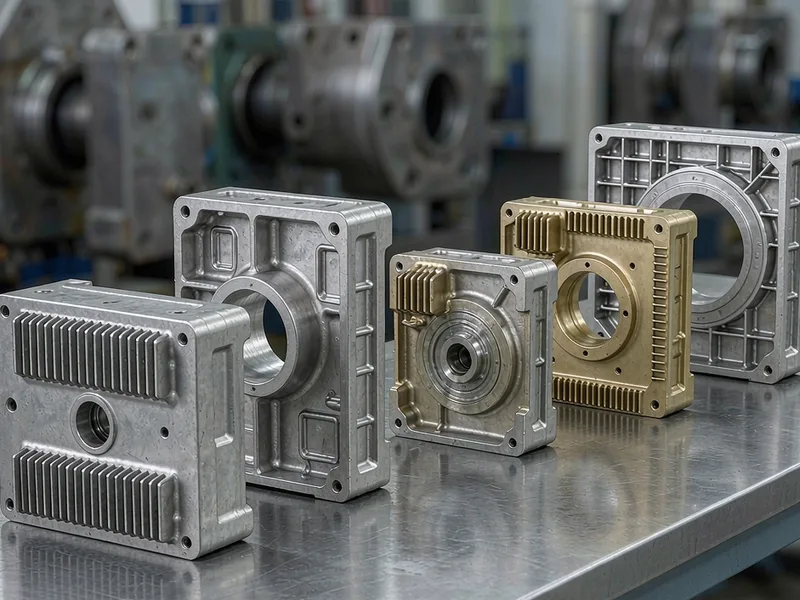
Hot cracking is subtler. Alloys with a narrow freezing range lock up gradually and resist tearing. Iron content helps here. A380 carries enough iron to avoid most hot tears. Low-iron structural alloys crack more readily, so they demand careful gate design and balanced filling.
Die soldering is the third trap. Aluminum sticks to steel at high temperature. Some grades stick harder than others, and that shortens die life. A380 gets protection from its iron content. Purer low-iron grades need die surface treatment and tighter thermal control.
Cost Is More Than the Metal Price
Buyers compare metal price per kilogram and stop there. That single number hides most of the real cost. Cycle time, scrap rate, die life, and finishing all move with the alloy you pick.
A grade that freezes faster runs a shorter cycle. A grade that fills reliably produces less scrap. A grade that machines cleanly cuts secondary operations. Structural grades add a heat-treat furnace, a vacuum system, and extra floor space. Those costs do not appear on a metal price sheet.
| Alloy | UTS (MPa) | Yield (MPa) | Elongation (%) | Castability | Cost index |
|---|---|---|---|---|---|
| A380 / ADC12 | 317 | 159 | 3.5 | Excellent | 1.00 |
| A383 | 310 | 152 | 3.5 | Excellent | 1.00 |
| A360 | 317 | 172 | 3.5 | Good | 1.05 |
| A413 (AlSi12) | 296 | 145 | 2.5 | Good | 1.00 |
| B390 | 276 | 241 | Under 1 | Fair | 1.10 |
| Silafont-36 (A365) | 240 | 124 | 8–12 | Fair (vacuum) | 1.30 |
Typical as-cast properties per ASTM B85. Cost index uses A380 = 1.00 and covers metal, melt loss, and handling.
Read the table as a menu, not a ranking. A higher cost index is fine when it removes a machining step or kills a leak reject. The cheapest choice is the one that ships your part at the lowest total cost.
The Matrix We Use on New Projects
We open every quote with four questions. What load must the part carry? Where will it live? How thin are the walls? What is the annual volume? Those four answers narrow the field to two or three grades.
Then we run fill simulation on the leading candidate. Simulation shows fill time, flow front temperature, and trapped air. A design that is marginal in A380 will fail in a low-iron grade. Better to learn that in software than in a hardened die.
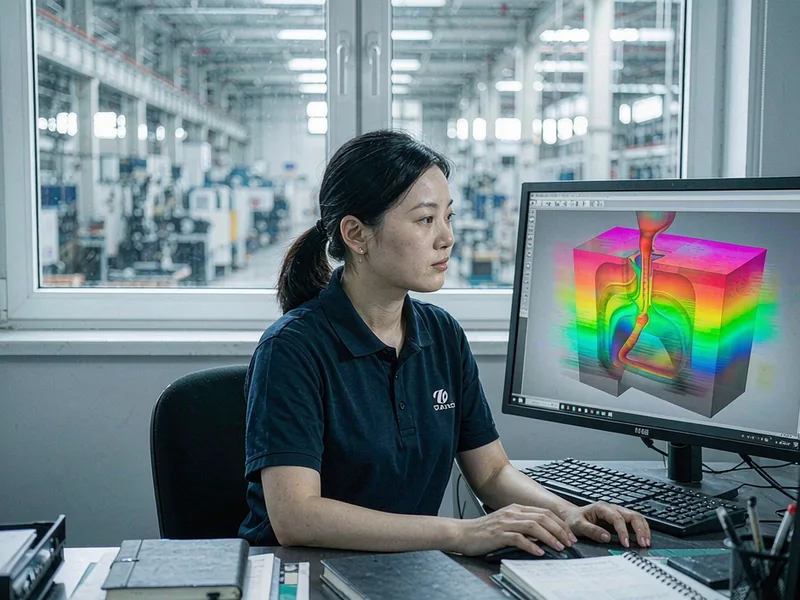
Finally we return a short matrix with your drawing. It lists each candidate with its strengths, risks, and cost index. You choose the trade you want. If you want a second opinion on your next part, send us the drawing and the load case.
External Links
- North American Die Casting Association (NADCA) — publishes alloy property data and the design guides that underpin most die casting practice.
- ASTM B85 — the standard specification for aluminum-alloy die castings, covering chemistry and mechanical property requirements.
- International Organization for Standardization (ISO) — home of ISO 8062, the castings tolerance system used across global supply chains.
FAQ
What matters most in die casting alloy selection?
Start with the requirement your part cannot fail. If it must hold pressure, prioritize low porosity. If it lives outdoors, prioritize low copper. Strength usually matters less than designers expect. Rank every property, then match grades to the ranking.
Is A380 the same as ADC12?
For practical purposes, yes. They sit in the same family with nearly identical properties. Naming follows different regional standards, so treat them as interchangeable on most drawings unless your specification says otherwise.
Which aluminum casting alloy resists corrosion best?
Low-copper grades such as A360 and A413 outperform A380 in salt and moisture. Copper improves strength and fluidity but speeds up corrosion. When the part sees road salt or marine air, accept the small cost premium and drop the copper.
When should I choose a structural die casting alloy?
Choose one when the part must absorb energy, bend without cracking, or be welded. Ductile grades reach 8 to 12 percent elongation. They require vacuum assist, tighter process windows, and heat treatment. That added cost only pays off when ductility is a real requirement.
Does die casting alloy selection change the tooling?
Yes. Lighter, more fluid grades need different gate areas and venting than low-iron structural grades. Die steel, surface treatment, thermal layout, and draft can all shift with the alloy. Lock the alloy before you cut steel to avoid a costly rework later.