Iron in Die Casting Alloys: Why Fe Content Matters
Iron in aluminum usually means trouble. In die casting, it is a working tool. Aluminum die casting iron content must sit inside a tight window, and two failures set that window. Too little iron and molten aluminum solders to the steel die, tearing the surface shot after shot. Too much iron and hard, brittle needles form inside the casting, cutting tool life and fatigue strength. The right level keeps the die alive while the casting stays strong and machinable. This guide covers why iron matters, the numbers we target for A380, ADC12, and A360, how recycling adds iron, and how we verify chemistry on every heat. You will leave with the working limits we use on real production runs.
Key Takeaways
- The die needs iron. The casting usually does not.
- A380 and ADC12 typically run 0.8–1.3% Fe. A360 runs lower.
- Below about 0.6% Fe, soldering and die erosion climb fast.
- Above about 1.5% Fe, hard phases reduce ductility and machining life.
- Every recycling loop raises iron, so dilution control matters daily.
Why Iron Sits in Every Die Casting Alloy
Pure aluminum has almost no iron. Die casting alloys add it on purpose. The reason is simple. Aluminum loves steel too much. At 650 °C, liquid aluminum dissolves the die surface and welds to it. The bond is strong enough to pull die steel away at ejection.
Iron stops that. It reacts with aluminum first and builds a thin, stable skin at the die interface. That skin blocks further soldering. Without iron, a die casting cell cannot run for long before the die is damaged.
So iron is a process element, not just a metallurgical one. It protects the tool. The trade is that iron also forms its own hard particles inside the metal. Those particles do not care about your machining budget. That is the tension behind every aluminum die casting iron content target we set.
The Working Iron Window by Alloy
The table below shows the ranges we use at volume. These are process windows, not specification limits. A good melt shop holds the middle of each range and adjusts with dilution or addition.
| Alloy | Typical Fe range | Risk below range | Risk above range |
|---|---|---|---|
| A380 / ADC12 | 0.8–1.3% | Die soldering, erosion | Low ductility, tool wear |
| A383 | 0.8–1.3% | Sticking, cold shuts | Hard phases, poor finish |
| A360 | 0.4–0.7% | Soldering if very low | Weaker corrosion resistance |
| AlSi10Mg | 0.5–0.8% | Die sticking | Lower elongation |
| Secondary 226 | 0.7–1.1% | Erosion, die damage | Machining tool wear |
*Ranges reflect common practice for high pressure die casting. Confirm against ASTM B85 chemistry limits for your grade.
What Too Little Iron Does to the Die
When iron drops, the die suffers first. The melt wets the steel and sticks. Each ejection then peels a little die material away. Over thousands of shots, the parting line washes out and the casting grows flash.
Soldering also shows up on the casting. You see rough, built-up patches on the surface, often near gates where the metal is hottest. Those patches fail cosmetic specs and need extra finishing work.
Low iron is not only a die problem. Thin sections can cold-shut earlier because the alloy is less fluid. The melt also loses some resistance to erosion at high gate velocity.
The fix is usually a small addition. A few hundred grams of a low-carbon iron master alloy in a 500 kg furnace lifts chemistry quickly. We add, wait one heat, then re-test the spectrum before running the next batch.
What Too Much Iron Does to the Part
Too much iron brings its own defects. Iron forms AlFeSi needles and sludge particles. The needles are hard and brittle. They act as tiny knives inside the metal, so a crack finds them and runs.
The result is lower elongation and lower fatigue strength. A tensile bar that should stretch 3 percent may fail near 1 percent. For structural castings, that loss matters a lot.
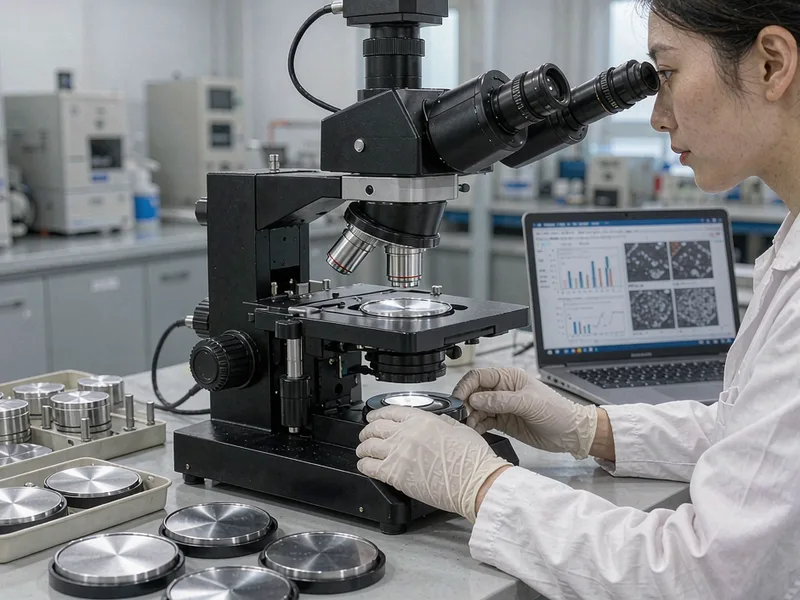
High iron also hurts machining. The hard particles wear cutting edges fast. Insert life drops, and you spend more on tools and downtime. Surface finish gets worse because the particles pull out of the cut face.
There is another cost. Iron raises the melting range, so the alloy needs more heat. Extra heat means a longer cycle and higher energy use on every shot.
How Recycling Adds Iron
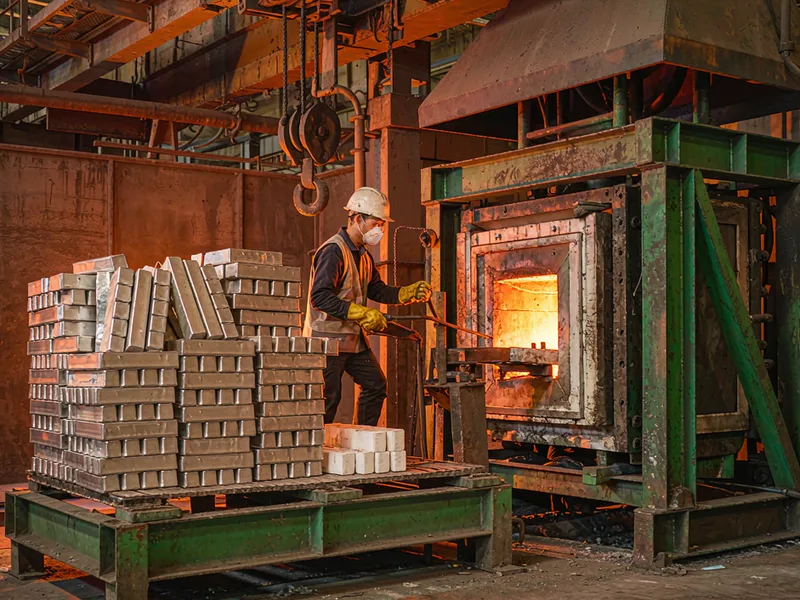
Every time aluminum passes through the loop, it picks up iron. Dies, shot blasting, conveyor wear, and scrap sorting all add a little. Foundries that run a heavy recycled charge see iron drift upward week by week.
The counter is dilution. We blend higher-iron recycled metal with low-iron primary or with clean internal returns. Then we re-check the spectrum before the next charge.
This is where aluminum die casting iron content becomes a daily control task, not a one-time spec. A good furnace operator watches the trend, not just the single reading.
How We Verify Iron on the Floor
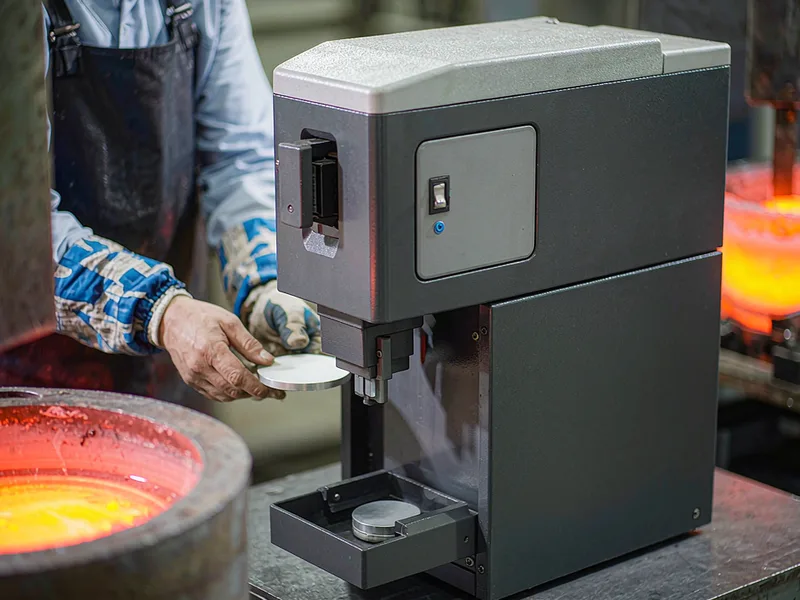
We test every heat before it reaches the machine. An optical emission spectrometer reads iron, silicon, copper, and the rest in under two minutes. The operator compares the result to the target window for the running alloy.
Out-of-range metal does not go to the die. It goes to a holding furnace for correction. We add iron master alloy or dilution metal, stir, and re-test. Only in-window metal is released to production.
We also keep a chemistry log for each heat. If a customer asks for traceability, we can show the exact iron reading for the metal in their parts.
Design and Sourcing Notes
If you are choosing an alloy, remember what iron does. A360 and 413 resist corrosion because they hold less iron. A380 tolerates more iron because it is built for general purpose work.
Secondary alloys carry more iron than primary. They also cost less. For many parts, the higher iron is fine. For thin walls, long flow paths, or high-toughness parts, you may prefer a tighter limit.
Ask your supplier for the chemistry range up front. A supplier who gives you only a single number per element is not sharing the window that decides whether your parts run clean.
When in doubt, send us the drawing and the alloy callout. We will tell you which iron window fits your part, your die, and your volume. Then we hold that window on every heat.
External Links
- ASTM B85 — the standard specification for aluminum-alloy die castings, which lists the chemistry and mechanical property limits for each grade.
- North American Die Casting Association (NADCA) — industry guides on alloy selection, melting practice, and die life for high pressure die casting.
- ASM International — reference handbooks on aluminum alloy metallurgy, including the role of iron in intermetallic phases.
FAQ
Why does aluminum die casting iron content matter so much?
Iron does two opposite jobs. It stops liquid aluminum from soldering to the steel die, but too much of it forms hard, brittle particles inside the part. The right window protects both the die and the casting.
What is a typical iron level for A380?
A380 usually runs between 0.8 and 1.3 percent iron. Staying near the middle keeps the die protected without pushing ductility and machining life down.
Can I lower iron to improve ductility?
You can, but only to a point. Drop below about 0.6 percent and the melt starts sticking to the die. Use A360 or a low-iron alloy if you truly need more elongation, and expect tighter process control.
Does recycled metal change iron content?
Yes. Every recycling loop adds a little iron from tooling, blasting, and handling. We dilute with primary or clean returns and re-test each charge to keep the trend flat.
How do you test iron in the melt?
We use optical emission spectrometry on every heat. A reading takes under two minutes, and out-of-range metal stays in the holding furnace for correction before it reaches the die.