AZ91D magnesium: Properties, Die Casting & Corrosion Limits
Weight is the last easy win left in most product programs, and AZ91D magnesium is where many teams find it. At 1.81 g/cm³, this is the lightest structural metal you can die cast — roughly 35% lighter than aluminum for the same volume. It casts thin walls, shields electronics, and machines faster than almost anything else in the shop. It also carries real limits: it corrodes badly next to bare steel, it needs protective gas during melting, and it loses strength above 120 °C. This guide covers the chemistry behind the “D” designation, the property numbers you can actually design to, the process rules for die casting it well, and the corrosion limits that decide whether it survives in your environment.
Key Takeaways
- AZ91D magnesium is the highest-purity and most widely used magnesium die casting alloy worldwide.
- Density of 1.81 g/cm³ makes parts about 35% lighter than the same aluminum casting.
- Typical as-cast properties: about 230 MPa tensile, 160 MPa yield, and 3% elongation.
- The “D” suffix means controlled copper, nickel, and iron — the foundation of its corrosion resistance.
- Galvanic contact with steel fasteners is the top failure mode; isolation hardware and coatings are mandatory.
What the “D” in AZ91D Means
The name spells the chemistry. “A” stands for aluminum, “Z” for zinc, and “91” marks roughly 9% aluminum with 1% zinc. AZ91D magnesium carries 8.3–9.7% aluminum, 0.35–1.0% zinc, and 0.15–0.5% manganese per ASTM B94, with zinc and manganese refining the grain and supporting strength. The alloy is magnesium as the balance, which is what keeps the density so low.
The “D” is the part that earns respect. Its predecessor, AZ91C, suffered ugly corrosion in salt environments because trace iron, nickel, and copper formed microscopic cathodes inside the metal. The D grade caps those impurities hard — copper at 0.015% maximum, nickel at 0.002% maximum — and improves salt-spray performance by roughly an order of magnitude. That single chemistry change turned magnesium from a niche metal into a production alloy for cars and electronics.
Watch the suffix when you cross quotations. AZ91C still appears on legacy drawings, and AZ91E serves sand casting. If a supplier quotes “AZ91” without a letter, ask which one you are buying, because the corrosion difference is not subtle.
Properties You Can Design To
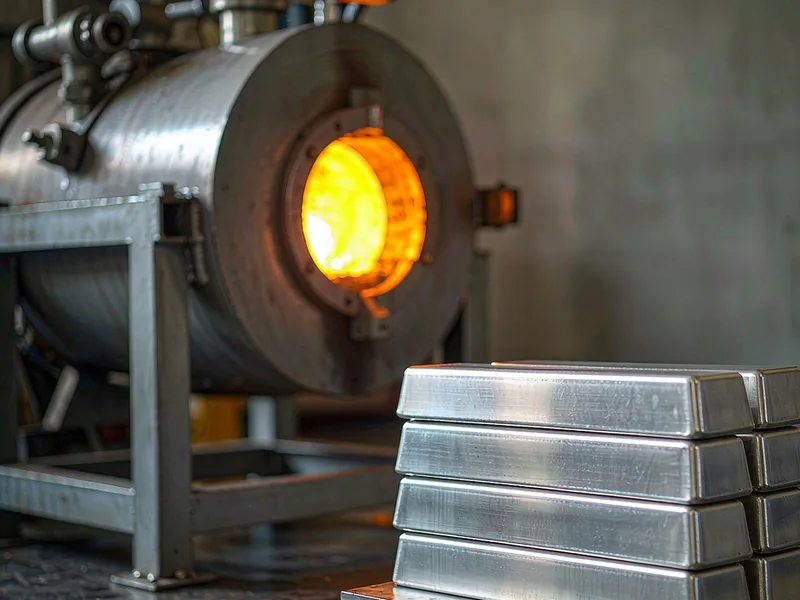
The table below lists typical as-cast values for a high-pressure die casting in AZ91D, drawn from ASTM B94 and industry handbook data. Use them for feasibility work, then verify critical values on parts from your own tooling.
| Property | AZ91D, as-cast (HPDC) |
|---|---|
| Density | 1.81 g/cm³ |
| Tensile strength | ~230 MPa |
| Yield strength | ~160 MPa |
| Elongation | ~3% |
| Elastic modulus | ~45 GPa |
| Hardness | ~83 HB |
| Solidus temperature | ~470 °C |
| Thermal conductivity | ~65 W/m·K |
Typical handbook values. Thick sections and slow-cooling features test lower than separately cast bars.
Two rows deserve attention. The elastic modulus of AZ91D magnesium sits near 45 GPa, so stiffness comes from rib geometry, not from the material. And the solidus near 470 °C foreshadows the service-temperature ceiling discussed below — strength fades well before the metal approaches melting.
Die Casting AZ91D: Process Notes
Casting AZ91D magnesium runs on cold chamber machines, and the melt needs cover gas the entire time. Molten magnesium ignites in open air, so foundries protect the melt surface with SF6 alternatives or SO2 and keep the furnace sealed and dry. A supplier who cannot describe their melt protection in detail is not a supplier you want for this alloy.
In return for that discipline, the process pays you back. Magnesium’s low heat content shortens cycle times well below comparable aluminum parts, and thin walls of 1.0–2.0 mm fill cleanly on compact parts. Draft angles run small, surfaces come out clean, and die life is long because the alloy runs gentler on tool steel than aluminum does.
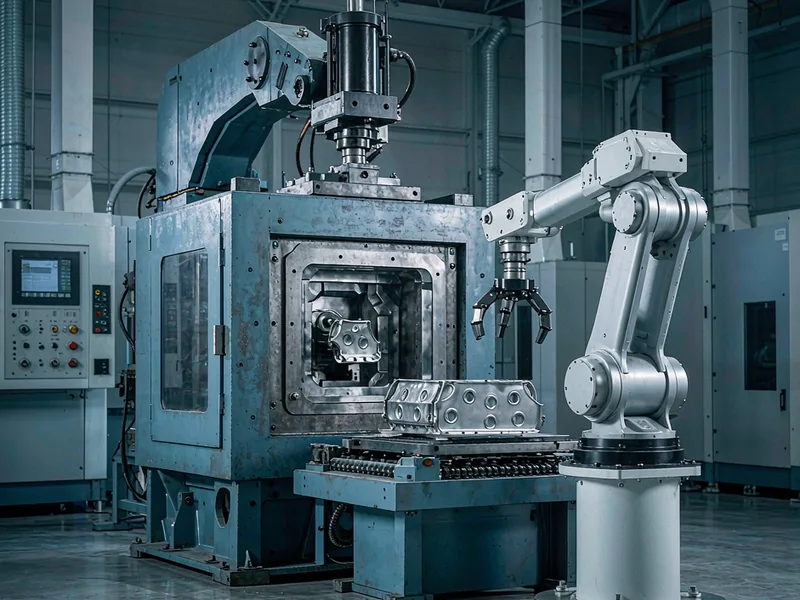
Machining is another quiet advantage. The alloy cuts faster than aluminum with sharp carbide tooling, though fine chips demand dry collection and Class D fire awareness. Shops set up for it routinely hold tight tolerances on machined datums without slowing the line.
Corrosion Limits and Galvanic Risk
On its own, high-purity AZ91D resists atmosphere and mild salt exposure reasonably well, especially under an e-coat or powder coat. Chloride environments eventually pit it, so continuous marine spray or road salt demands a sealed coating system and drainage-friendly design. The alloy does not rust through, but uncoated service in aggressive chloride is not realistic.
The serious risk is galvanic. Bolt AZ91D magnesium directly against bare steel and the small cathode/large anode geometry drives rapid attack at every fastener. Isolate every joint: coated fasteners, sealed washers, insulating sleeves, and drainage paths. Aluminum hardware is a far gentler partner, and stainless with isolation works where loads demand it.
Temperature completes the limits list. Sustained service above about 120 °C lets creep loosen bolted joints and slowly distort loaded features. Under that ceiling, behavior is dependable; above it, you should be quoting AE44 or an aluminum alloy instead of pushing this one past its comfort zone.
Where AZ91D Makes Sense — and Where It Does Not
The alloy earns its keep wherever every gram matters and loads stay moderate. Steering wheel armatures, gearbox and clutch housings, seat frames, laptop and display frames, and power tool bodies dominate the application list. All of them benefit from the same package: thin walls, short cycles, light weight, and good EMI shielding for free.
Step back when the service case breaks the rules. Continuous heat above 120 °C, permanent immersion in chloride solutions, or heavy sections where weight savings shrink all point away from AZ91D magnesium toward aluminum. So does a design full of bare steel inserts with no budget for isolation hardware — the corrosion bill arrives either way, so design it out or pick another alloy.
If you have a drawing that might fit magnesium, send it over. We will check the wall sections, the fastener interfaces, and the thermal environment, then tell you honestly whether AZ91D magnesium beats your current aluminum part on weight, cost, and risk.
External Links
- ASTM B85 — ASTM’s die casting specifications hub, the same committee structure behind ASTM B94, the magnesium casting specification.
- ASM International — handbooks covering magnesium alloy data, corrosion mechanisms, and finishing practice.
- North American Die Casting Association (NADCA) — design and safety resources for magnesium die casting operations.
FAQ
What does the “D” mean in AZ91D?
It marks the high-purity version of the AZ91 chemistry, with copper held to 0.015% maximum and nickel to 0.002% maximum. Those limits remove the micro-galvanic impurity phases that caused heavy corrosion in the older AZ91C grade.
Is AZ91D magnesium corrosion resistant?
Yes, for a magnesium alloy — the high-purity chemistry resists atmosphere and mild salt exposure well. Coated parts pass standard salt-spray programs, but bare service in chloride-rich environments and any direct contact with steel remain unacceptable.
Can AZ91D parts use steel fasteners?
Only with isolation. Use coated fasteners, insulating washers, and sealed joints so the magnesium never sits in wet electrical contact with steel. Designed correctly, bolted AZ91D assemblies pass years of vehicle and outdoor service.
What is the maximum service temperature for AZ91D?
Plan sustained service up to about 120 °C. Above that range, creep relaxes bolted joints and loaded bosses. Higher-temperature programs move to AE44, AS41, or aluminum alloys.
How much lighter is AZ91D than aluminum?
About 35% by volume — 1.81 g/cm³ versus roughly 2.7 g/cm³ for A380. Because magnesium walls and ribs differ from aluminum designs, real finished parts typically come out 25–30% lighter.