A360 Aluminum: When Corrosion Resistance Outranks Castability
Most die casting programs start with A380 or ADC12 out of habit. Then a part goes outdoors, meets road salt, or sits in a wash-down zone, and the corrosion starts. That is the moment A360 aluminum alloy earns its place. A360 is a low-copper Al-Si-Mg grade. It gives up a little hardness to buy a lot of corrosion resistance and ductility. For the right part, that trade pays off for years. This guide explains what makes A360 different, where it wins, and how to design for it without losing castability. If your part faces moisture, salt, or long outdoor life, read on before you default to A380 again.
Key Takeaways
- A360 aluminum alloy is a low-copper, Al-Si-Mg die casting grade built for wet and outdoor service.
- Low copper is the whole point: it removes the element that drives most pitting and galvanic attack.
- A360 pours as well as A380 and often fills thin walls even better.
- You give up some hardness and strength, so dry, highly loaded parts still favor A380.
- Specify A360 for housings, brackets, and hardware exposed to salt, moisture, or wash-down.
Why Copper Controls Corrosion
Copper is the enemy of corrosion resistance in aluminum. It sits above aluminum in the galvanic series, so a copper-rich phase becomes a cathode. Around it, the aluminum becomes an anode and dissolves. Drop by drop, that reaction pits the surface.
A380 carries 3 to 4 percent copper, which makes it strong and hard. It also makes it the wrong choice for salt spray. A360 cuts copper to about 0.6 percent or less. With less copper, there is far less galvanic drive, so pitting slows sharply.
The magnesium in A360 adds strength without hurting corrosion resistance. That balance is rare. It lets A360 keep most of A380’s mechanical performance while shedding the corrosion penalty. For a wet environment, that combination is exactly what you want.
Salt spray testing shows the gap clearly. Run A380 and A360 side by side for a few hundred hours and the difference is obvious. A380 develops white corrosion products and pits. A360 stays far cleaner. That result is why marine and outdoor buyers reach for the low-copper grade.
A360 Aluminum Alloy: Properties and Trade-offs
The table compares A360 against A380 on the points that decide most projects. Values are typical for die cast test bars. Your casting may differ with section size and process control.
| Property | A360 | A380 |
|---|---|---|
| Copper content | ≤0.6% | 3.0–4.0% |
| Silicon content | 9.0–10.0% | 7.5–9.5% |
| Corrosion resistance | High | Moderate to low |
| Tensile strength | ~315 MPa | ~324 MPa |
| Yield strength | ~165 MPa | ~160 MPa |
| Elongation | ~3.5% | ~3.0% |
| Hardness | ~75 HB | ~80 HB |
| Fluidity | Excellent | Very good |
The numbers are close, and that is the point. A360 loses a few points of hardness and keeps almost everything else. What it gains is service life in wet conditions. For many buyers, that trade is worth far more than the hardness gap.
Cost runs a little higher than A380. The alloy is less common, so supply and price follow a smaller market. On a corrosion-critical part, the premium is small next to the cost of a field failure or a coating step.
Fluidity deserves attention too. A360 sits near a eutectic silicon level, so it flows a little better than A380. Better flow means fewer cold shuts on thin walls and long runners. Shops that pour both grades often report cleaner fill on A360, especially on thin cosmetic surfaces.
Where A360 Wins on Real Parts
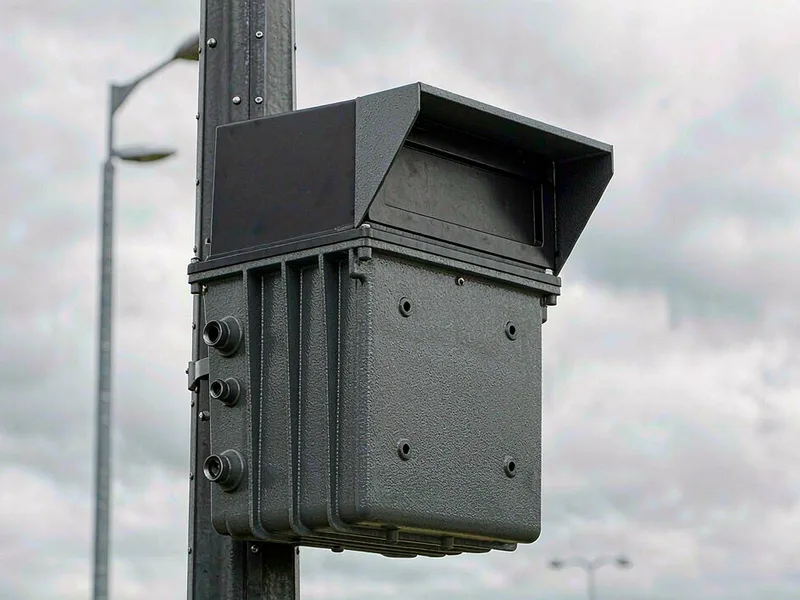
Outdoor housings are the classic case. Electrical enclosures, signage frames, and lighting bodies all face rain and temperature swings. A360 resists the surface attack that dulls A380 over time. That keeps the finish and protects the electronics inside.
Marine hardware is the second strong fit. Boat fittings, pump housings, and dock brackets live in salt air. Standard A380 pits quickly there. A360 aluminum alloy slows that attack and extends replacement intervals.
Wash-down equipment rounds out the list. Food, dairy, and chemical plants spray parts with water and cleaners daily. A360 tolerates that routine better than any high-copper grade. It also avoids many of the coating steps that A380 parts need to survive.
Telecom and solar hardware also fit the pattern. These parts sit outside for decades and rarely get maintenance. A360 keeps its surface through sun, rain, and temperature cycling. That reliability lowers warranty claims and keeps antennas and mounts working after years of exposure.
Design and Process Notes for A360
Design rules barely change from any die casting grade. Keep walls uniform and ribs generous. Cored bosses still beat solid ones. The one adjustment is machining stock. A360 is softer, so add a little material where you will cut threads or bores.
Machining needs sharp tools and steady feeds. Low copper makes A360 slightly gummy, so dull cutters smear instead of cutting. Plan for higher insert wear and a clean chip load. The finish is excellent once the tooling is right.
A360 does not accept most heat treatments in the high pressure die casting process. Trapped gas blisters the part when you heat it. If you need extra strength, add ribs and bosses instead of chasing a T6 cycle. Cast it right and the as-cast properties do the job.
Cycle time stays close to A380. The two alloys share a similar melting range and solidification window. Your existing die and process settings usually carry over with small tweaks. That near drop-in behavior is a big reason A360 upgrades are easy on an existing line.
Finally, keep chemistry tight. Copper can creep up through scrap and cross-contamination. A quick spectrometer check each shift protects the very property you chose A360 for. Lose control of copper and you lose the corrosion benefit.
Coating choice matters as well. A360 often skips anodizing or painting because it already resists attack. When a client still wants color, powder coat bonds well to the clean surface. You save the extra prep steps that high-copper grades need. That saving offsets part of the alloy premium over the life of the program.
External Links
- North American Die Casting Association (NADCA) — alloy selection and design guidance covering A360 and other die casting grades.
- ASTM B85 — standard specification for aluminum-alloy die castings, including A360 chemistry and properties.
- ASM International — materials data source for comparing corrosion behavior across aluminum casting alloys.
FAQ
What is A360 aluminum alloy used for?
A360 suits parts exposed to moisture, salt, or wash-down. Common uses include outdoor housings, marine hardware, pump bodies, and fittings. Anywhere A380 would corrode, A360 is the upgrade.
Is A360 stronger than A380?
They are close. A380 is slightly harder and a touch stronger in tension. A360 wins on ductility and corrosion resistance. For wet service, that balance usually matters more than raw strength.
Why does A360 aluminum alloy resist corrosion so well?
It carries very little copper, near 0.6 percent or less. Copper drives galvanic pitting in aluminum. With copper removed, the alloy resists salt spray and moisture far better than high-copper grades.
Can A360 be heat treated?
Not in standard high pressure die casting, because trapped gas causes blistering. Use thickness, ribs, and geometry for strength instead. Gravity and low-pressure cast A360 parts can take a T6 cycle.
Does A360 cost more than A380?
Usually yes. It is a less common grade, so supply and pricing are tighter. Push the extra cost against the value of avoiding coatings or field failures on a corrosion-critical part.