A380 Aluminum Alloy: The Workhorse of Die Casting
A380 aluminum alloy is the grade most high pressure die casters reach for first. It balances strength, fluidity, thermal conductivity, and cost better than almost any other aluminum grade. That balance is why A380 shows up in engine brackets, electronics housings, power tools, and countless industrial parts. This guide covers what A380 is, how it compares to nearby grades like ADC12 and A383, and when to pick it over the alternatives. We also explain why it machines well, how it handles finishing, and what to watch for in thin walls. If you are specifying a die casting alloy, these are the numbers and rules you need. Read on for the composition table and the selection guidance we use on live programs.
Key Takeaways
- A380 aluminum alloy is an Al-Si-Cu grade built for high pressure die casting at volume.
- Typical tensile strength lands near 324 MPa, with good fluidity for thin, complex walls.
- Its copper content boosts strength and castability but trims corrosion resistance slightly.
- ADC12 is the close Japanese equivalent, and A383 trades a little strength for better fill.
- A380 recycles well and machines cleanly, which keeps total part cost low over long runs.
What Is A380?
A380 is an aluminum-silicon-copper alloy defined by ASTM B85. The silicon adds fluidity and cuts hot cracking. The copper lifts strength and hardness. Together they make a grade that fills complex dies fast and holds tight detail.
Those traits matter in high pressure die casting, where metal fills the cavity in milliseconds. A sluggish alloy freezes early and leaves a short fill. The a380 aluminum alloy flows far enough to reach thin sections and long flow paths before it sets.
It is also the default grade in North America for general purpose die castings. When a drawing lists no alloy, there is a good chance the shop quotes A380. That familiarity keeps tooling, cycle time, and pricing predictable.
The name follows a standard numbering system for aluminum alloys. The 3 in A380 points to silicon with copper as the main addition. Its long history in foundries means tooling and process data are well understood. That lowers risk on a new program.
Two more families sit nearby. A360 offers better corrosion resistance for outdoor work. A383 pours thinner walls for detailed parts. A380 remains the middle ground that suits most jobs.
Composition and Properties
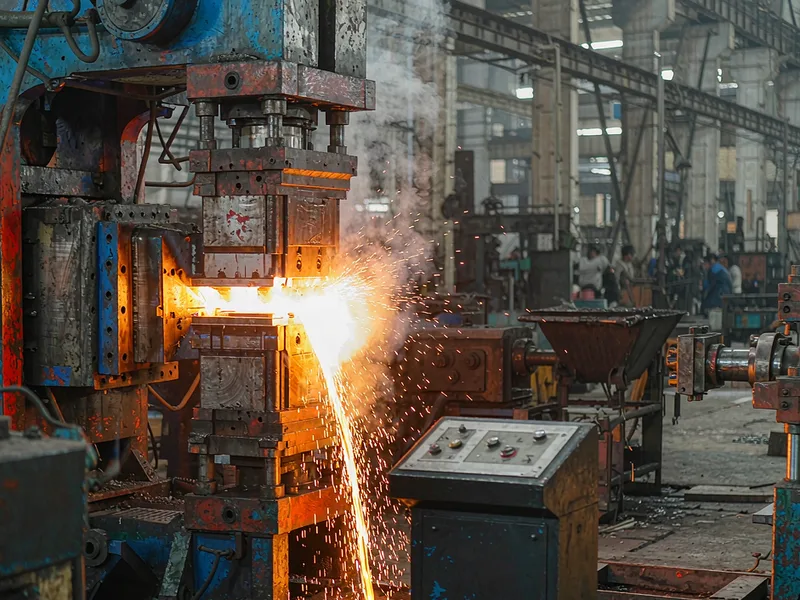
The table below compares A380 with its two closest relatives. Values are typical for as-cast material and reflect published industry data.
| Element or property | A380 | ADC12 | A383 |
|---|---|---|---|
| Silicon (%) | 7.5–9.5 | 9.6–12.0 | 9.5–11.5 |
| Copper (%) | 3.0–4.0 | 1.5–3.5 | 2.0–3.0 |
| Iron (%) max | 1.3 | 1.3 | 1.3 |
| Tensile strength | 324 MPa | 310 MPa | 310 MPa |
| Yield strength | 159 MPa | 150 MPa | 150 MPa |
| Elongation | 3.5% | 3.5% | 3.5% |
| Hardness (Brinell) | 80 HB | 75 HB | 75 HB |
| Density | 2.71 g/cm³ | 2.70 g/cm³ | 2.74 g/cm³ |
| Thermal conductivity | 96 W/m·K | 96 W/m·K | 92 W/m·K |
The differences look small on paper, and for many parts they are. Still, they decide the right grade for thin walls, pressure tightness, and wear. A383 fills thin sections a touch better. ADC12 lands close to A380 for most automotive work.
Iron is worth a closer look. It appears as a maximum, not a target. A little iron stops the alloy from sticking to the die, but too much forms hard platelets. Those platelets cut tool life and reduce toughness, so the melt stays inside a narrow iron window.
Why A380 Dominates Die Casting
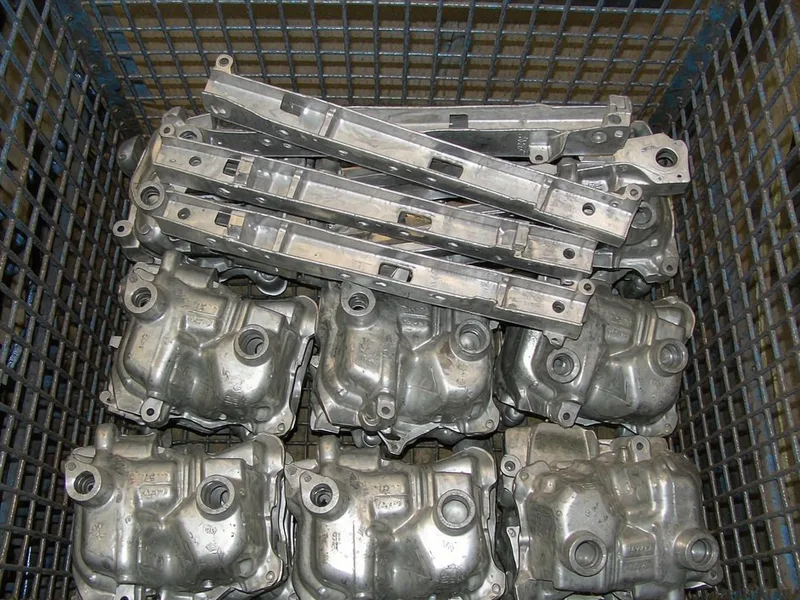
Fluidity is the headline. A380 fills complex geometry without cold shuts, so walls can be thinner and features sharper. That cuts weight, which matters for every handheld or automotive part.
Strength is the close second. At about 324 MPa tensile, the a380 aluminum alloy handles structural brackets and housings that a softer grade would fail. It is strong enough for real load and still light enough to carry.
Thermal conductivity seals the case. A380 moves heat well at roughly 96 W/m·K. That makes it a favorite for motor housings, LED frames, and heat sinks, where the casting is also the cooling path.
Cost closes the loop. A380 recycles cleanly, so scrap returns to the melt with little loss. Combined with short cycle times, that keeps part price low even at high volume. Machine tonnage follows from the same traits. A380 freezes fast, so the die opens sooner and the shot runs quicker.
Where A380 Fits and Where It Does Not
A380 suits most general purpose die castings. Engine brackets, pump housings, tool bodies, and electronics enclosures all use it daily. If the part needs strength, detail, and heat flow at a fair price, A380 is usually the answer.
There are cases where it is not. Copper lowers corrosion resistance slightly, so marine and outdoor parts may prefer a different grade or a coating. Where maximum pressure tightness is critical, A383 or a modified grade with lower porosity may serve better.
A380 also has limits on heat treatment. High copper content traps gas, so castings resist the strong solution treatments that forged grades accept. Designers work around this by choosing geometry and section size that carry the load as-cast.
Thin walls deserve a specific check. A380 fills fine at one millimetre on small parts, but long flow paths need more thickness. We simulate fill before tooling so the wall matches the flow length, not the other way around. Simulation flags the risk before steel is cut.
Machining, Finishing, and Reuse
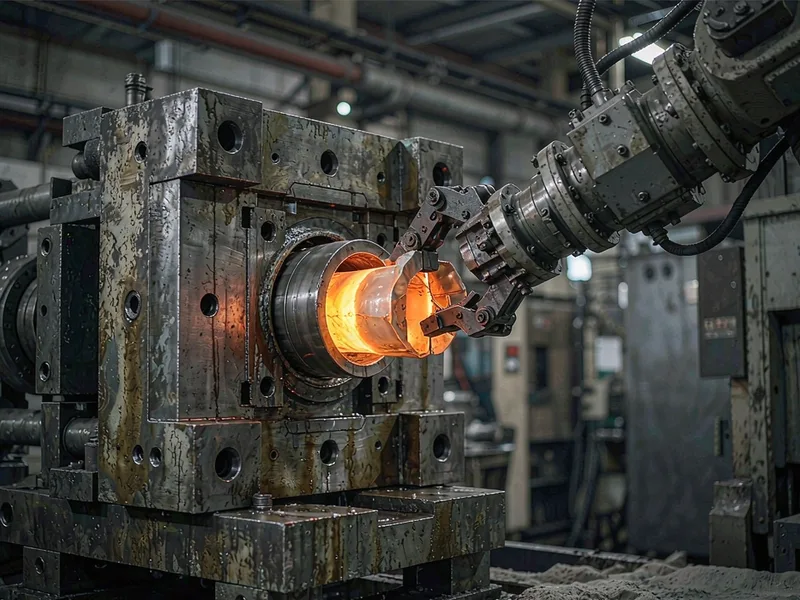
A380 machines well. It forms clean chips, holds tapped threads, and takes tight tolerances without tearing. That is a big reason it stays popular on parts that need secondary machining.
Finishing options are broad. The alloy anodizes, powder coats, e-coats, and plates with the right prep. Free iron on the surface can hurt corrosion, so we control that in the die and the shot before finishing starts.
Reuse keeps the economics strong. A380 returns to the furnace and re-melts with minimal loss, so runners and rejects become new metal. That closed loop lowers material cost and waste across a program. Scrap control ties it together, because the same metal is used again and again.
External Links
- ASTM B85 — the standard specification that defines A380 chemistry and mechanical properties.
- North American Die Casting Association (NADCA) — alloy selection guides and design references for die casters.
- International Organization for Standardization (ISO) — source of ISO 8062, the castings tolerance system used in global supply chains.
FAQ
What is A380 aluminum alloy used for?
It is a general purpose die casting grade. Common parts include engine brackets, electronics housings, motor cases, power tools, and heat sinks. It also appears in pump housings and industrial equipment where strength and heat flow both count.
Is A380 the same as ADC12?
They are close cousins. ADC12 is the Japanese designation with slightly more silicon and less copper. For most castings they perform similarly, but chemistry differs.
How strong is A380?
Typical as-cast tensile strength is about 324 MPa, with yield near 159 MPa. That covers many structural brackets without heat treatment.
Can A380 be heat treated?
Not like forged alloys. Trapped gas limits strong solution treatment. Designers rely on section size and geometry instead, so the part carries its load as-cast.
Does A380 corrode easily?
It resists corrosion reasonably well, but copper lowers that a little. Outdoor and marine parts usually get a coating or a lower copper grade for extra protection.