Melting Points of Metals: Reference Charts for Casting
Melting point of metals is one of the first numbers you need before you quote a casting. It tells you which furnace to fire, which alloy to pour, and which die material can survive the heat. Get it wrong and you waste a shift and a batch of alloy. Get it right and the whole process falls into line. This guide gives you practical reference charts for the metals we see every day. It also explains why a single number often misleads. The melting range matters more than the peak temperature. We use these figures on live die casting and machining programs. Every value below reflects standard commercial grades, not textbook pure elements. Read the charts first, then the rules that turn them into decisions.
Key Takeaways
- Pure aluminum melts near 660 °C (1220 °F). Common casting alloys start lower, around 540–600 °C.
- Zinc alloys melt near 380–390 °C. That low temperature is why hot-chamber die casting works for them.
- Magnesium melts around 650 °C. It needs cover gas, because molten magnesium burns in open air.
- Copper and its alloys melt above 900 °C. They demand a different furnace, ladle, and die setup.
- Design to the alloy’s solidus–liquidus range. One melting point of metals figure rarely tells the full story.
Why the Melting Point Sets the Whole Process
Heat is the engine of every casting process. You heat metal until it flows, pour it into a die, and let it freeze in the shape you want. The temperature where that flow begins sets your furnace type, your die material, and your cycle time.
A low melting point such as zinc’s lets you run a hot-chamber machine. The gooseneck sits inside the melt, so the shot happens fast. High-melting alloys cannot use that setup. Molten copper would destroy the submerged parts within hours.
Melting temperature also decides your die steel. Aluminum at 600 °C is hard on tooling. Cast iron at 1250 °C is far harder. The hotter the metal, the shorter the die life and the higher the tooling cost per part.
The number shapes logistics too. A furnace must hold the melt in a narrow band above the liquidus. Too hot and you burn the alloy and gas the metal. Too cold and the shot freezes before it fills the die. Every degree shifts the balance. Operators watch this band all day. Even a small drift shows up on the shot and on the finished part.
Reference Chart: Melting Points of Casting Metals
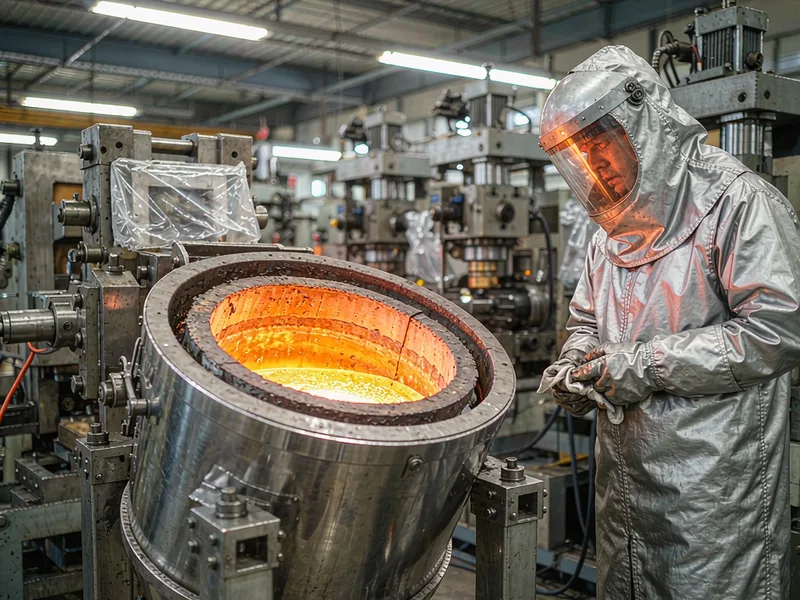
The table below covers the metals and alloys we cast or machine most often. The ranges show where the alloy starts to melt (solidus) and where it turns fully liquid (liquidus). A pure metal melts at one temperature. An alloy does not. That single difference explains most of the process choices that follow.
| Metal or alloy | Solidus (°C) | Liquidus (°C) | Typical process |
|---|---|---|---|
| Pure aluminum | 660 | 660 | Reference only |
| A380 / ADC12 | 540 | 595 | High pressure die casting |
| A356 | 555 | 615 | Gravity, low pressure |
| Zinc Zamak 3 | 381 | 387 | Hot chamber die casting |
| Magnesium AZ91D | 470 | 595 | Hot chamber die casting |
| Pure copper | 1085 | 1085 | Reference only |
| Brass (Cu-Zn) | 900 | 940 | Sand, investment |
| Gray cast iron | 1120 | 1250 | Sand casting |
The low melting point of metals in the zinc row is the reason zinc parts cast so cleanly. Zinc flows into thin sections before it freezes, and it cools fast enough to keep cycle times short. Aluminum sits in the middle. It is hot enough to hold detail, yet cool enough for steel dies to last.
Treat this chart as a starting point, not a spec sheet. Every supplier melts to its own window. Silicon, copper, and magnesium move the numbers by tens of degrees. Always confirm against the alloy certificate before you set furnace targets.
Alloys Melt Over a Range, Not One Point
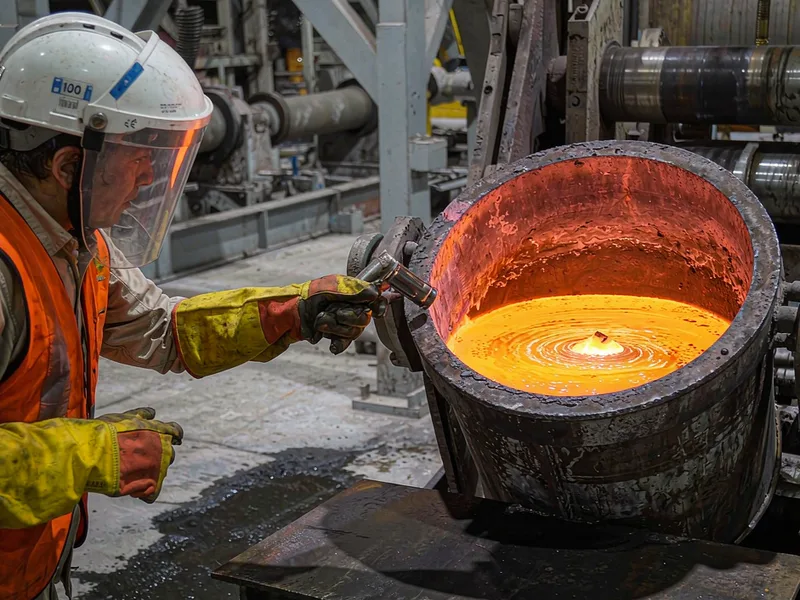
This is the detail that trips up new engineers. Pure copper melts at 1085 °C, full stop. An alloy like A380 starts melting at 540 °C and finishes at 595 °C. Between those two numbers, the metal is a slush of liquid and solid.
That range matters inside the die. The solidus is where the part stops feeding. The liquidus is where it turns to mush. Push too much heat into the die and you feed shrinkage longer. Run too cold and you get cold shuts and short fills.
So the useful melting point of metals for a designer is the liquidus. That is the temperature the melt must reach to fill the cavity. The solidus tells you when the casting locks and the die can open. Everything in between decides how the part solidifies.
Alloy choice moves that window. Adding silicon widens the gap between solidus and liquidus. That wider gap makes the melt easier to pour but slower to set. Narrow windows freeze quickly, which suits high-volume die casting and thin walls. Two alloys with the same base metal can behave very differently on the same machine.
Turning Melting Data into Casting Decisions
We start every project by matching the alloy’s melting range to the process. Aluminum alloys suit high pressure die casting because they freeze fast and hold fine detail. Zinc alloys run even cooler, so dies last longer and cycle times stay short.
Melting temperature also shapes thermal management. A die for aluminum runs hotter than a die for zinc. Cooling channels get sized around the heat the melt brings in. Balance that and you hold tolerance across a long run.
Melting point sets safety and handling as well. Magnesium needs a protective gas blanket. Copper needs ceramic-lined ladles. These are not options. They are process requirements that flow straight from the numbers in the chart above.
Energy use follows the same logic. Every 100 °C you add to the melt costs fuel and time. That is why zinc runs cheaper per kilogram than aluminum, and why iron sits at the expensive end. The chart is a cost map as much as a temperature guide. Lower melt temperatures mean lower energy bills and less wear on every part that touches the metal.
External Links
- North American Die Casting Association (NADCA) — industry references on alloy selection and melt practice for die casters.
- International Organization for Standardization (ISO) — publisher of ISO 8062, the castings tolerance system used across global supply chains.
- ASTM B85 — the standard specification for aluminum-alloy die castings, covering chemistry and mechanical properties.
FAQ
What is the melting point of metals used in die casting?
Aluminum alloys melt between 540 and 600 °C. Zinc alloys melt near 381 °C. Magnesium runs about 650 °C. The exact figure depends on the alloy, not just the base metal.
Does adding alloy elements change the melting range?
Yes. Silicon, copper, and magnesium usually lower the start of melting. They also spread melting across a range. That range, from solidus to liquidus, is what drives your process window.
Why does a pure metal melt at one temperature?
A pure element has a single melting point, such as 660 °C for aluminum. Alloys contain more than one element, so they soften and freeze over a range instead.
How do you check melt temperature in production?
We use thermocouples in the furnace and a pyrometer at the ladle. Both readings must agree before the operator adjusts the furnace. Lab chemistry checks confirm the alloy matches its certificate.
Which casting alloy melts at the lowest temperature?
Zinc alloys lead at about 381 °C. That low figure is why hot-chamber die casting is possible, and why zinc parts cool fast and run long dies with little thermal wear.