ADC12 Aluminum Alloy: Composition, Properties & Equivalents
ADC12 aluminum alloy is the most widely used die casting alloy in Asia, and it earns that rank on performance and price. It is an Al-Si-Cu alloy built for high-pressure die casting. It flows into thin walls, copies fine detail, and holds tight tolerances shot after shot. Engineers specify it for housings, brackets, covers, and structural parts that need strength without a premium cost. Its closest western cousin is A383, and the two swap freely in most designs. This guide breaks down what the alloy is made of, what it can do, and how it maps to grades you already know. You get real numbers, honest limits, and clear equivalents so you can specify with confidence. Plants run this alloy around the clock, and that experience shows in consistent results.
Key Takeaways
- ADC12 aluminum alloy is an Al-Si-Cu die casting alloy with about 9.6–12.0% silicon and 1.5–3.5% copper.
- It matches A383 (US), EN AC-46000 / AlSi11Cu3 (Europe), and YZAlSi11Cu3 (China) for most applications.
- Typical as-cast tensile strength runs 230–310 MPa with 1–3% elongation, so it is strong but not ductile.
- It fills thin walls down to roughly 1.0 mm and machines cleanly with a good surface finish.
- Standard ADC12 is not a marine or anodizing alloy; copper raises strength but cuts corrosion resistance and finish quality.
What ADC12 Actually Is
ADC12 is a Japanese designation defined in JIS H 5302. The letters ADC stand for Aluminum Die Casting. The number 12 is simply a grade index, not a copper content. It belongs to the Al-Si-Cu family of casting alloys, which balances fluidity against strength.
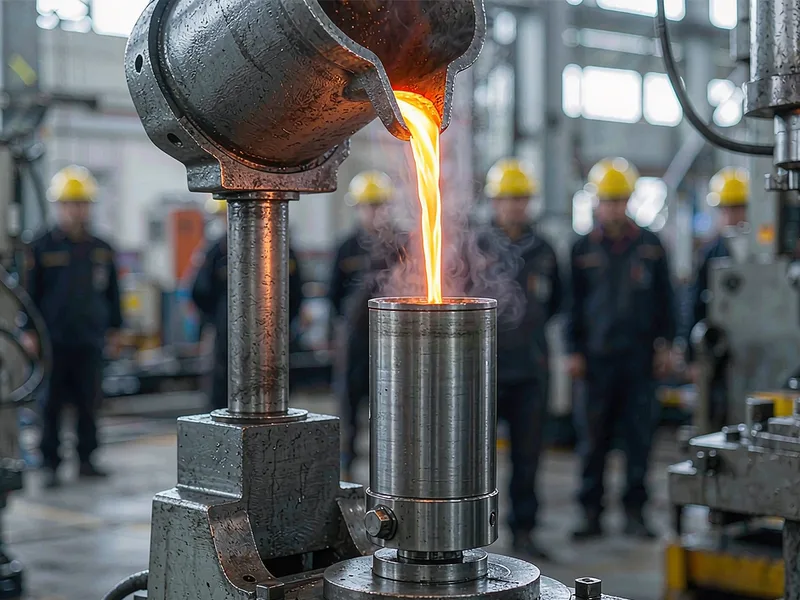
The alloy was developed for high-volume production on cold chamber machines. High silicon lowers the melting point and improves fluidity. Copper adds strength and hardness. Together they let the metal fill complex dies in a few milliseconds and eject cleanly. That combination is why it dominates Asian die casting capacity.
This is not a wrought alloy. You will not find it as sheet, plate, or extrusion. It exists to be poured into steel dies, frozen in seconds, and popped out at rate. Its whole chemistry is tuned for that one job.
Chemical Composition and Why Each Element Matters
The chemistry below reflects the JIS H 5302 window. Suppliers keep each element inside a range because small shifts change casting behavior fast. Treat these as design inputs, not trivia.
| Element | Typical range (wt%) | Role in the alloy |
|---|---|---|
| Silicon (Si) | 9.6–12.0 | Boosts fluidity, cuts hot cracking, lowers melting point |
| Copper (Cu) | 1.5–3.5 | Raises strength and hardness, improves machinability |
| Iron (Fe) | ≤ 1.3 | Reduces die soldering but lowers ductility |
| Zinc (Zn) | ≤ 1.0 | Minor strengthening; too much hurts corrosion |
| Magnesium (Mg) | ≤ 0.3 | Held low to control oxidation and shrinkage |
| Manganese (Mn) | ≤ 0.5 | Neutralizes iron and aids die release |
| Nickel (Ni) | ≤ 0.5 | Adds high-temperature strength at added cost |
| Tin (Sn) | ≤ 0.3 | Kept low to avoid hot shortness |
| Aluminum (Al) | Balance | Matrix that carries every other element |
Iron gets more attention than its small number suggests. A little iron stops molten metal from welding to the die, which is called soldering. Too much iron forms hard platelets that cut elongation and dull cutting tools. Suppliers walk that line carefully.
Copper is the other lever. It lifts yield strength and helps chips break during machining. That same copper seeds tiny galvanic cells in wet service, so it lowers corrosion resistance. You trade durability in weather for strength and castability.
Mechanical and Physical Properties
Values shift with section thickness, gate design, and cooling rate. Thin walls cool fast and come out stronger. Heavy sections cool slowly and collect porosity. The numbers below are typical as-cast values for sound, well-gated parts.
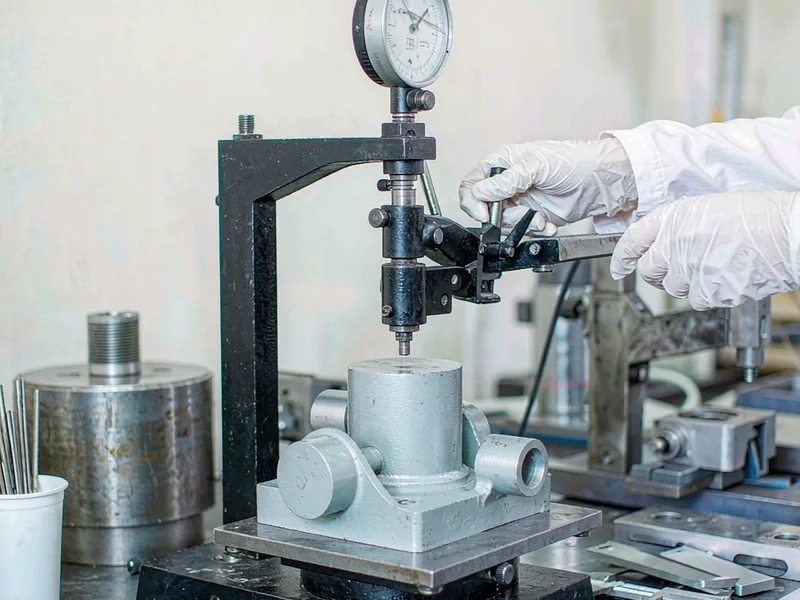
Tensile strength sits near 230 MPa and reaches 310 MPa in well-fed thin sections. Yield strength lands around 150–170 MPa. Elongation stays low at 1–3%, which means this alloy does not stretch before it breaks. Hardness runs about 74–95 HB on the Brinell scale.
Physically, the metal is light and thermally active. Density is about 2.68–2.70 g/cm³. It melts over a range near 515–580°C, which suits fast fill and quick freeze. Thermal conductivity is roughly 92–96 W/m·K, so it sheds heat well. Fatigue strength is modest near 145 MPa, so avoid sharp corners in cyclic parts.
One point causes confusion: ADC12 aluminum alloy is normally used as-cast. It is not a heat-treat alloy in practice. You can stress-relieve it, but you do not chase T6 strength the way you would with A356. Design for as-cast properties and you will not be surprised.
ADC12 Equivalents Around the World
No global standard carries one universal name. Each region publishes its own designation for a nearly identical alloy. The chemistry table above maps closely to all of them, but small windows differ, so confirm before you swap.
In the United States, ASTM B85 covers A383 and its lower-iron A383.2 variant. In Europe, EN 1706 lists the alloy as EN AC-46000, traded widely as AlSi11Cu3. ISO 3522 uses AlSi11Cu3 as well. China’s GB/T 15115 calls it YZAlSi11Cu3, and Japan’s JIS uses ADC12 itself.
The practical takeaway: A383 and ADC12 aluminum alloy behave almost the same in the die. If your drawing lists A383 and your supplier pours ADC12, the part usually meets intent. Document the swap anyway, because traceability matters in automotive and medical programs.
Where ADC12 Works Best — and Where It Does Not
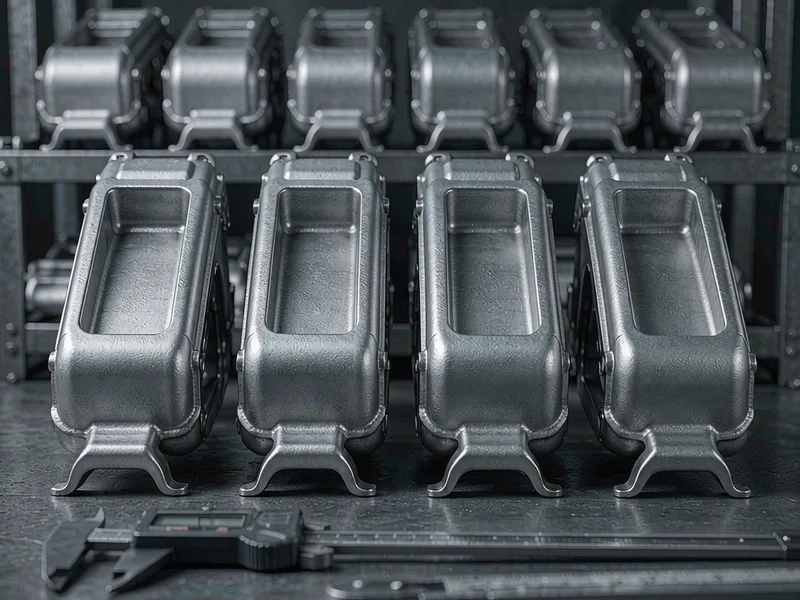
This alloy suits parts that need stiffness, detail, and low cost in high volume. You see it in automotive housings, motor brackets, pump bodies, and electronic enclosures. It fits LED heat sinks, power tool frames, and connector shells. Any part with thin ribs and tight bosses is a natural match.
It also machines and finishes well in the common ways. Cutting is fast and clean, with short chips and good surface finish. Painting and powder coating bond reliably. Plating works with proper preparation. Design walls at 1.5–2.5 mm, add 1–2° draft, and the part will run with few surprises.
The limits matter just as much. Do not choose this alloy for marine hardware or parts that stay wet. Copper-driven corrosion eats into unprotected surfaces over time. Do not specify it for bright anodizing either, since the silicon and copper leave a dark, blotchy film. Welding is also poor, so plan mechanical joints instead. For those needs, switch to a low-copper or copper-free alloy such as A360 or A365.
External Links
- North American Die Casting Association (NADCA) — publishes design guides and alloy data used across the die casting industry.
- ASTM B85 — the standard specification for aluminum-alloy die castings, covering A383 and related chemistries.
- International Organization for Standardization (ISO) — source of ISO 3522, which defines the AlSi11Cu3 casting alloy family.
FAQ
What is ADC12 aluminum alloy made of?
It is mostly aluminum with 9.6–12.0% silicon and 1.5–3.5% copper, plus small amounts of iron, zinc, magnesium, and manganese. That mix gives high fluidity for thin walls and enough strength for structural housings.
Is ADC12 the same as A383?
They are close commercial equivalents and often used interchangeably. A383 is the US designation under ASTM B85, while ADC12 comes from JIS H 5302. Chemistry windows differ slightly, so confirm tolerances and any corrosion or finishing requirements first.
How strong is ADC12?
Typical as-cast tensile strength is 230–310 MPa, yield strength is about 150–170 MPa, and elongation is 1–3%. It is strong and stiff, but not ductile, so avoid designs that depend on bending before failure.
Can ADC12 be anodized?
It can be anodized, but the copper and silicon make the finish dark and uneven. For decorative or clear anodizing, choose a low-copper alloy instead. For painted or powder-coated parts, ADC12 works fine.
What is ADC12 used for?
It is common in automotive housings, motor brackets, pump bodies, electronic enclosures, LED heat sinks, and power tool frames. Any high-volume part that needs thin walls, fine detail, and low cost is a good fit.