Die Casting vs CNC Machining from Solid: Cost Crossover Analysis
The die casting vs CNC machining question shows up on almost every new project. Machining from solid gives you a real metal part in days, with no tooling and no minimum order. Die casting needs a steel tool and weeks of lead time before the first good part appears. So why would anyone tool up? Because at some volume the piece price gap becomes impossible to ignore. This guide shows where that crossover sits, how to calculate it for your part, and which factors quietly move the line in either direction before you commit a budget.
Key Takeaways
- CNC from solid wins below roughly 1,000–3,000 parts per year, mostly because it needs no tooling.
- Die casting wins above that band, often cutting piece price by 50–80 percent.
- A die casting tool costs USD 25,000–150,000; CNC needs a program and fixtures, not a die.
- Machining wins on low volume, tight tolerance, and parts still changing shape.
- Compare the total cost across the program life, not the price of the first order.
Why the Two Processes Cost So Differently
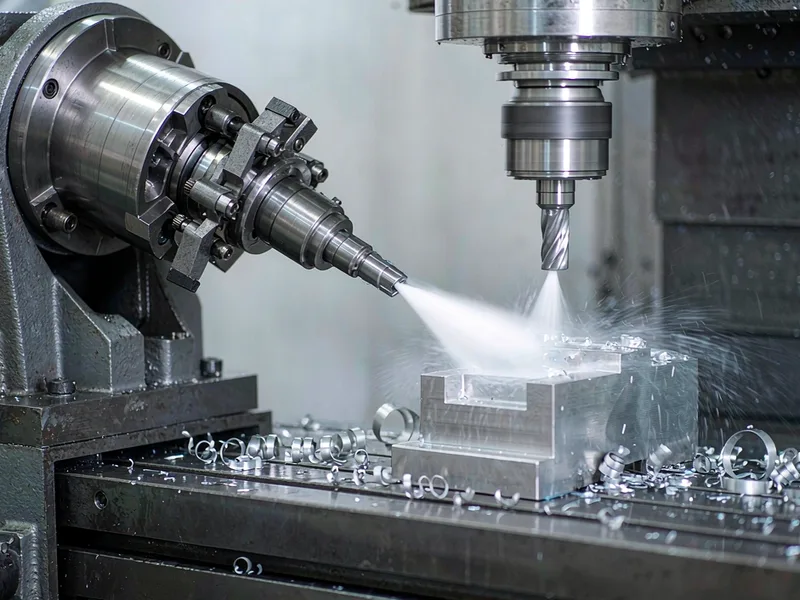
CNC machining cuts a part from a solid block of aluminum. There is no tool to build. You program the toolpath, load a billet, and start cutting. That is why machining owns prototypes and low-volume work. Setup is fast and the design can change between orders without scrapping anything.
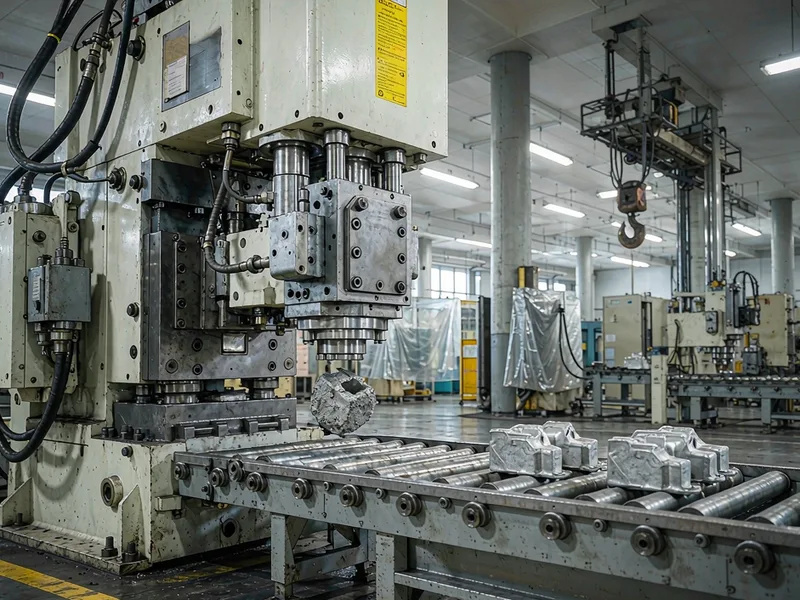
Die casting works the other way. Molten aluminum fills a hardened steel die in one shot, and the part comes out near net shape. The tool is expensive and slow to build, but once it runs, each part costs only metal, machine time, and a little labor. That fixed-versus-variable split drives everything.
Machining also removes material, so cycle time climbs with part complexity. Die casting adds complexity for free as long as the features are castable. A part with ten machined pockets might take twenty minutes per unit in a mill, while the same part drops out of a die in under a minute.
Tooling and Setup: The Fixed Cost Gap
The fixed cost split is the first number to nail down. A CNC job needs fixtures, maybe soft jaws, and a proven program. That can run a few hundred to a few thousand dollars. A die casting tool is a machined block of H13 steel with waterlines, slides, and a runner system, and it can take weeks to build. The two are not close.
That gap explains the shape of the crossover curve. At low volume, the die tool cost divided by a small number of parts is huge, so machining wins by default. As volume climbs, that fixed cost spreads thinner and thinner until die casting piece price takes over. Nothing else in the comparison moves as sharply.
The tooling is not pure cost either. A die casting tool is an asset. You can run additional orders from it for years, amortizing the cost with each program. Machining never gets that benefit — every unit starts from a fresh billet and a fresh hour of spindle time.
Piece Price and the Crossover Range
Piece price is where die casting overtakes machining. Once the die exists, cost per part is dominated by metal weight and machine cycle, both of which stay low. Machining cost per part stays high because every unit consumes spindle time proportional to its complexity. The table below shows how that plays out across volume bands for a medium aluminum part.
| Annual volume | CNC from solid | Die casting | Typical best choice |
|---|---|---|---|
| 1–250 parts | USD 25–60 | USD 8–20 plus tooling amortization | CNC machining |
| 250–1,000 parts | USD 18–45 | USD 7–16 plus tooling amortization | CNC, review die at top end |
| 1,000–3,000 parts | USD 15–35 | USD 6–12 plus lower per-unit tooling | Crossover zone, run a model |
| 3,000–20,000 parts | USD 12–30 | USD 4–9 | Die casting |
| Above 20,000 parts | Rarely competitive | USD 3–7 | Die casting |
Ranges cover typical medium aluminum parts with moderate machining content. Your part size, wall thickness, and feature count will move them.
How to Run the Crossover Math
The calculation is straightforward. Subtract the die casting piece price from the CNC piece price to get the per-part saving. Then divide the tooling difference by that saving. The result is the number of parts needed to pay back the tool, which is your break-even volume.
Here is a worked example. Say the die tool costs USD 50,000 and fixtures for machining cost USD 3,000, so the gap is USD 47,000. If CNC runs USD 28 per part and die casting runs USD 7, you save USD 21 per unit. Divide 47,000 by 21 and you get about 2,240 parts. That is your annual break-even at one year of production.
Now change the horizon. Stretch the program to three years and the break-even drops to roughly 750 parts a year, because the tool cost spreads across three times the quantity. Product life changes the answer as much as annual demand. A long-running part justifies a die at volumes that would look reckless for a one-year build.
Machining content shifts the line too. The more pockets, holes, and tight tolerances you need, the more spindle time CNC burns per part, and the faster the die pays back. A part with heavy secondary machining can cross over at a few hundred units.
When Machining Still Beats Die Casting
Volume is not the only reason to stay with machining. Tolerance is the big one. CNC holds dimensions and finishes that die casting cannot match as cast, especially on sealing faces and bearing bores. If your part needs those features, you may still machine after casting, which changes the cost picture.
Design maturity matters just as much. A part still moving through revisions is a poor candidate for a die. Machining lets you change geometry between orders at almost no cost. Locking a shifting design into steel means welding, cutting, or a new tool when the next revision lands.
Lead time is the third factor. CNC can ship in days. A die casting tool adds weeks before first article, and that delay may cost you a program. When a launch date is tight and volume is uncertain, machining buys you time.
Weighing the Decision on Real Projects
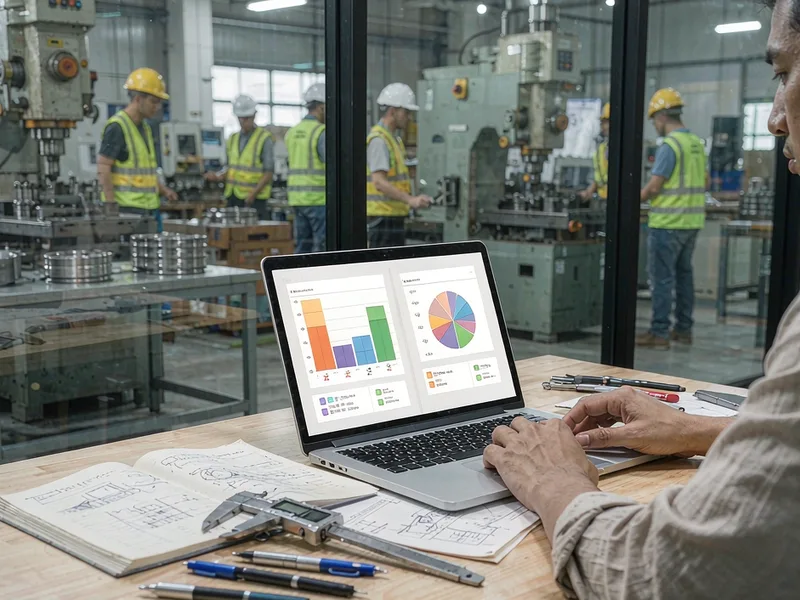
We run the same screen on every inquiry. First we take annual volume and multiply by expected program life. Then we add up machining content, since heavy secondary work pushes die casting ahead. Finally we check the tightest tolerance and confirm the design is stable enough to tool.
Most cases resolve quickly. A 300-part run stays on the mill. A 30,000-part run with a simple shape goes to die casting. The hard cases sit between about 1,000 and 3,000 parts, where a short-run die or a cast-then-machine hybrid can beat both pure routes. That middle band is where the die casting vs CNC machining decision earns its reputation as a genuine trade-off.
If your part sits in that band, send us the drawing and your annual forecast. We will build the crossover model with real numbers, show where the tool pays back, and recommend the route that costs least across the program.
External Links
- North American Die Casting Association (NADCA) — industry design guides and process standards for die casting programs.
- International Organization for Standardization (ISO) — source of the ISO 8062 casting tolerance system used to compare as-cast dimensions.
- ASTM B85 — the standard specification for aluminum-alloy die castings, covering chemistry and mechanical properties.
FAQ
At what volume does die casting beat CNC machining on cost?
For a typical medium aluminum part, the break-even lands between 1,000 and 3,000 parts per year. Heavy machining content pushes it lower, and simple shapes with light machining push it higher.
Is die casting vs CNC machining only about volume?
No. Tolerance, design stability, and lead time all matter. If your part needs a mirror finish or is still changing, CNC stays the better choice even at volume until the design freezes.
Why is CNC machining so expensive at high volume?
Every unit consumes spindle time proportional to its complexity, and you buy a new billet each time. Die casting spreads its tooling cost across the run, so the per-part price falls sharply as quantity rises.
Can I cast the part and still machine it?
Yes, and it is often the best route. Die casting produces the near-net shape, then CNC finishes the critical faces and bores. You get low metal cost and high precision, which beats both pure options for demanding parts.
How do I find my own crossover point?
Divide the tooling cost difference by the per-part saving from die casting. The result is the number of parts needed to pay back the die. Compare that to your volume over the whole program life, not just the first year.