Die Casting Machine Tonnage: Sizing Your Project from 280T to 4000T
Machine tonnage is the clamping force that holds your die shut while metal is injected. Choose too little and the die flashes, the shot fails, and the part is scrap. Choose too much and you pay for capacity you never use. Sizing a machine is a calculation, not a guess. It comes down to projected area, cavity pressure, and a safety margin that covers how hard the metal pushes back. In this guide we walk through the real numbers behind clamp force, from a small 280-ton cell up to a 4000-ton press. You will see the formula we use, a working table of common sizes, and the mistakes that cost money on both sides of the estimate.
Key Takeaways
- Machine tonnage must exceed projected area times cavity pressure, with a safety margin.
- The formula is simple: clamp force = projected area (cm²) × intensification pressure (bar) ÷ a conversion factor.
- Projected area includes the part, runner, overflow, and biscuit area — not just the casting.
- Common cells run 280T, 500T, 800T, 1,250T, 1,600T, 2,500T, and 4,000T.
- Undersizing causes flash and scrap. Oversizing raises hourly rate and lowers your margin.
The Sizing Formula Behind Every Machine
Clamping force has one job: resist the separating force of the metal. When the plunger pushes metal into the cavity, that metal pushes back on the die halves. The clamp must hold the die closed against that push.
The separating force equals cavity pressure times the projected area. Projected area is the shadow the casting and runner system cast on the parting plane, measured in square centimeters. Cavity pressure is the die casting intensification pressure at the metal, in bar.
So the math is: clamp force (in tonnes) = projected area (cm²) × cavity pressure (bar) ÷ 981, then multiply by a safety factor of 1.2 to 1.5. The 981 converts bar-cm² into tonnes of force.
Worked example. A part with 400 cm² of projected area running at 800 bar: 400 × 800 ÷ 981 = 326 tonnes. With a 1.3 safety factor, you need about 424 tonnes. The next standard machine is 500T.
Projected Area Is Where Most Estimates Go Wrong
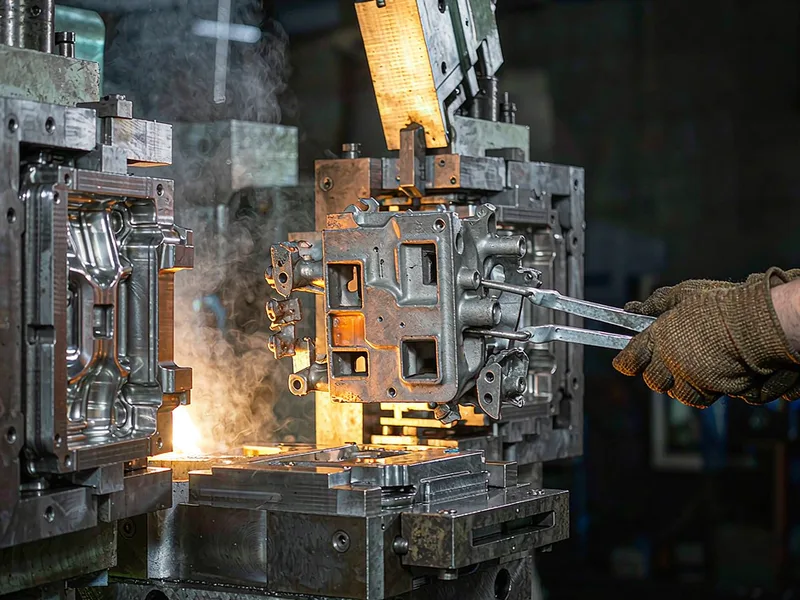
Designers often plug in the part footprint and stop there. That underestimates the load badly. The runner, the overflows, and the biscuit all sit on the parting plane too, and they all push the die open.
On a small part, the runner system can add 40 to 80 percent to the projected area. A 100 cm² casting with a generous runner and overflows may reach 170 cm² of real projected area. Ignore that and your tonnage estimate is short by half.
Multiple cavities multiply the load. A two-cavity die doubles the part area, and the runner grows too. That is why a part that runs on 500T as a single cavity can need 800T or more in a two-cavity layout.
Get the number right at DFM. Ask your die designer for the true projected area, including the feed system. It is the single most important input in the sizing calculation.
Matching Tonnage to Part Size
The table below is a practical map of what each machine class handles. Treat it as a starting point. Real capacity depends on your alloy, your wall thickness, and how much runner area you add.
| Machine size | Typical projected area | Part examples | Typical shot weight |
|---|---|---|---|
| 280T | 80–220 cm² | Small brackets, connectors, handles | 0.2–0.8 kg |
| 500T | 200–450 cm² | Housings, small covers, fittings | 0.6–1.8 kg |
| 800T | 400–800 cm² | Motor housings, brackets, panels | 1.5–3.5 kg |
| 1,250T | 750–1,400 cm² | Telecom housings, structural frames | 3–7 kg |
| 1,600T | 1,200–2,200 cm² | Large housings, EV components | 5–12 kg |
| 2,500T | 2,000–3,500 cm² | Body panels, large structural parts | 10–20 kg |
| 4,000T | 3,000–5,500 cm² | Giga-style structures, battery trays | 18–40 kg |
Undersizing vs Oversizing: Both Cost You
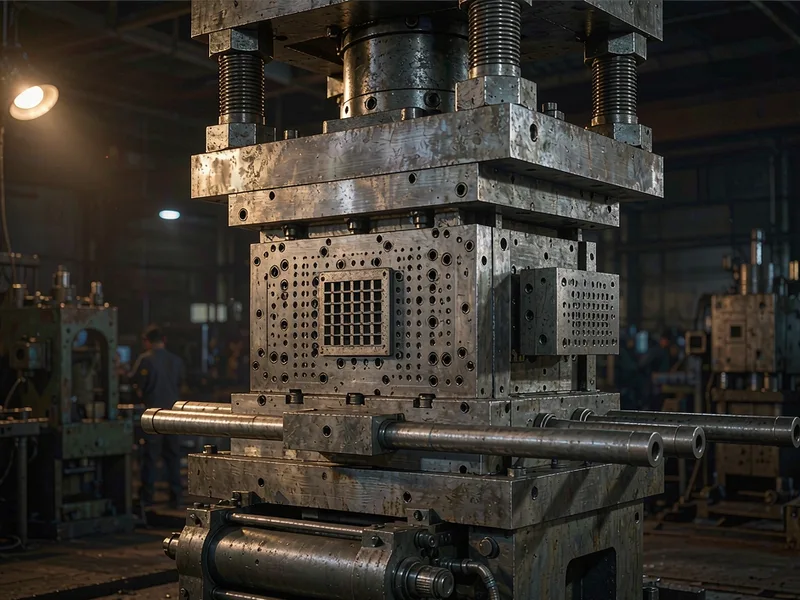
Undersizing is the more obvious failure. If clamp force is short, the die opens a hair under pressure and metal flashes along the parting line. You lose parts, you spend time trimming flash, and in serious cases you damage the die. Running a machine at 100 percent of its calculated load leaves no room for process variation.
Oversizing is quieter but just as expensive. A larger machine draws more power, needs more floor space, and carries a higher hourly rate. If you size a 300-tonne job onto an 800T press, you pay for 500 tonnes of capacity you never use. That cost lands in your piece price on every shot.
The right answer is a safety margin, not maximum capacity. A factor of 1.2 to 1.5 above the calculated load covers normal variation. Die casting machine tonnage also pairs with the intensification setting; our guide on die casting intensification pressure explains how that pressure drives the load.
Process Settings That Follow Machine Size
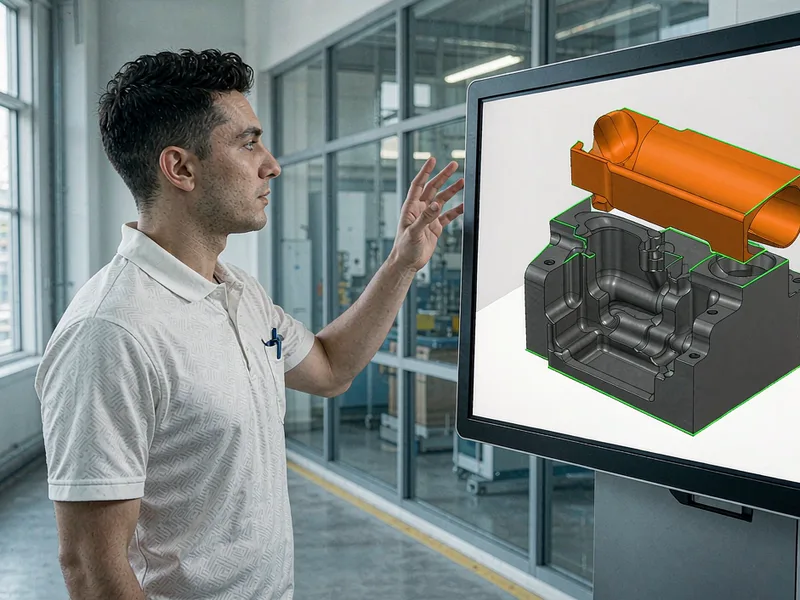
Once tonnage is fixed, three settings follow. Shot weight must fit the sleeve capacity with a safe fill ratio. A typical target is 40 to 60 percent sleeve fill, which leaves room for air to escape ahead of the metal.
Plunger diameter ties to both shot weight and cavity pressure. A larger plunger gives more shot volume but less intensification pressure at the same hydraulic input. The two trade against each other, and machine size sets the range you can work in.
Locking force also affects die design. A big machine with high clamp force needs a die built to take it. Thin backing plates or weak support blocks deflect and cause flash even when the tonnage number is correct. Match the die structure to the press.
Finally, cycle time changes with machine size. A 4,000T press moves more metal and holds longer, so shots per hour drop. That is fine for a large structural part, wasteful for a small bracket. This is how machine size reaches into your piece price.
How to Specify Tonnage on a Quote
When you send a casting out for quote, give the supplier enough to size it. State the alloy, the projected area with the runner system, the required pressure tightness, and your annual volume. If you do not know the projected area, say so and ask the supplier to calculate it.
A good supplier will return the tonnage, the alloy, the estimated shot weight, and a rough cycle time. If a quote comes back without a machine size, ask for it. That number tells you whether the price is built on the right press or padded for a bigger one, and it is the fastest way to sanity-check die casting machine tonnage on any quote.
For large structural parts, the choice between a few big machines and several smaller ones is a real strategy call. We help customers balance it against volume and lead time. The goal is simple: the smallest machine that runs the part reliably, every shot.
External Links
- North American Die Casting Association (NADCA) — industry guidance on machine selection, projected area, and HPDC process planning.
- ASTM B85 — standard specification for aluminum-alloy die castings, covering alloy grades and mechanical properties.
- ASME Y14.5 — the dimensioning and tolerancing standard that governs how casting features are defined on drawings.
FAQ
How do I calculate die casting machine tonnage?
Multiply projected area in square centimeters by cavity pressure in bar, divide by 981 to get tonnes, then add a safety factor of 1.2 to 1.5. Include the runner, overflows, and biscuit in the projected area — not just the part.
What is the projected area for die casting machine tonnage?
It is the shadow the casting and its feed system cast on the parting plane. Designers who use only the part footprint underestimate the load by 40 to 80 percent on small parts. Always use the full projected area.
Can I run a part on a smaller machine to save money?
Only if the calculated clamp force fits with a safety margin. Running short causes flash, scrap, and die wear. The cheapest machine is the smallest one that holds the die closed reliably at your pressure.
Does a bigger machine make better castings?
No. Tonnage only holds the die shut. Part quality comes from fill, venting, and intensification pressure. An oversized machine raises your hourly rate without improving the casting.
What machine size handles a large structural die casting?
Large structural parts and battery trays usually run on 2,500T to 4,000T presses, depending on projected area and wall thickness. Confirm the number with the sizing formula before committing to a die.