Sand Casting vs Die Casting: The Volume Break-Even Point
The sand casting vs die casting decision rarely comes down to which process is better. Both make good aluminum parts. The real question is volume. Sand casting wins on tooling cost because a pattern set costs a fraction of a hardened steel die. Die casting wins on piece price because one die can run hundreds of thousands of shots. Between those facts sits a break-even point, and finding it is the whole game. This guide walks through the numbers we use when customers ask which route fits their annual quantity, geometry, and tolerance budget.
Key Takeaways
- Sand casting tooling often runs USD 2,000–15,000; a die casting tool runs USD 25,000–150,000 and up.
- Break-even usually lands between 2,000 and 10,000 parts per year, but geometry moves it hard.
- Below the break-even, sand casting keeps your cash out of tooling and lets you revise the design cheaply.
- Above it, die casting cut piece price by 40–70 percent and holds tighter tolerances.
- Volume is not the only axis. Tolerance, surface finish, and wall thickness can override the count.
What Each Process Actually Does
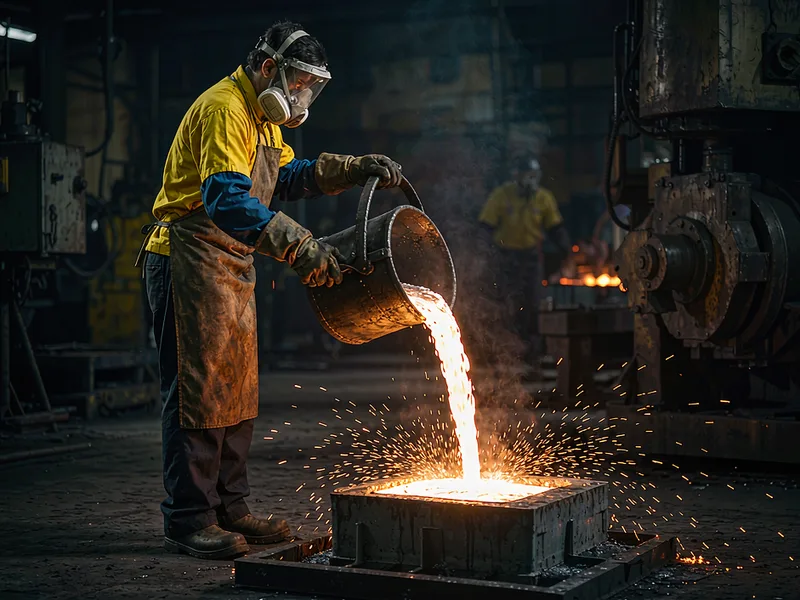
Sand casting packs a sand mold around a pattern, pulls the pattern, and pours molten aluminum into the cavity. The mold breaks away after the metal cools. Because the mold is destroyed each cycle, the pattern can be simple wood or resin, so tooling stays cheap.
Die casting forces molten aluminum into a hardened steel die under high pressure. The die opens, ejector pins push the part out, and the cycle repeats. Tooling costs more because the die must survive hundreds of thousands of thermal cycles. In return, you get fast cycles and repeatable dimensions.
The two processes also split on wall thickness. Sand casting handles thick, chunky sections well and needs extra machining stock. Die casting fills thin walls in milliseconds and holds features as cast. That difference in machining stock quietly shifts the crossover in die casting’s favor at higher volumes.
Tooling Cost: The Number That Decides Everything
Tooling separates the two processes first. A sand pattern, core boxes, and a matchplate can cost a few thousand dollars. A die casting tool is a machined block of H13 steel with waterlines, slides, and a runner system. It costs ten to fifty times more, and it takes longer to build.
That gap is why low-volume programs start in sand. You keep capital free and you keep the ability to change the design. When a part is new and the geometry still moves, a six-figure die is a bet you may regret.
Die casting flips the logic once the design freezes. The die cost spreads across a large quantity, so the tooling line on your quote shrinks to almost nothing per unit. Fixed costs behave poorly at low volume and beautifully at high.
Piece Price and the Real Break-Even Range
Piece price is where die casting claws back the tooling gap. Once the die is built, each shot costs metal, machine time, and a little labor. Sand casting costs more per part because every mold is new and fettling is manual. The table below shows how that gap plays out across volume bands. These are typical ranges for medium aluminum parts, not quotes.
| Annual volume | Sand casting piece price | Die casting piece price | Typical best choice |
|---|---|---|---|
| 100–500 parts | USD 18–40 | USD 12–25 plus tooling amortization | Sand casting |
| 500–2,000 parts | USD 14–30 | USD 9–18 plus tooling amortization | Sand casting, review die at top end |
| 2,000–10,000 parts | USD 12–25 | USD 6–14 plus lower tooling per unit | Crossover zone, run a model |
| 10,000–50,000 parts | USD 10–22 | USD 4–10 | Die casting |
| Above 50,000 parts | Rarely competitive | USD 3–8 | Die casting |
Ranges reflect typical medium-size aluminum parts with moderate wall sections. Your part weight, alloy, and machining content will move them.
How to Calculate Your Break-Even Point
The math is simpler than most buyers expect. Add the tooling cost difference to the per-part cost difference across a year of production. The volume where total cost from both routes matches is your break-even. Below that count the cheaper tool wins, and above it the cheaper part wins.
Run it like this. Take the sand tooling at USD 5,000 and the die tooling at USD 60,000. The gap is USD 55,000. If sand costs USD 20 per part and die casting costs USD 8, you save USD 12 on every die cast part. Divide 55,000 by 12 and you reach roughly 4,600 parts. That is your annual break-even for one year of production.
Now stretch the horizon. Over three years, the break-even drops to about 1,500 parts a year, because the die cost spreads across three times as many parts. Product life matters as much as annual volume. A part that runs five years justifies die casting at a volume that would look foolish for a one-year program.
Geometry moves it too. A complex part with deep cores costs more in sand because every mold needs extra cores and cleanup. That pushes sand piece price up and drags the break-even down toward 1,500 parts. A simple, chunky part does the opposite and keeps sand competitive far longer.
Tolerance, Finish, and Design Freedom
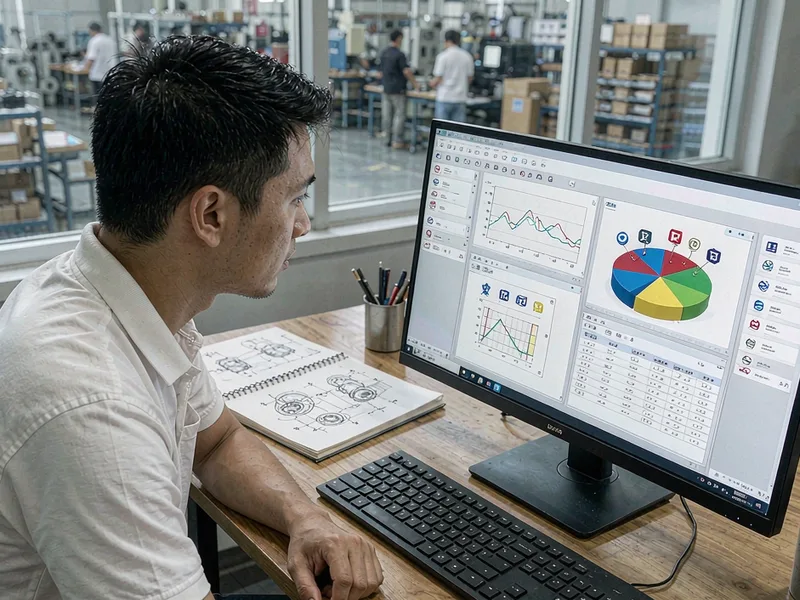
Volume alone does not pick the process. Tolerances do a lot of the work. Sand casting typically holds dimensional tolerance around ISO 8062 grade D or tighter with machining, and it leaves a rougher surface. Die casting holds tighter as-cast dimensions and a smoother finish, so features that would need machining in sand often ship as cast.
Wall thickness pushes the same way. Sand casting prefers walls of 3 to 5 mm and struggles below about 2.5 mm. Die casting fills walls down to 1 mm on the right geometry. If your design is a thin, ribbed housing, sand casting needs extra stock and machining, which shifts the break-even.
Design freedom cuts both ways. Sand casting lets you hollow shapes with cores and revise the pattern between runs cheaply, which supports prototyping. Die casting locks the geometry into steel, so changes after first article mean welding, cutting, or a new tool.
Reading the Decision in Practice
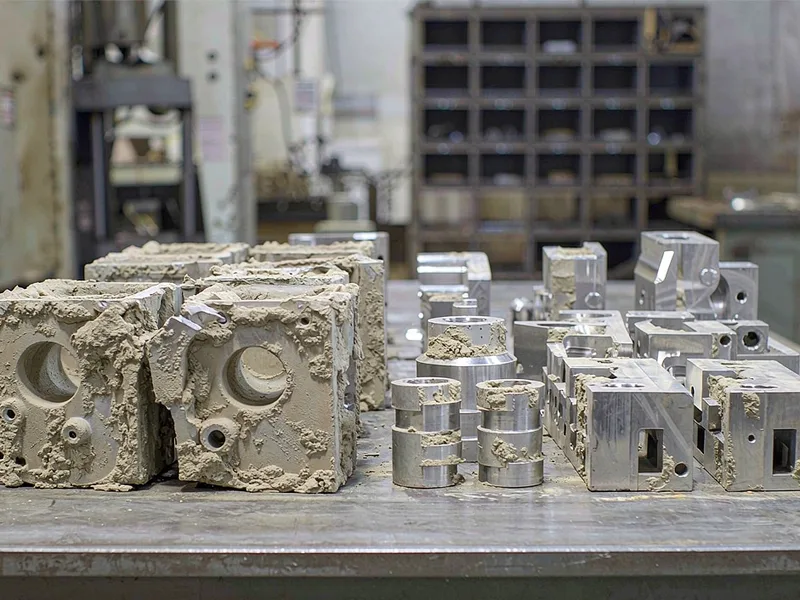
We run this same screen on every new inquiry. First we count annual volume and multiply by expected product life. Then we look at the tightest tolerance and the thinnest wall. Finally we weigh machining content, because die casting usually removes more of it.
Most of the time the answer is clear within that review. A 300-part run goes to sand. A 40,000-part run with a 1.2 mm wall goes to die casting. The interesting cases live between about 2,000 and 10,000 parts, where a short-run die or a hybrid approach can beat both pure options. That band is where the sand casting vs die casting question earns its reputation as a hard call.
If you are stuck in that band, send us the drawing and your annual forecast. We will build the crossover model with real numbers, show where tooling pays back, and recommend the route that costs least across the program.
External Links
- North American Die Casting Association (NADCA) — the industry body behind the design guides and process standards we reference for die casting programs.
- International Organization for Standardization (ISO) — home of the ISO 8062 casting tolerance system used to compare as-cast dimensions across processes.
- ASTM B85 — the standard specification for aluminum-alloy die castings, covering chemistry and mechanical properties.
FAQ
At what volume does die casting beat sand casting on cost?
For a typical medium aluminum part, the break-even lands between 2,000 and 10,000 parts per year. Complex geometry pushes it lower, and simple chunky parts push it higher. Run the crossover with your own prices before you decide.
Is the sand casting vs die casting choice only about volume?
No. Tolerance, surface finish, and wall thickness can override the count. If your part needs a 1.2 mm wall or a smooth as-cast finish, die casting wins even at modest volume, because sand casting would need extra stock and machining to match.
Why is sand casting tooling so much cheaper?
A sand pattern is wood, resin, or light metal and can be revised between runs. A die casting tool is machined H13 steel with waterlines and slides, built to survive 100,000 cycles or more.
Can sand casting handle long production runs?
It can, but piece price stays high because every mold is new and fettling is manual. Above roughly 10,000 parts a year, die casting usually undercuts it by 40 to 70 percent, which repays tooling.
How do I decide between the two for a new part?
Multiply annual volume by expected program life, then check your tightest tolerance and thinnest wall. Start with the process that fits volume, then confirm it survives the tolerance and wall check.