Gigacasting & Mega Castings: What EV Body-in-White Means for Buyers
Gigacasting has moved from a Tesla experiment to a sourcing decision you may face on your next EV program. Instead of stamping and welding roughly 70 to 100 steel panels into a rear underbody, a single mega casting presses one aluminum part in a machine the size of a small building. The promise is fewer welds, less factory floor, and lower body cost at scale. The risks are equally real: huge tooling bets, hard design changes, and a small pool of qualified suppliers. This guide explains what EV body-in-white gigacasting integration means for you as a buyer, and how to decide when a mega casting fits your program.
Key Takeaways
- Gigacasting replaces dozens of stamped, welded panels with one large aluminum die casting.
- It cuts assembly steps and weld count dramatically, but tooling costs run into seven figures.
- Design freezes matter: a casting change can mean a full die replacement, not a small rework.
- You need machines of 4,000 to 9,000 tons and aluminum alloys built for large, thin sections.
- Sourcing shifts from press shops toward foundries with vacuum HPDC and heavy inspection capacity.
What Gigacasting Actually Is
Gigacasting is high pressure die casting taken to extreme scale. A cold chamber machine with clamping force from 4,000 to over 9,000 tons injects molten aluminum into a die the size of a car. The part that comes out is a complete underbody section, often 1.5 to 2.5 meters long, with ribs, bosses, and crash structures cast in place. Cycle times sit around 90 to 180 seconds, slow by die casting standards but fast compared with assembling that structure from stampings.
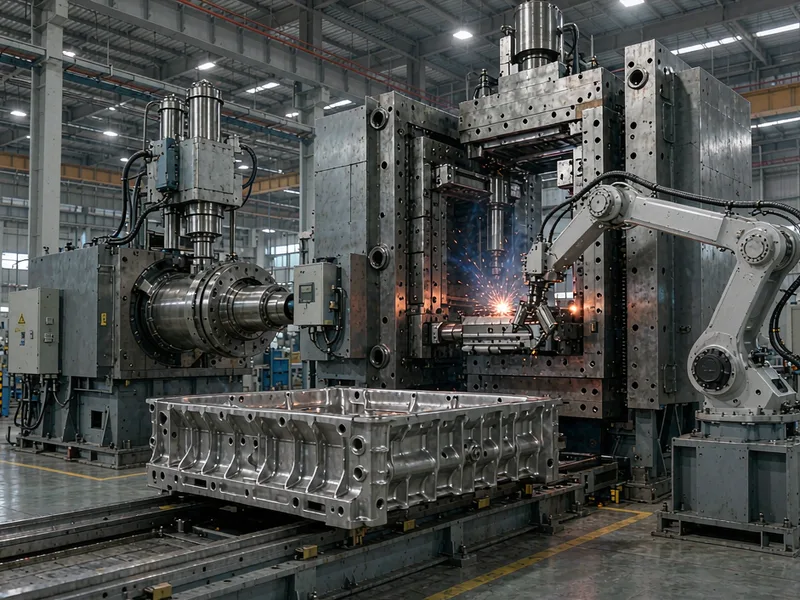
The economics rest on part consolidation. A conventional rear underbody might need 70 or more stamped panels, hundreds of welds, and several robotic joining cells. One casting eliminates most of that assembly labor and the factory space it occupies. Tesla popularized the approach; Chinese EV makers including NIO, Xpeng, and BYD, plus Volkswagen and Volvo, now run or plan similar cells.
But scale cuts both ways. The die for a mega casting weighs 100 to 200 tons and costs from one to several million dollars. You cannot economically build one for a low-volume program. The gigacasting approach earns its place at annual volumes in the hundreds of thousands, or on platforms you can carry across several models.
Body-in-White Integration: What Changes for the Buyer
The body-in-white is the welded sheet-metal skeleton of a car before paint and trim. When you move a section of it into a gigacasting, three things change. First, joining logic changes: the casting meets extrusions, stampings, or a second casting through structural adhesive, self-piercing rivets, flow-drill screws, or laser welding rather than spot welding. Your joining suppliers and validation scope change with it.
Second, stiffness and crash behavior change. A cast node is much stiffer than a welded cluster, which helps torsional rigidity. But cast aluminum behaves differently in a crash than rolled steel: it does not deform in the same controlled way, so crash structures need careful casting-specific design. crash load paths must be simulated and validated as castings, not adapted from steel carry-over parts.
Third, dimensional strategy changes. A casting locks in geometry over a huge area in one shot. That is good for consistency if the die is right, and very expensive if it is wrong. You inherit the foundry’s process capability as your body capability. That means audit depth at the casting supplier matters more than a press shop audit ever did.
Alloys, Heat Treatment, and Quality Control
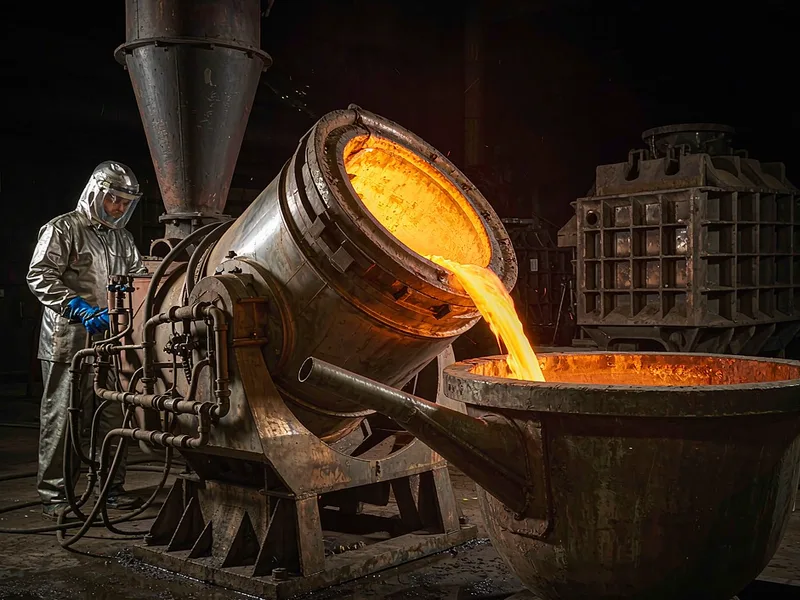
Large structural castings cannot use standard ADC12-type alloys the way small parts do. High silicon alloys blister during heat treatment because trapped gas expands. So gigacasting programs use tough, low-iron, heat-treatable alloys — AlSi10MnMg and similar grades — combined with vacuum-assisted filling to keep gas content low. Some producers skip heat treatment entirely and rely on as-cast properties plus thick rib design.
| Factor | Conventional stamped BIW section | Mega casting (gigacasting) section |
|---|---|---|
| Part count for a rear underbody | ~70–100 panels | 1–2 castings |
| Weld / joint count | 400–700 welds | Under 100 joints |
| Tooling cost | $3–8M across many stamping dies | $1–4M in one die set |
| Typical annual volume to justify | 50,000+ | 150,000–250,000+ |
| Alloy | Mild / high-strength steel | AlSi10MnMg-class aluminum |
| Change cost after design freeze | Modify one die | Often replace the die |
Quality control is the hidden cost center. A casting this large needs X-ray or CT inspection of critical zones, automated porosity analysis, and strict melt control. Yield is a real number to negotiate: early programs ran significant scrap on first articles, and a scrapped mega casting wastes hundreds of kilograms of alloy in one shot.
Risks and Rewards at Program Level
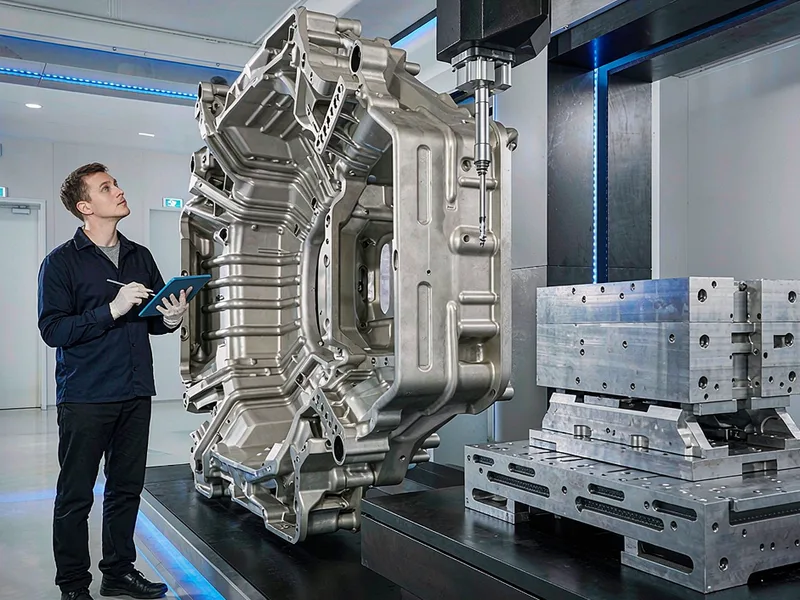
The gigacasting rewards are real when volume and design maturity line up. Programs that commit early report lower body cost per unit, shorter rear-module assembly lines, and better packaging because cast ribs replace stacked panels. Repair cost drops too, since a rear hit damages one module instead of a lattice of welded panels — though the replacement part itself is pricier.
The risks concentrate around change. In stamping, you modify one die and run a pilot. In gigacasting, a late geometry change can scrap a million-dollar die. That pushes design freeze earlier than most automotive organizations are used to. Buyers also face a thin supplier base: machines this large come from a handful of builders, and casting capacity for EV programs is booked years ahead.
There is a middle path worth asking suppliers about: sub-giga castings in the 2,000 to 4,000-ton class. They consolidate 10 to 20 parts instead of 70, need cheaper tooling, and fit mid-volume programs. For many EV platforms, that is the rational first step before committing to full mega castings.
How We Help Buyers Evaluate Mega Castings
We sit on the production side of this technology, running high pressure die casting cells and helping OEM and Tier 1 teams decide where castings beat stampings. Send us your target structure, annual volume, and joining concept. We will return a feasibility view: which sections consolidate well, what alloy and machine class the part needs, and what tooling and per-unit cost look like against your stamped baseline.
We also screen for the failure modes early — thick-section porosity, die-fill imbalance, distortion after heat treatment — because each one is far cheaper to fix in CAD than in steel. Whether you end up with one casting or six, that screening protects both your tooling budget and your launch date.
External Links
- North American Die Casting Association (NADCA) — industry body publishing design and safety data for high pressure die casting, including large structural applications.
- International Organization for Standardization (ISO) — source of quality and castings tolerance standards referenced across automotive supply chains.
- ASM International — materials engineering society with reference data on heat-treatable aluminum casting alloys used in structural automotive parts.
FAQ
What is gigacasting in electric vehicle production?
Gigacasting is the use of very large high pressure die casting machines, typically 4,000 to 9,000 tons of clamping force, to produce one-piece aluminum body structures such as rear or front underbodies. It replaces dozens of stamped and welded panels with a single casting.
How much does a gigacasting die cost?
A die set for a full body structure casting generally runs from one to several million dollars and can weigh well over 100 tons. Because late design changes often require a new die, tooling risk is the main economic barrier for buyers considering the process.
Does gigacasting make the body-in-white lighter?
Yes, usually by 10 to 20 percent for the section converted. Cast aluminum ribs replace stacked steel panels, and part consolidation removes flanges and overlap zones that exist only for welding. Actual savings depend on the crash package and joining design.
Can gigacastings be repaired after a crash?
Minor damage can be straightened or machined, but structural cracking in a cast body section normally means replacing the whole module. Repair economics still favor castings in many rear impacts because the affected area is one bolt-on part rather than a welded lattice.
What volume justifies gigacasting for an EV program?
Most business cases need roughly 150,000 to 250,000 or more units per year to beat a stamped baseline, though sub-giga castings in the 2,000 to 4,000-ton class bring consolidation benefits to mid-volume platforms at lower tooling risk.