Chinese Casting Aluminum Alloys: Grades & Uses
Chinese casting aluminum alloy grades appear on more drawings every year, and they confuse buyers who work in ASTM or EN terms. The naming looks odd, the data sheets arrive in Chinese, and the numbers rarely line up one-to-one with A380 or AlSi9Mg. But the alloys themselves are mature and well documented. Chinese foundries have poured them at volume for decades. Once you decode the GB system, the grades map cleanly. This guide explains the naming rules, lists the grades you will actually see, and shows their international equivalents. You will learn which alloy fits each process and how to check a data sheet without guesswork. That clarity saves weeks of back-and-forth on every new program. It also protects you when a supplier proposes a substitute grade.
Key Takeaways
- Chinese casting alloys follow GB standards: GB/T 1173 for gravity and sand casting, GB/T 15115 for die casting.
- Old codes like ZL104 and YL113 still appear on drawings; new designations use ZAlSi or YZAlSi prefixes.
- YL113 is the near-equivalent of ADC12 and A383 for high-pressure die casting.
- ZL101 and ZL104 dominate sand and gravity casting for structural parts.
- Always confirm the real grade and temper, because the code alone does not fix the heat treatment.
Why These Grades Matter to Global Buyers
China pours a large share of the world’s aluminum castings, so its grade system touches almost every supply chain. A buyer in Germany or the US may order a housing that a Chinese plant casts in a GB grade. If the drawing and the data sheet use different vocabularies, mistakes creep in.
The good news is that these alloys are not exotic. Most of them line up with familiar families: Al-Si-Mg, Al-Si-Cu, and Al-Mg. The differences sit in narrow chemistry windows and heat treatment. Those details decide strength, corrosion behavior, and machinability.
Knowing the mapping also protects you on quality. When you name the correct GB grade, your supplier quotes the right alloy instead of the cheapest one. That single step avoids most arguments later.
Language is the other hurdle. A Chinese data sheet may report strength in MPa, hardness in HBW, and chemistry in mass percent. Those units are standard, so the numbers themselves are fine. The risk sits in translation, where a machine-translated sheet can rename a grade or drop the temper entirely.
How the GB Naming System Works
Chinese standards use two naming styles side by side. The short style gives a code like ZL104. The long style spells out the alloying elements, as in ZAlSi9Mg. Both describe the same metal.
Read the long style like a recipe. The letter Z means cast alloy. Al is the base. Then come the alloying elements with their target percentages. So ZAlSi9Mg is an aluminum alloy with about 9% silicon and a little magnesium.
The prefixes matter. Z or ZL points to general casting alloys under GB/T 1173. YZ or YL points to die casting alloys under GB/T 15115. Many Chinese alloy data sheets still print the old YL code first, so learn both styles.
| Old code | GB designation | Family | Closest international grade | Typical use |
|---|---|---|---|---|
| ZL101 | ZAlSi7Mg | Al-Si-Mg | A356 / AlSi7Mg0.3 | Gravity covers, brackets, housings |
| ZL102 | ZAlSi12 | Al-Si | A413 / AlSi12 | Thin-wall parts, high fluidity |
| ZL104 | ZAlSi9Mg | Al-Si-Mg | A360 / AlSi9Mg | Manifolds, machine housings |
| ZL107 | ZAlSi7Cu4 | Al-Si-Cu | A319 / AlSi7Cu4 | Engine parts, gravity castings |
| ZL109 | ZAlSi12Cu1Mg1Ni1 | Al-Si with Ni | A332 piston alloy | Pistons, high-temperature parts |
| ZL201 | ZAlCu5Mn | Al-Cu | 201.0 / A201 | High-strength aerospace parts |
| YL112 | YZAlSi11Cu2 | Al-Si-Cu (HPDC) | ADC10 / A380 class | Die cast covers, frames |
| YL113 | YZAlSi11Cu3 | Al-Si-Cu (HPDC) | ADC12 / A383 | Die cast housings, brackets |
Treat the right-hand column as a guide, not a promise. Chemistries drift by a few tenths of a percent between standards. That small gap rarely changes a design, but it can change corrosion or finishing behavior.
Die Casting Grades and Their International Matches
High-pressure die casting in China leans on the YZAlSi family. YZAlSi11Cu3, sold as YL113, is the volume leader. It matches ADC12 and A383 closely and handles thin walls well. Most housings, brackets, and covers use it.
YZAlSi11Cu2, or YL112, carries slightly less copper. It forfeits a little strength but gains a bit of ductility and corrosion resistance. Choose it when a part sees moisture or needs a cleaner anodized look.
A third choice, YZAlSi9Mg, trades copper for magnesium. It resists corrosion better and accepts decorative finishing. It is a solid pick for outdoor enclosures and parts that must stay bright.
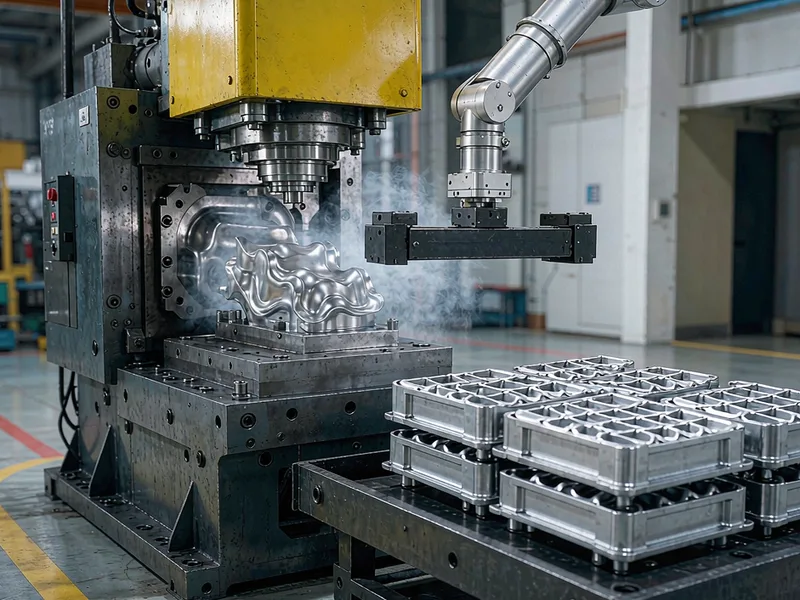
When you specify a Chinese casting aluminum alloy for HPDC, name both the process and the grade. “HPDC, YL113” leaves no room for a supplier to swap in a cheaper Al-Si grade that fails your strength target.
Gravity and Sand Casting Grades
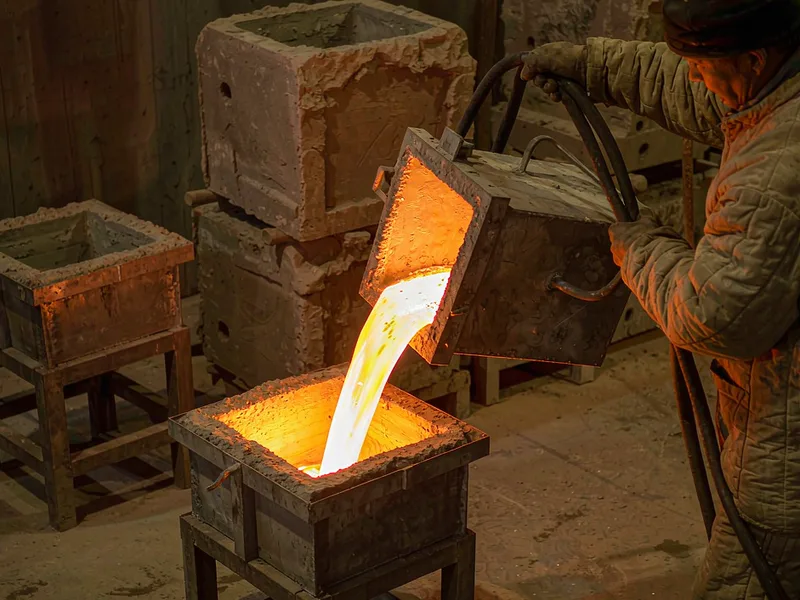
Gravity and sand casting open the door to heat-treatable alloys. ZL101, or ZAlSi7Mg, is the workhorse. With a T6 temper it reaches high strength and good ductility. It suits structural brackets and covers that carry real load.
ZL104, or ZAlSi9Mg, casts more easily than ZL101 and costs less. It tolerates complex geometry and thin sections. It is common in housings and manifolds where castability matters more than peak strength.
ZL107, or ZAlSi7Cu4, adds copper for strength and hardness at high temperature. It fits engine-related parts that run hot. ZL201, a copper-based alloy, pushes strength higher still, but it casts poorly and needs careful gating. Reserve it for aerospace-class parts with a strong quality plan.
How to Verify a Chinese Data Sheet
Start with the standard number. A real sheet cites GB/T 1173 or GB/T 15115, plus the exact grade. If it lists only a trade name, ask for the standard reference before you approve anything.
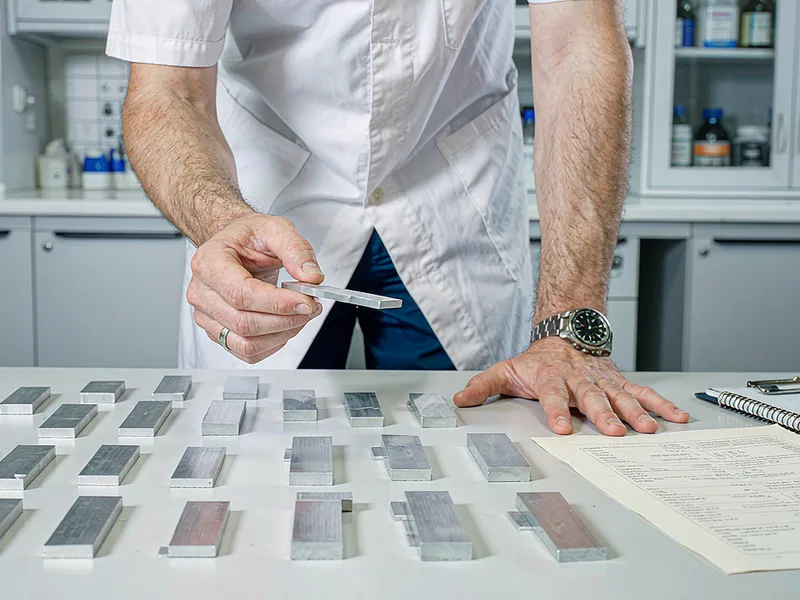
Next, check the temper and the process. ZL101 changes a lot between as-cast, T4, T5, and T6. A sheet that omits temper tells you nothing about strength. Confirm whether the test bar was cast separately or cut from the part, because values differ.
Finally, confirm chemistry and traceability. Ask for a lot-level chemical analysis, not a generic table. For export work, add RoHS and REACH statements. A careful Chinese casting aluminum alloy supplier will have all of this ready, and the request alone tells you a lot about the plant.
External Links
- North American Die Casting Association (NADCA) — publishes alloy data and design guidance that help you compare GB grades with North American practice.
- ASTM B85 — the US specification for aluminum-alloy die castings, useful when you map YL grades to A380 or A383.
- International Organization for Standardization (ISO) — source of ISO 3522, which defines many casting alloys that overlap with GB grades.
FAQ
What is the Chinese casting aluminum alloy equivalent of A356?
ZL101, also written ZAlSi7Mg, is the closest match. Like A356 it is an Al-Si-Mg alloy, and it is heat treated to T6 for high strength. ZL101A is the higher-purity version with better ductility.
Is YL113 the same as ADC12?
They are close equivalents and often used interchangeably. YL113 follows GB/T 15115 and ADC12 follows JIS H 5302, with only small chemistry differences. Confirm the exact window before any critical swap.
What does the ZL prefix mean?
ZL stands for a general casting aluminum alloy under GB/T 1173. The letters mark a cast alloy, and the number is a sequence code. The long form, such as ZAlSi9Mg, spells out the alloying elements instead.
Which grade should I pick for sand casting?
Start with ZL101 for strength and ZL104 for castability. Use ZL107 when the part runs hot. Choose ZL201 only when you need maximum strength and can support careful process control.
How do I verify a Chinese casting aluminum alloy spec?
Ask for the standard number, the exact grade, and the temper. Request lot-level chemistry plus mechanical test results and RoHS or REACH statements. If any of these is missing, hold the approval.