Chinese Aluminum Alloy Grades Explained with International Equivalents
Chinese aluminum alloy grades look like a code to anyone raised on ASTM or EN numbers. Once you learn the rules, they are actually logical. China publishes its designations in GB standards, and those standards borrow heavily from the international system. Wrought grades often share the same four-digit numbers you already use. Casting grades follow their own ZL and YZ prefixes. The trick is knowing which system applies and where the numbers stop matching. This guide explains how the naming works, tables the grades you will meet most, and gives clear equivalents across AA, EN, and JIS designations. By the end, you can read a Chinese spec and map it to alloys you trust. With that skill, grade swaps stop feeling like a gamble.
Key Takeaways
- China publishes aluminum designations in GB standards, chiefly GB/T 3190 for wrought and GB/T 1173 and GB/T 15115 for castings.
- Many wrought grades copy their AA number directly, so 6061 in China is the same 6061 you know.
- A letter in the prefix, as in 2A12 or 7A09, marks a Chinese modification of an AA alloy.
- Casting grades use ZL codes for gravity and sand casting and YZ or YL codes for die casting.
- Numbers alone are not enough; always check the temper, the process, and the exact chemistry window.
How China Names Aluminum Alloys
China runs two naming worlds side by side. For wrought products, the standard is GB/T 3190, and it follows the international four-digit system. For castings, separate standards cover gravity, sand, and die casting. That split explains most of the confusion buyers feel.
Wrought grades look familiar because China aligned them with the global system decades ago. A 6061 extrusion from China carries the same number as a 6061 extrusion from the US. Alloy families run from 1xxx (pure aluminum) to 8xxx, just as they do everywhere else.
The mutation sits in the letter codes. When Chinese engineers tweak a familiar alloy, they add a letter. So 2A12 is a Chinese version of 2024, and 7A09 sits close to 7075. These versions are not identical, and the differences affect strength, corrosion, and welding.
The Four-Digit Wrought System and Its Equivalents
The first digit sets the family. 1xxx is nearly pure aluminum. 3xxx adds manganese. 5xxx adds magnesium for marine use. 6xxx adds magnesium and silicon for extrusion. 7xxx adds zinc for high strength.
The table below lists grades that appear most often on global drawings. Where the Chinese and AA numbers match, they describe the same alloy. Where they differ, treat the pairing as close, not exact.
| Chinese grade | AA / ASTM | EN designation | Typical use |
|---|---|---|---|
| 1070A | 1050 / 1070 | EN AW-1070A | Electrical conductors, foil |
| 3003 | 3003 | EN AW-3003 | Panels, heat exchangers |
| 5052 | 5052 | EN AW-5052 | Marine parts, tanks |
| 6061 | 6061 | EN AW-6061 | Structural extrusion, frames |
| 6063 | 6063 | EN AW-6063 | Architectural profiles |
| 2A12 | 2024 (near) | EN AW-2024 (near) | Aircraft skins, fasteners |
| 7A09 | 7075 (near) | EN AW-7075 (near) | Aerospace, high-strength parts |
Notice the pattern. When the number matches, the alloy matches. When a letter appears, expect a small chemistry shift. That shift is usually a deliberate choice for local casting, welding, or cost reasons.
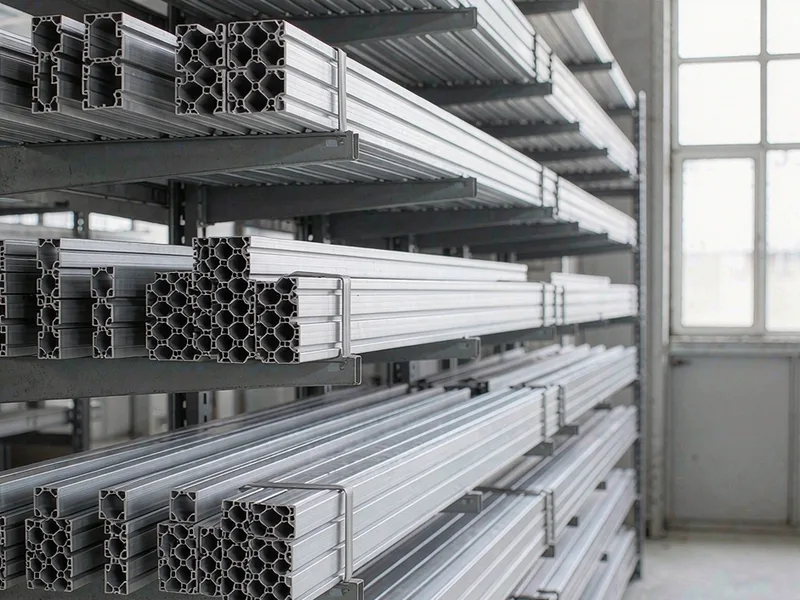
Wrought alloys also carry a temper code. The letter and number after the alloy, such as H14 or T6, describe how the metal was strengthened. H tempers come from strain hardening. T tempers come from heat treatment. Two extrusions of the same grade can differ by a factor of three in strength because of temper alone. Always quote the full designation, not just the four digits.
Casting Grade Codes in the GB System
Casting alloys do not use the four-digit wrought system. Instead, they carry a short code starting with ZL, plus a long form that spells out the chemistry. ZL stands for a cast aluminum alloy, and the number is a sequence index.
Read the long form as a recipe. ZAlSi9Mg is an aluminum alloy with about 9% silicon and a little magnesium. The element symbols and numbers tell you the main additions at a glance, without a lookup table.
One code can hide real variation. Two suppliers may cast the same ZL grade with different iron levels, and that changes ductility and machinability. Ask for the chemistry window on the certificate, not just the code.
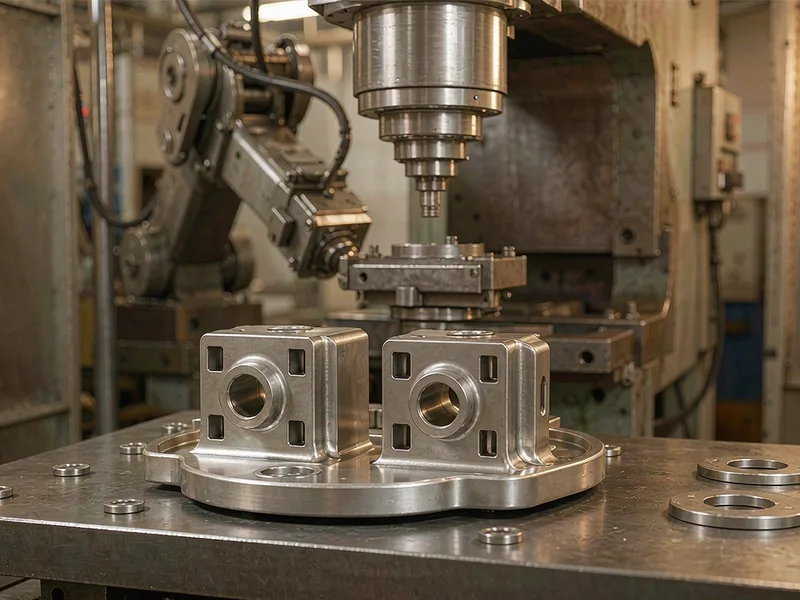
Die casting uses a different prefix. YZ or YL marks a die casting alloy, and YL113 is the common one for high-pressure work. It maps closely to ADC12 and A383. So a Chinese drawing may say YL113 while your reference prints ADC12, and both point to nearly the same metal.
Reading International Equivalents Safely
Equivalence tables are a shortcut, not a guarantee. Two standards can describe the same alloy family and still differ in a narrow window. That gap matters most for corrosion performance, anodizing, and welding, where small copper or iron changes decide the outcome.
Use the table to shortlist, then confirm the details. Check the temper code, such as T4, T5, or T6. Check the product form, because sheet and extrusion behave differently at the same grade. Check the test method behind any strength number.
Regional standards add another layer. JIS in Japan, DIN in Germany, and AA in the United States each publish their own windows. ISO 3522 and ISO 209 try to harmonize cast and wrought alloys, but gaps remain. When a part travels between markets, document which standard governs the drawing.
When you compare Chinese aluminum alloy grades with foreign ones, ask your supplier for the certified mill certificate. That document ties the number to a real heat of metal. A generic equivalence chart ties it to nothing.

Common Mistakes When Mapping Grades
The first mistake is treating a near-match as exact. A 2A12 part is not the same as a 2024 part in every respect. If your design is sensitive to corrosion or fatigue, verify the chemistry rather than assume the swap is safe.
The second mistake is ignoring the temper. A 6061-T6 extrusion and a 6061-O extrusion share a number but deliver wildly different strength. The temper is part of the grade, not an optional extra.
The third mistake is mixing wrought and cast grades. Wrought numbers like 6061 do not apply to castings, and cast codes like YL113 do not apply to sheet. Keep the two systems separate in your mind and most errors disappear. With those three checks in place, working across Chinese aluminum alloy grades becomes routine instead of risky.
External Links
- International Organization for Standardization (ISO) — source of ISO 3522 and ISO 209, which underpin many casting and wrought alloy designations.
- ASTM B85 — the US specification for aluminum-alloy die castings, useful when you map YL and YZ grades to A380 or A383.
- ASM International — publishes alloy data and handbooks that help you compare equivalent grades by chemistry.
FAQ
Are Chinese aluminum alloy grades the same as AA grades?
Often yes for wrought alloys. China aligned many of its numbers with the AA system, so 6061 and 6063 match directly. Grades with a letter in the prefix, such as 2A12, are Chinese modifications and are close but not identical.
What does 2A12 mean in China?
It is a Chinese alloy close to AA 2024. The letter A marks a local modification of the base alloy. It offers high strength for aircraft and fastener parts, but confirm the exact chemistry before you substitute it for 2024.
How do I convert a ZL code to an international grade?
Start with the long form, such as ZAlSi7Mg, then match the alloy family. ZL101 maps to A356, and ZL104 maps to the A360 family. Treat every mapping as close and verify strength and temper data.
Is YL113 the same as ADC12?
They are commercial equivalents used across Asia for high-pressure die casting. YL113 follows GB/T 15115 and ADC12 follows JIS H 5302. Small chemistry differences exist, so confirm tolerances and any corrosion or finishing needs first.
Why do equivalent grade tables disagree?
Standards define ranges, not single values, and each region sets its own windows. Two tables can list the same alloy with slightly different limits. Always trust the certified mill certificate over any equivalence chart.