7075 vs 6061 Aluminum: Strength, Cost & Castability
The 7075 vs 6061 aluminum question comes up on almost every aerospace, motorsport, and tooling project we quote. Both are heat-treatable, both machine well, and both carry a premium over die casting alloys. Yet they are built for very different jobs. 7075 delivers high strength and pays for it in cost, corrosion care, and welding trouble. 6061 trades peak strength for toughness, weldability, and a lower price. This guide compares the two on the numbers that matter: strength, density, cost, machinability, and castability. We also explain why neither is a true high pressure die casting alloy, and what to use instead when you need volume. Read the comparison table, then the selection rules we use on real programs.
Key Takeaways
- 7075-T6 reaches about 572 MPa tensile strength, roughly 1.8 times stronger than 6061-T6.
- 6061-T6 offers excellent weldability and corrosion resistance, which 7075 cannot match.
- 7075 costs more and is harder to machine, so it suits aerospace and tooling, not general frames.
- Neither alloy belongs to a high-volume die casting process. Use A380 or ADC12 for that.
- The best pick depends on load, environment, and volume, so compare 7075 vs 6061 aluminum on the whole picture.
What Sets 7075 and 6061 Apart
Both alloys use aluminum as the base and add magnesium plus silicon or zinc for strength. The split comes from the main alloying element. 6061 leans on magnesium and silicon. 7075 leans on zinc, with copper and magnesium alongside it.
That zinc and copper mix is what makes 7075 strong. It also makes the alloy more sensitive to stress corrosion and harder to weld. The trade-off between them starts right there, in the chemistry.
Heat treatment unlocks the strength in both. The T6 temper solution-treats the metal and then ages it to peak hardness. Skip the temper and both alloys feel soft and ordinary. Order the wrong temper and your design margins disappear. The same drawing can pass or fail simply on the temper called out.
Strength: How the Two Alloys Compare
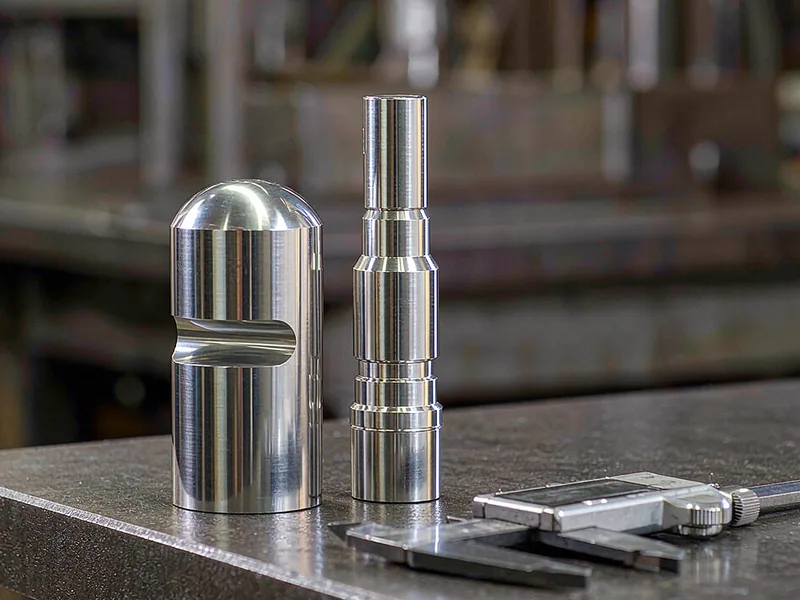
The table below uses published typical values for the T6 temper. Use it as a starting point for concept work, then confirm against the mill certificate for your lot.
| Property | 7075-T6 | 6061-T6 |
|---|---|---|
| Tensile strength | 572 MPa | 310 MPa |
| Yield strength | 503 MPa | 276 MPa |
| Elongation | 11% | 12% |
| Hardness (Brinell) | 150 HB | 95 HB |
| Density | 2.81 g/cm³ | 2.70 g/cm³ |
| Weldability | Poor | Excellent |
| Corrosion resistance | Moderate | Excellent |
| Relative material cost | Higher | Lower |
Those numbers explain the market. Where every gram and every MPa counts, 7075 wins. Where the part is welded, exposed to weather, or built in volume, 6061 wins by a wide margin.
Stiffness deserves a note too. Both alloys share a similar elastic modulus, near 69 GPa. So 7075 does not flex less than 6061 at the same section. It simply carries more load before it yields or breaks. That distinction changes how you design ribs and wall thickness.
Fatigue life follows strength. Under repeated cycles, 7075 resists cracking longer when the surface stays clean. Scratch or pit that surface and the advantage shrinks fast. This is why 7075 parts often get shot peening or a protective coating.
Cost and Machining Reality
Strength on paper is not the whole bill. 7075 stock costs more per kilogram, and it machines slower. The alloy is harder on tools, so you run lower feeds and change inserts sooner. Those two effects stack.
6061 cuts freely and holds a clean finish. It also anodizes to a consistent color, which matters for visible parts. A shop can run 6061 at higher speed and reach a lower finished cost per part. That finish advantage saves labor on any visible part.
When we compare the two for a customer, we price the whole route. Material, machining time, tool wear, and finishing all enter the number. On lightly loaded parts, 6061 often lands 20 to 40 percent cheaper once the route is complete.
Castability: The Limit Most Buyers Miss
Here is the point that surprises people. Neither 7075 nor 6061 is a high pressure die casting alloy. Die casting runs on A380, ADC12, and similar grades that flow fast and freeze clean. Those grades are tuned for flow and quick freezing, not for peak strength.
7075 resists casting even with other methods. Its wide freezing range and hot-short nature cause cracks and poor fill. Foundries rarely offer it as a casting alloy at all. 6061 casts better, but it still trails the dedicated die casting grades for thin walls and fine detail.
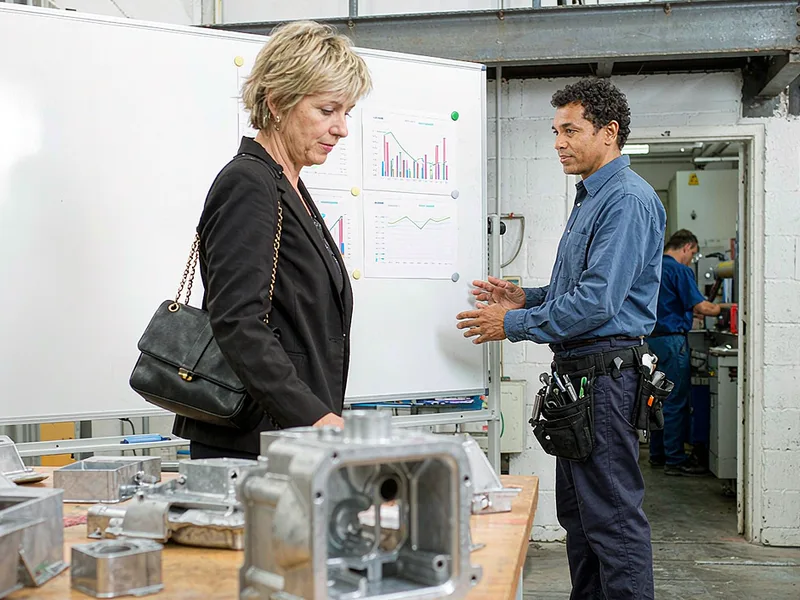
The practical takeaway is simple. If your part must be 7075 or 6061, you are usually machining or extruding, not die casting. If you need thousands of parts with complex shape, a die casting alloy will beat both on cost and speed.
There is a middle path worth knowing. Some shops cast a part in a castable alloy and then machine it to final form. That route handles complex geometry that solid stock cannot reach. It rarely replaces die casting at volume, but it fills a useful gap for mid-size runs.
Choosing Between Them
Start with the load. If a part sees high stress and weight is critical, look hard at 7075. Aircraft fittings, racing suspension, and mold tools are classic fits. Accept the extra cost and the coating you will need for corrosion.
If the part is welded, weather-exposed, or built at scale, 6061 is the safer pick. Bicycle frames, marine hardware, and general structures all lean on it. You give up peak strength and gain toughness and peace of mind.
The 7075 vs 6061 aluminum decision should also weigh volume. For a few hundred machined parts, either alloy works. For tens of thousands of identical complex parts, stop comparing these two and talk to a die caster about A380 instead.
One last check helps every time. Ask whether the part truly needs the stronger alloy, or just a better design. A thicker rib or a smarter fillet in 6061 often matches the strength of a 7075 part at lower cost. Strength is a system property, not a single material number.
External Links
- ASM International — publishes the reference data and handbooks engineers use to compare aluminum alloy properties.
- ASTM B85 — the standard specification for aluminum-alloy die castings, covering chemistry and mechanical properties.
- International Organization for Standardization (ISO) — source of ISO 8062, the tolerance system applied to castings worldwide.
FAQ
Is 7075 stronger than 6061 aluminum?
Yes. 7075-T6 reaches about 572 MPa tensile strength against 310 MPa for 6061-T6. That is roughly 1.8 times stronger, which is why aerospace parts favor 7075.
Why is 6061 more common than 7075?
6061 welds well, resists corrosion, costs less, and machines fast. For most general structures those traits matter more than peak strength, so 6061 dominates the market.
Can you die cast 7075 or 6061 aluminum?
No, not in a standard high pressure process. Both resist the fast fill and freeze that die casting needs. Use A380, ADC12, or a similar die casting grade instead.
Which alloy is better for corrosion?
6061 wins. It resists weathering without extra help. 7075 needs a coating or anodized layer in most outdoor or wet environments to avoid corrosion.
Does 7075 vs 6061 aluminum matter for cost?
Yes, it changes the whole route. 7075 costs more and machines slower, so a finished part can run well above the 6061 price for the same shape and size.