ZL101 & ZL104: Chinese Gravity Casting Grades Explained
Sourcing castings from China means reading a different alloy language. The GB/T designation system replaces names like A356 and A360 with codes such as ZL101 and ZL104, and RFQs stall the moment buyers cannot map them. Both grades sit in the Al-Si-Mg family, both pour well in sand and permanent molds, and both respond to heat treatment. Yet they are not interchangeable. One favors ductility and pressure tightness; the other favors fluidity and thin sections. Pick the wrong one and you pay for it in machining hours, leak rejects, or scrapped heat-treat lots. This guide explains what ZL101 aluminum alloy and ZL104 actually are, how their chemistry and properties compare, which casting route suits each, and how we specify them on real programs so your drawings reach the foundry without ambiguity.
Key Takeaways
- ZL101 aluminum alloy is the Chinese GB/T counterpart of A356; ZL104 sits closer to A360.
- Both are gravity and low-pressure casting grades; neither is meant for high-pressure die casting.
- ZL101A in the T6 temper reaches roughly 280–300 MPa tensile strength with 3–5% elongation.
- ZL104 carries more silicon, so it fills thinner, more intricate sections but gives up ductility.
- Specify grade, temper, and test method together — the designation alone does not define the part.
What ZL101 and ZL104 Actually Are
ZL101 is the workhorse Al-Si-Mg casting grade in the Chinese GB/T 1173 system. Its refined version, ZL101A, tightens iron and gas limits for higher-integrity parts. Foundries pour it into sand, gypsum, and permanent molds across automotive, pump, and lighting applications. The chemistry holds about 6.5–7.5% silicon and 0.25–0.45% magnesium, a combination that casts easily and responds strongly to aging.
ZL104 raises silicon to roughly 8.0–10.5% and keeps magnesium in a similar band. The extra silicon improves fluidity and resists hot tearing. That is why ZL104 shows up on thin-walled, rib-heavy housings where ZL101 aluminum alloy would struggle to fill without cold shuts. In practice the two grades often compete for the same drawing, and the winner is decided by geometry, not by price.
Neither grade belongs in a high-pressure die casting machine. They are gravity, tilt, and low-pressure alloys, designed for slower fill and directional solidification. If your program needs die-casting wall limits and second-level cycle times, look at YL112 or ADC12 instead. Choose ZL grades when the part needs heat treatment, weld repair, or pressure tightness that HPDC cannot deliver.
Composition and Mechanical Properties Compared
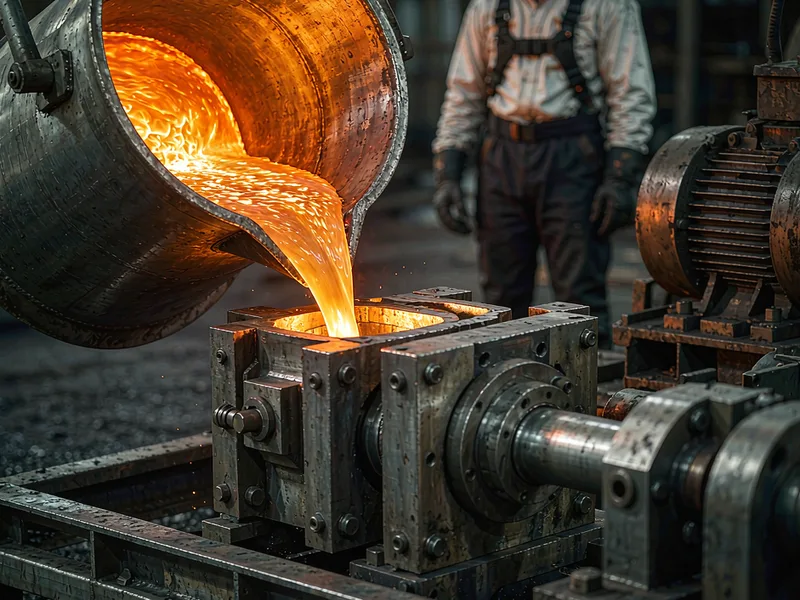
The table below lists nominal chemistry ranges and typical properties from GB/T 1173 for separately cast test bars. Treat the mechanical values as design targets for well-fed sections, not guarantees for every feature on the part.
| Grade / Temper | Si (%) | Mg (%) | Tensile (MPa) | Elongation (%) | Main casting route |
|---|---|---|---|---|---|
| ZL101 – T4 | 6.5–7.5 | 0.25–0.45 | 170–200 | 4–8 | Sand / permanent mold |
| ZL101A – T6 | 6.5–7.5 | 0.25–0.45 | 280–300 | 3–5 | Permanent mold / low pressure |
| ZL104 – T1 | 8.0–10.5 | 0.17–0.35 | 190–220 | 1.5–2.5 | Sand / permanent mold |
| ZL104 – T6 | 8.0–10.5 | 0.17–0.35 | 230–260 | 1–2 | Permanent mold |
Values reflect typical GB/T 1173 requirements. Thick or poorly fed sections test lower; verify critical properties on cast bars cut from the part.
Two details matter when you compare these rows. First, the T6 jump: heat treatment nearly doubles the strength of ZL101 aluminum alloy versus the as-cast T4 state. Second, the elongation gap: ZL104 gives back ductility for fill ability, which is a fair trade on stiff housings and a bad one on impact parts.
ZL101 vs ZL104: Choosing for Your Part
Choose ZL101 aluminum alloy when the drawing rewards ductility. Pressure-tight pump housings, suspension brackets, and parts that see impact or weld repair all favor it. Its T6 condition delivers the best strength-to-elongation balance in this family, and refined ZL101A keeps porosity low enough for leak testing without impregnation on most designs.
Choose ZL104 when geometry drives the decision. Long flow paths, dense rib packs, and 3–4 mm walls fill more reliably because the higher silicon keeps metal liquid longer before it freezes. Strength stays adequate for most housings, but elongation drops toward 1–2% in the T6 temper, so keep it away from crash-load hardware.
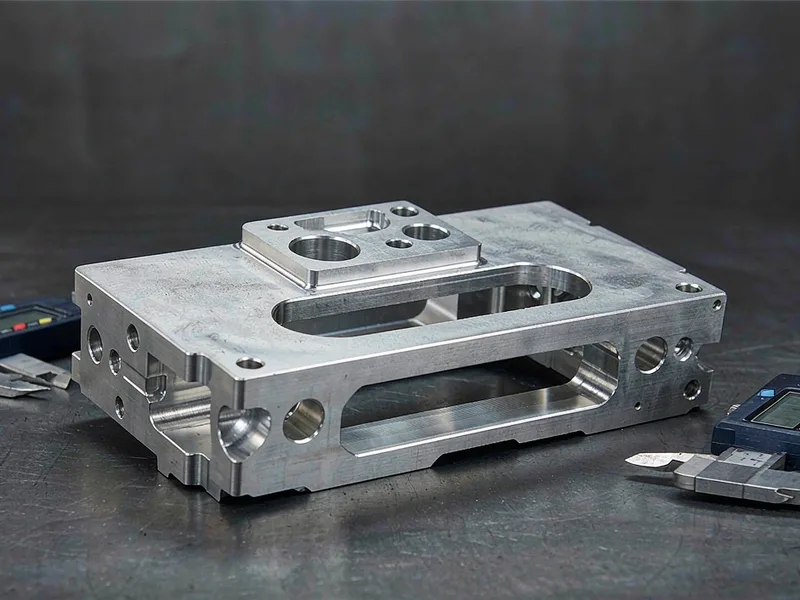
Cost rarely separates the two grades. Both use similar melting practice and the same aging cycles, so alloy price moves the quote by only a few percent. The real cost driver is scrap. A grade mismatched to the geometry burns money in weld repairs and leak rejects long before any alloy premium shows up on the quotation.
Heat Treatment, Corrosion, and Weldability
A T6 heat treatment unlocks the strength these grades are bought for. ZL101A gets a solution soak near 535 °C, a cold or hot water quench, and an artificial age around 150–180 °C. ZL104 follows a similar schedule at slightly lower solution temperature. Watch distortion: thin flanges can warp in the quench, so fixtures or correction presses must be planned into the route.
Corrosion behavior is good for both grades. The high silicon content leaves a stable surface oxide, and atmospheric service rarely needs more than a coating for appearance. Salt spray changes the picture: pitting starts at iron-rich phases, so keep iron under the GB/T limit and specify e-coating or anodizing for coastal or road-salt exposure.
Weldability is where the grades separate clearly. ZL101 aluminum alloy welds readily by TIG with 4043 or 4047 filler, which keeps weld-repair and weld-assembly options open. ZL104 can be welded, but its higher silicon narrows the process window and raises hot-crack risk during repair. If your process plan includes welding, that alone often decides the grade.
How We Specify ZL Grades on New Drawings
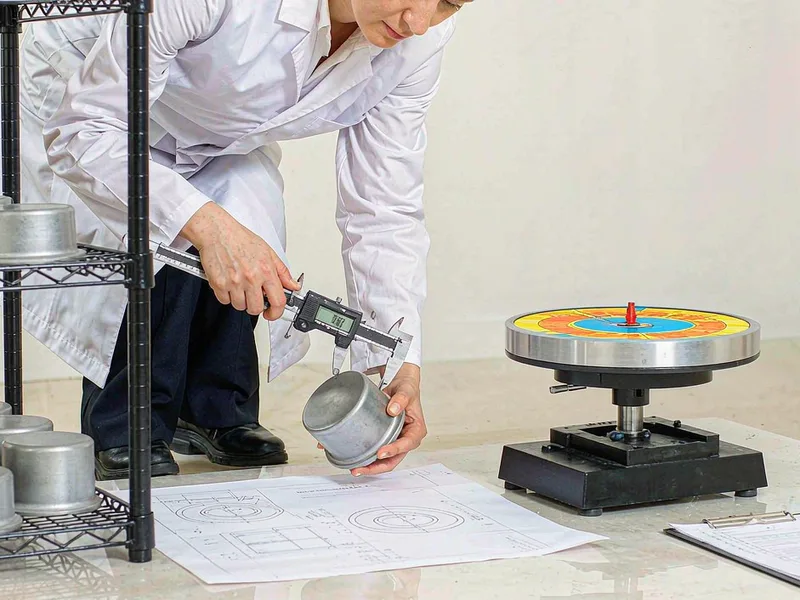
Every drawing we review goes through the same screen. We confirm the GB/T grade and temper against the load and pressure requirements. We check section thickness against the fill ability of the alloy. We tie mechanical values to test bars cut from defined locations, not to unattached coupons. Then we return a marked-up drawing with the grade callout written the way the foundry needs it.
If you are converting an A356 or A360 part to a Chinese source, send us the print. We will map the Chinese casting grades line by line, flag any callout that does not transfer, and quote the part in the right alloy the first time.
External Links
- ASM International — authoritative alloy data sheets covering Al-Si-Mg casting alloy properties and heat treatment practice.
- North American Die Casting Association (NADCA) — industry design guidance useful when comparing gravity cast and die cast alloy families.
- ASTM B85 — standard specification for aluminum-alloy die castings, a practical reference when mapping Chinese grades to ASTM chemistry windows.
FAQ
What is the A356 equivalent of ZL101?
ZL101A is the closest match. Its silicon and magnesium windows align with A356, and T6 properties land in the same band. Treat them as near-equivalents, but always confirm the test bar type and temper on the purchase drawing.
Can ZL104 be used for high-pressure die casting?
It is not designed for it. ZL104 targets gravity, tilt, and low-pressure casting, where slow fill and directional solidification do the work. For HPDC, Chinese foundries use YL-series alloys such as YL112 or ADC12 equivalents.
Which temper should I order for ZL101 parts?
Order T6 when you need maximum strength with useful ductility. Choose T5 when dimensional stability matters more than peak strength, and T4 when the part will be formed or welded after casting.
How does ZL104 compare with A360?
The silicon windows overlap, but A360 runs higher magnesium, about 0.4–0.6% versus 0.17–0.35% for ZL104. That pushes A360 slightly stronger and less ductile. Cross-mapping is workable, yet properties must be re-qualified on the new grade.
Can ZL101 castings be welded and re-heat-treated?
Yes. TIG welding with 4043 filler works well, and the weld area recovers much of its strength after a re-aging cycle. Plan the weld before final machining so distortion stays under control.