Hypoeutectic vs Eutectic Al-Si Alloys in Die Casting
Nearly every aluminum die casting you buy is an aluminum-silicon alloy, and the silicon percentage quietly decides how that part behaves. Cross the line at 12.6% silicon and you move from hypoeutectic territory into a true Al-Si eutectic alloy, with real consequences for fluidity, porosity, ductility, and machining. Most workhorse grades — A380, ADC12, A360 — sit well below the line. Grades like A413 and ADC1 sit right on it. This guide explains the phase diagram in plain terms, shows how the two microstructures differ, compares the property trade-offs with real numbers, and lays out the selection logic we use when a drawing could run on either type of alloy. The goal is simple: pick the silicon level that matches the part you are building, not the habit left over from your last supplier.
Key Takeaways
- The Al-Si eutectic point sits at 12.6% silicon and 577 °C — the boundary separating the two families.
- Hypoeutectic alloys (A380, ADC12, A360) freeze with soft aluminum dendrites, which support ductility and heat treatment.
- An Al-Si eutectic alloy such as A413 or ADC1 fills thin sections better and seals pressure-tight more reliably.
- Eutectic structures hold less shrinkage porosity, but the eutectic silicon must stay refined to avoid brittle plate-like particles.
- Machinability and heat-treat response favor hypoeutectic chemistry; leak tightness and intricate thin walls favor eutectic.
The Phase Diagram in Plain Terms
The aluminum-silicon phase diagram has one famous landmark: the eutectic point at 12.6% silicon and 577 °C. Below that composition, an alloy is hypoeutectic — soft aluminum dendrites freeze first, and the eutectic mixture fills the gaps between them. Above it, hard primary silicon particles appear. The eutectic composition itself melts and freezes at a single temperature, which is exactly what makes it special in a die.
That single-temperature freezing matters more than any other detail. A hypoeutectic alloy solidifies across a temperature span, spending part of its life as a mushy mix of solid dendrites and liquid. That mushy zone traps interdendritic shrinkage and demands feeding. A true Al-Si eutectic alloy stays fully liquid until it freezes almost instantly, so it keeps flowing into thin features right up to the end and leaves fewer shrink voids behind.
Think of it as a traffic problem. Dendrites are obstacles in the flow path; eutectic metal has none. The practical result shows up at the die: near-eutectic metal fills long, thin, intricate sections that a dendritic alloy of the same temperature would refuse to complete.
Hypoeutectic Alloys: Dendrites First
Under the microscope, a hypoeutectic casting shows white aluminum dendrites surrounded by fine eutectic. Those dendrites are the reason these alloys bend before they break. Deformation spreads through the soft primary aluminum instead of snapping along brittle silicon, so elongation runs 2–4% in typical die castings, and toughness follows.
Dendrites also open the door to heat treatment. Add magnesium to a hypoeutectic chemistry and the alloy responds to T6 aging — that is the basis of AlSi10Mg and A360-style structural grades. It is no accident that shock towers, battery enclosures, and suspension components all run hypoeutectic chemistry. Eutectic alloys have nothing to age-harden and little elongation to give.
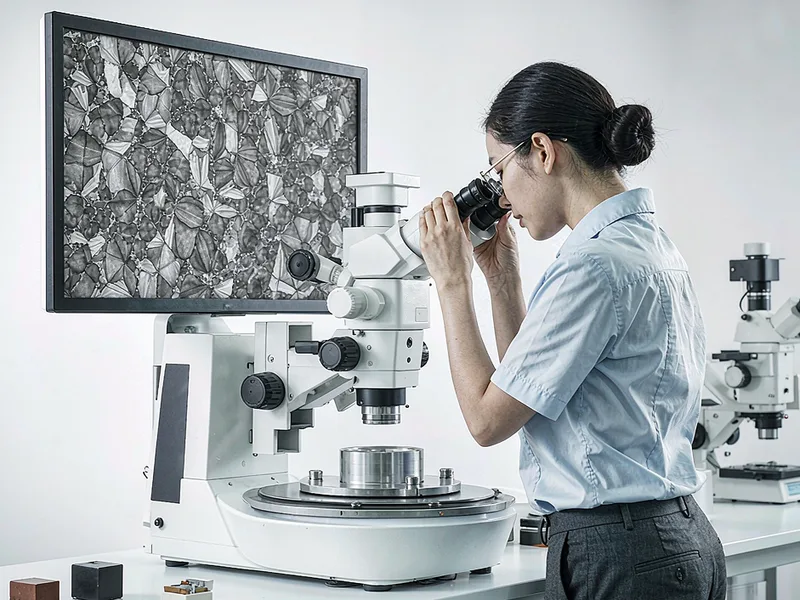
Machining completes the case for the dendritic side. Soft primary aluminum cuts into clean, short chips and spares cutting edges. Higher silicon content steadily hardens the job, so a drawing with heavy machining usually lands on a hypoeutectic grade, sometimes one at the low end of the silicon window.
Eutectic Alloys: Fluidity and Leak Tightness
An Al-Si eutectic alloy carries little or no primary aluminum, so its structure is eutectic from edge to edge. With no dendrites in the way, fluidity is the best in the aluminum family, hot-tear resistance is excellent, and solidification shrinkage stays low. These are the alloys you reach for when a housing is thin, convoluted, and must pass a leak test every shot.
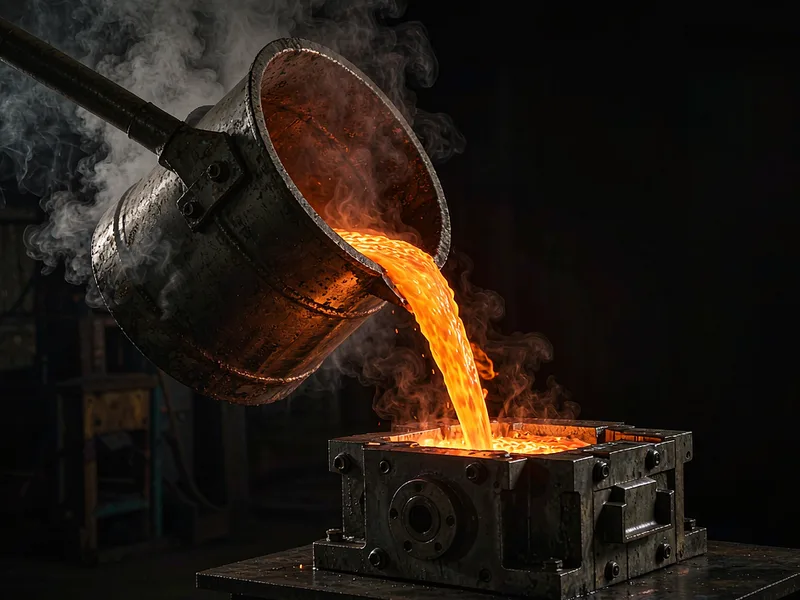
The table below places the common die casting grades along the silicon scale. Note how the tasks line up with the chemistry.
| Alloy | Si (%) | Family | Best known for |
|---|---|---|---|
| A380 | 7.5–9.5 | Hypoeutectic | General purpose: strength plus castability |
| A360 | 9.0–10.0 | Hypoeutectic | Corrosion resistance and heat-treat response |
| ADC12 | 9.6–12.0 | Hypoeutectic | Broad die casting workhorse across Asia |
| A413 | 11.0–13.0 | Near-eutectic | Pressure tightness and thin walls |
| ADC1 | 11.0–13.0 | Eutectic | Maximum fluidity for intricate parts |
High-pressure grades also carry 0.7–1.3% iron to resist die soldering; iron stays lower in gravity casting chemistry.
One warning belongs next to the table. The silicon in an unmodified Al-Si eutectic alloy can grow into coarse, plate-like particles that slash ductility and fatigue life. Strontium modification and the fast solidification of high-pressure die casting both refine it, but a serious program verifies the microstructure, not just the chemistry certificate.
Practical Trade-offs in the Casting Shop
On the melt floor, the two families behave almost identically. Both melt in the same furnaces, both run through the same cold chamber machines, and both want iron in the 0.7–1.3% band to keep metal from soldering to the die steel. The differences hide in the details: near-eutectic melts forgive sloppy gating because they fill so well, while dendritic alloys punish long, thin flow paths with misruns.
Secondary operations are where the trade becomes real. Machining a near-eutectic part costs more tool time because hard silicon and lower ductility roughen the cut. Heat treating is simply off the table. On the other side, a leak-test reject rate of half a percent on a dendritic housing can erase every machining saving — pressure tightness is a cost line, even when the quote hides it.
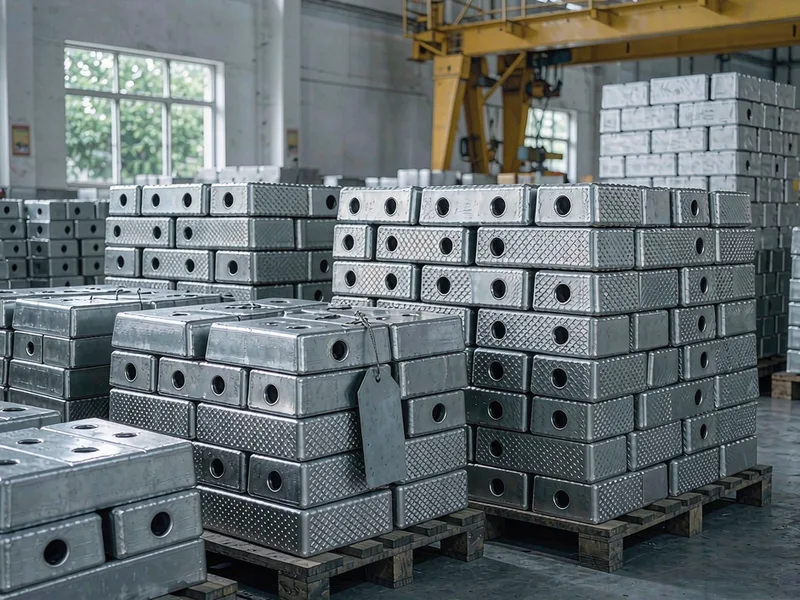
Keep hypereutectic chemistry out of the conversation unless wear is the whole point. Above 12.6% silicon, primary silicon crystals appear, hardness climbs, and machinability collapses — A390 parts are famous for it. That is a different alloy family with a different business case.
Choosing Between the Two Families
Start with the function, not the grade list. If the part carries loads, gets welded or heat treated, or spends much of its life on a machining center, a hypoeutectic alloy such as A380, A360, or AlSi10Mg earns the drawing. If the part is thin, intricate, and must not leak — valve bodies, manifolds, filter housings — an Al-Si eutectic alloy such as A413 or ADC1 will fill it cleanly and pass the test bench.
Price rarely decides this. Ingot costs track silicon loosely, and both families run the same machines and the same cycle times. What moves the total cost is scrap: leak rejects, machining tool wear, and heat-treat distortion. Choose the family that attacks your dominant cost, and the alloy price takes care of itself.
Send us your drawing and its duty cycle. We will map the flow paths, count the machining hours, and recommend a specific grade with the reason in writing — before any tooling steel gets cut.
External Links
- ASTM B85 — the standard specification covering A380, A360, and A413 aluminum-alloy die castings, including silicon ranges.
- North American Die Casting Association (NADCA) — alloy comparison data and die design guides for high-pressure aluminum casting.
- ASM International — phase diagram and microstructure references for the aluminum-silicon system.
FAQ
What is the eutectic composition of Al-Si alloys?
12.6% silicon at 577 °C. At that composition the alloy freezes at a single temperature instead of over a range, which gives maximum fluidity and minimum shrinkage porosity in a casting.
Is A380 a hypoeutectic or eutectic alloy?
A380 is hypoeutectic, with 7.5–9.5% silicon. It freezes dendritically, which is why it offers good ductility and general-purpose strength rather than the extreme fluidity of A413 or ADC1.
Why does an Al-Si eutectic alloy hold pressure better?
Two reasons: it has no dendrites blocking flow, so thin sections fill completely, and it freezes at nearly one temperature, leaving fewer shrinkage paths for leaks. Both effects reduce porosity at pressure boundaries.
Can hypoeutectic die castings be heat treated?
Yes, when magnesium is present. AlSi10Mg-type grades reach useful strength in the T6 temper. Eutectic grades like A413 carry almost no magnesium and gain little from heat treatment, so they are usually used as-cast.
How does silicon content affect machinability?
Every extra point of silicon adds hard particles to the microstructure. Hypoeutectic grades machine cleanly, near-eutectic grades wear tools faster, and hypereutectic alloys above 12.6% silicon demand diamond tooling for volume production.