Copper in Aluminum Casting Alloys: Strength Gain, Corrosion Cost
Aluminum copper casting alloy grades dominate high pressure die casting for one simple reason: copper is the cheapest strength you can buy. Add 3 to 4 percent copper to an aluminum-silicon base and yield strength climbs, machining chips break cleaner, and the melt flows better into thin sections. The bill arrives later, in corrosion. Copper accelerates pitting and galvanic attack, especially where salt or humidity is present. So every copper-bearing grade is a trade between strength now and corrosion cost later. This guide walks you through that trade with real numbers. We cover what copper does inside the melt, how much strength each level actually buys, what corrosion costs over a service life, and where low-copper grades are the smarter pick. By the end, you can read an alloy spec sheet and know exactly what the copper line is doing to your part.
Key Takeaways
- Copper raises strength, hardness, and machinability at minimal added cost.
- The same copper drives pitting and galvanic corrosion in salt and humid air.
- Low-copper grades such as A360 match A380 tensile strength with far better corrosion life.
- Copper plus iron content also protects the die steel from soldering.
- Match copper level to the service environment, not to the datasheet peak strength.
What Copper Does Inside the Melt
Copper dissolves into the aluminum matrix and forms hard intermetallic particles during solidification. Those particles block dislocation movement, which is a materials engineer’s way of saying the metal gets harder to bend. Yield climbs first. Tensile strength follows. Ductility drops a little, but die casting alloys keep enough elongation for most hardware.
Copper also helps in the die. It narrows the freezing range, so the casting locks up faster and feeds more cleanly. That means shorter cycles and fewer shrink defects. Machinists notice it too: copper-rich chips break into short segments instead of long birds’ nests. That cuts cycle time on every drilled hole.
Finally, copper improves hot tearing resistance when paired with enough iron. Together the two elements reduce soldering between the melt and the die steel. Die life is a quiet cost line, and copper quietly extends it. That is one more reason every aluminum copper casting alloy stays popular inside the shop.
The Strength Gain You Can Measure
The numbers below come from standard as-cast property tables. Look at the yield column. That is where copper earns its keep. Tensile strength barely moves across the range, but yield strength and hardness climb steadily with copper content.
| Alloy | Nominal Cu (%) | Yield (MPa) | UTS (MPa) | Elongation (%) | Corrosion rating |
|---|---|---|---|---|---|
| A413 | Under 0.1 | 145 | 296 | 2.5 | Excellent |
| A360 | 0.6 max | 172 | 317 | 3.5 | Excellent |
| A383 | 1.0–3.0 | 152 | 310 | 3.5 | Good |
| A380 | 3.0–4.0 | 159 | 317 | 3.5 | Fair |
| B390 | 4.0–5.0 | 241 | 276 | Under 1 | Fair |
Typical as-cast values per ASTM B85. Ratings are relative and assume exposure to salt spray or road de-icing salt.
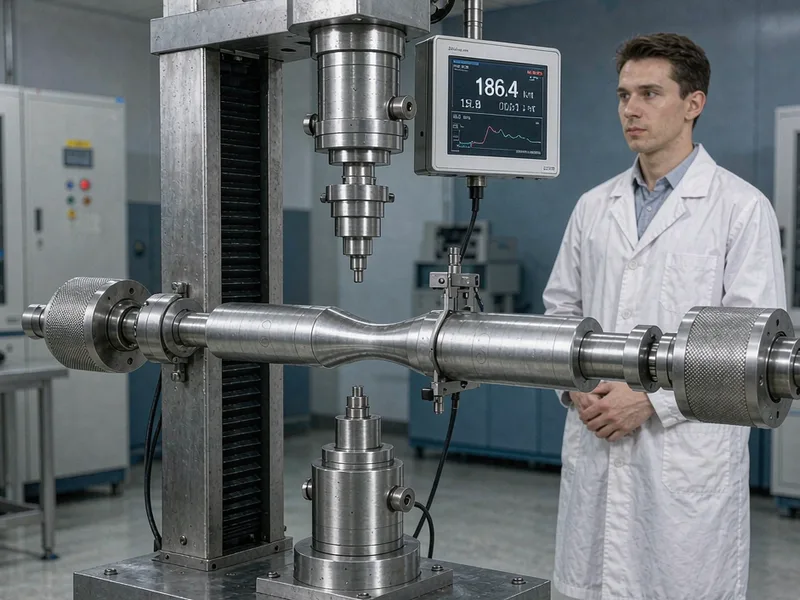
Notice what the table does not show. B390 gives the highest yield and the lowest elongation. That combination cracks under vibration. Most brackets never need B390’s hardness, so most brackets should not carry its corrosion penalty. Choose the yield number your load case needs, then stop.
The Corrosion Cost You Cannot See
Copper changes the electrochemistry of the casting. It forms cathodic particles inside an anodic matrix. In plain water the effect is small. In salt water, those particles become pit nucleation sites, and the pits grow fast. A copper-heavy casting that looks fine on delivery can bleed white corrosion product within one winter on a vehicle.
The cost rarely shows up on a quote. It shows up as warranty claims, field returns, and plating or coating charges. A painted A380 housing outdoors needs a full pretreatment and e-coat stack. The same geometry in A360 often ships with a simple powder coat. Over a program life, the finishing difference can exceed the metal premium several times over.
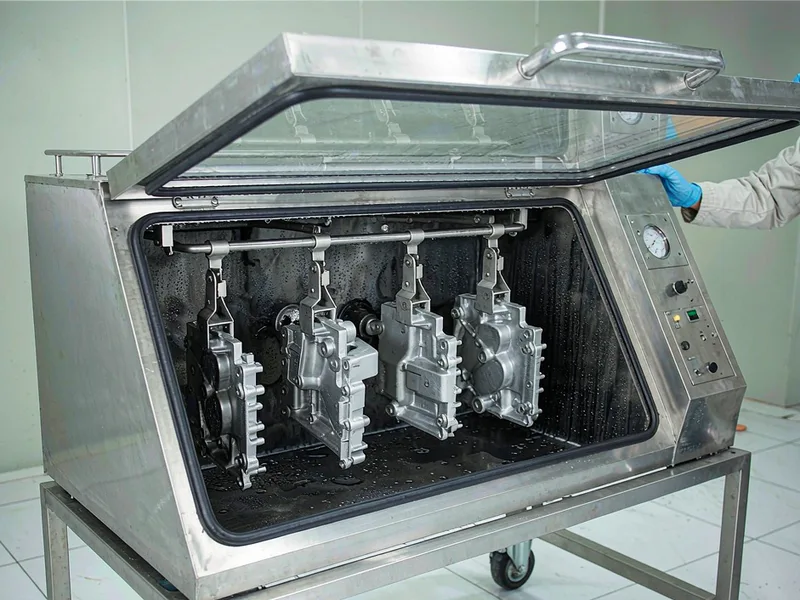
Galvanic couples make it worse. Copper-rich castings bolted to steel or stainless hardware corrode at the joint face first. Engineers see it as seized fasteners, lost clamping load, and leaks at sealed interfaces. None of it appears in a tensile report.
Where Copper Grades Still Win
None of this makes copper a bad choice. It makes copper a poor choice outdoors. Inside a climate-controlled enclosure, corrosion is a non-issue, and A380 — the classic aluminum copper casting alloy — is hard to beat. It fills thin walls, machines fast, resists soldering, and costs the least. The majority of die cast components on the market live in that environment.
Copper also carries real process benefits. Narrower freezing ranges reduce hot tears on difficult geometries. Better machinability shortens secondary operations. If your part has deep cores or heavy drilling, a copper-bearing grade often produces cleaner threads than a pure aluminum-silicon alloy.
Hybrid answers exist too. A383 sits between A380 and the low-copper grades, with better filling for thin walls and somewhat better corrosion behavior. Many electronics housings land there for exactly that reason.
Choosing the Copper Level for Your Part
Start with the environment, not the strength table. Ask three questions. Does the part see rain, salt, or condensation? Will it mate with dissimilar metals? Can a coating protect it reliably for the full service life? If the answers are no, no, and yes, a copper-bearing grade is safe. If any answer is yes, move down the copper ladder.
Then check the load case. Most die cast brackets see yield loads well under 100 MPa. A360 covers that with margin and gives up nothing in corrosion. Reserve B390 for genuine wear surfaces. Reserve A380 for indoor structural work where its machinability saves real money.

Finally, ask your casting partner to quote both grades. The delta is often smaller than buyers expect. When you send us a drawing, we run this screen and return the recommendation with the cost difference spelled out, so you decide with numbers instead of habit.
External Links
- ASTM B85 — standard specification covering chemistry limits and mechanical properties for aluminum-alloy die castings.
- ASM International — reference handbooks on aluminum alloy corrosion behavior and electrochemical data.
- International Organization for Standardization (ISO) — source of ISO 9227, the neutral salt spray test used to qualify coatings and alloys.
FAQ
How does copper change an aluminum copper casting alloy?
Copper forms hard intermetallic particles that raise yield strength, hardness, and machinability. It also narrows the freezing range, which shortens cycle time. The downside is electrochemical: copper particles become cathodic sites that drive pitting corrosion in salt.
Is A380 suitable for outdoor parts?
Only with a robust coating system and no dissimilar-metal contact. Its 3 to 4 percent copper content pits readily in salt. For uncoated or lightly coated outdoor hardware, A360 or A413 is the safer pick.
Which grade gives the best strength-to-corrosion balance?
A360 for most programs. It matches A380 tensile strength, beats it on yield and corrosion resistance, and costs only a small premium. Unless you need A380’s machinability or B390’s hardness, A360 is the default answer.
Does copper content affect die life?
Yes, positively. Copper with adequate iron reduces soldering between melt and die steel, and the faster-freezing chemistry lowers heat load. Shops running a typical aluminum copper casting alloy often see longer die campaigns between polishing.
Can coatings fully offset the corrosion cost?
Often, but not always. A full pretreatment and e-coat stack protects well, yet it adds cost and fails at scratches, fastener holes, and edges. For critical outdoor hardware, engineers prefer lowering copper rather than covering it up.