HKXCAST One-Stop Aluminum Alloy Product Solutions Provider Email :hkxcast@163.com
 08/13/2025
Introduction Low pressure die casting is a highly advanced metal forming process that has become indispensable in modern manufacturing. Unlike traditional gravity or high-pressure casting methods, low pressure die casting involves injecting molten metal into a mold under controlled, low-pressure conditions. This technique offers significant advantages in terms of product quality, efficiency, and versatility. In this article, we will delve into the detailed process of low pressure die casting, its key technologies, and its wide-ranging applications across various industries. Additionally, we will explore the benefits, challenges, and future trends shaping this dynamic field. Low-pressure casting machine The Basic Principle of Low Pressure Die Casting The core principle of low pressure die casting lies in its ability to inject molten metal into a mold at pressures typically ranging from 0.5 to 1.5 bar. This low-pressure environment minimizes gas entrapment, reduces porosity, and enhances the density and surface finish of the castings. Compared to gravity casting, where metal flows under the force of gravity, low pressure die casting ensures a more controlled and uniform filling of the mold cavity. Key Advantages of Low Pressure Die Casting: Low-pressure-casting-production-process The Detailed Process of Low Pressure Die Casting The low pressure die casting process consists of several critical steps: Step 1: Preparation Step 2: Low Pressure Injection Step 3: Cooling and Solidification Step 4: Demolding and Post-Processing Key Equipment and Technologies in Low Pressure Die Casting Effective implementation of low pressure die casting relies heavily on advanced equipment and cutting-edge technologies. Primary Equipment Critical Technologies Applications of Low Pressure Die Casting Low pressure die casting finds extensive use across multiple industries due to its ability to produce high-quality, complex parts with precision. Automotive Industry Aerospace Industry Electronics and Appliances Industry Building and Hardware Industry Advantages and Challenges of Low Pressure Die Casting Advantages Challenges Future…
 08/05/2025
With fast economic growth, industries like cars, communication equipment, trains, and machinery are growing quickly. This has made die casting develop fast too. Now, die cast products are more varied and complex, and the need for automation is higher. For the die casting industry, the quality of castings decides its success. Moving toward high-end die cast products is the future, so stable quality is more important than ever. In this guide, we will explain: What is Automotive Die Casting? How die casting automation works? Why it matters for manufacturing (like cars). How to pick the right factory for your needs. What is Automotive Die Casting? Auto die casting is a manufacturing method where melted metal is poured into a mold under high pressure to create car parts. It’s widely used because it makes parts that are lightweight, strong, and cheap to produce. For example, engine blocks, gearboxes, and even electric vehicle (EV) battery cases are often made this way. Die-casting automation involves related processes such as spray, part removal, deburring, deburring, and cleaning How Does Automotive Die Casting Work? The auto die casting process has four simple steps: Step 1: Melt the MetalMetals like aluminum, zinc, or magnesium are heated until they turn into liquid. Step 2: Inject Liquid into a MoldThe liquid metal is pushed into a steel mold at high pressure. This ensures the metal fills every part of the mold. Step 3: Cool and Remove the PartAfter a few seconds, the metal cools down and hardens. The mold opens, and the part is taken out. Step 4: Trim and FinishExtra metal (like flash or sprues) is cut off, and the part is polished or coated if needed. Why Use Die Casting for Cars? Here are four reasons why car makers love die casting: 3.1 Saves Money 3.2 Strong &…
 08/02/2025
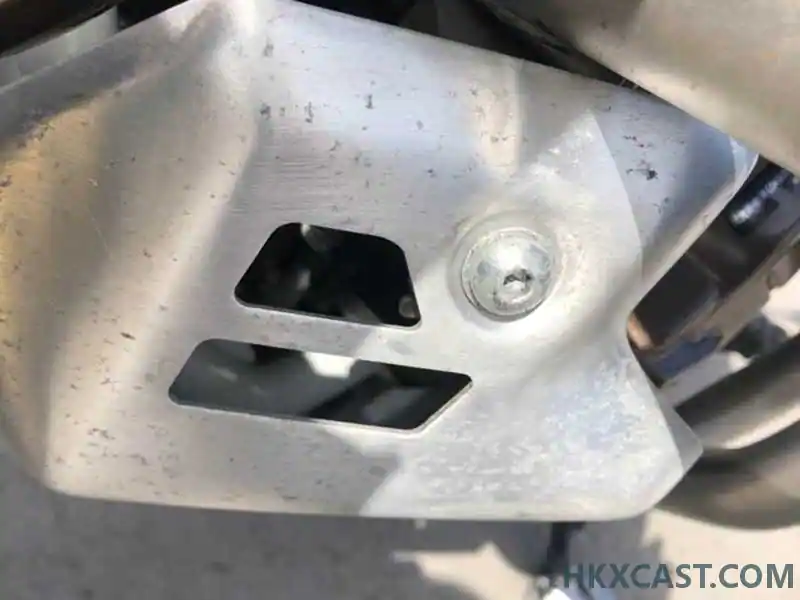
Our engineers often get asked: “Will aluminum parts rust like old iron tools?” Simply put, no—aluminum doesn’t “rust” in the same way as iron. But that doesn’t mean it can’t corrode. In fact, aluminum corrodes even more easily than iron! However, when aluminum corrodes, it still looks clean and shiny, unlike iron, which becomes covered in ugly red flakes. Let’s take a closer look at the science behind aluminum corrosion and why it’s a top choice for durable industrial parts. Does aluminum rust? Aluminum (symbol: Al, atomic number: 13) is a lightweight, silver-white metal. On the periodic table, aluminum is a very reactive metal, so in theory, it should corrode easily. So why do people often say aluminum doesn’t rust? Here’s why: When exposed to air, aluminum quickly reacts with oxygen to form a thin layer of aluminum oxide (Al₂O₃)—only about 2-10 nanometers thick. This layer: Because of this, aluminum usually does not corrode under normal conditions. When Can Aluminum Corrode? Even though aluminum resists rust well, it can still corrode in these situations: Proven Ways to Protect Aluminum Components How to Protect Aluminum?Usually, aluminum parts undergo Surface treatments. Here are the common surface treatment processes used to protect aluminum alloys, along with their key characteristics and applications: 1. Anodizing 2. Chemical Conversion Coating 3. Electroplating 4. Spray Coating 5. Passivation 6. PVD/CVD (Physical/Chemical Vapor Deposition) 7. Sealing (Post-Anodizing) 8. Laser Cladding Selection Guide These processes can be used alone or combined (e.g., anodizing + painting) based on performance needs and cost considerations. Conclusion: Engineering Confidence with Aluminum Aluminum’s self-protecting oxide layer makes it the MVP of corrosion-resistant metals. By understanding its limits and applying smart protections, you can design components that outlast competitors’ products. Need a corrosion-resistant die-casting solution? [Contact our engineering team] We will provide you with the most suitable solution. FAQs:…
 07/31/2025
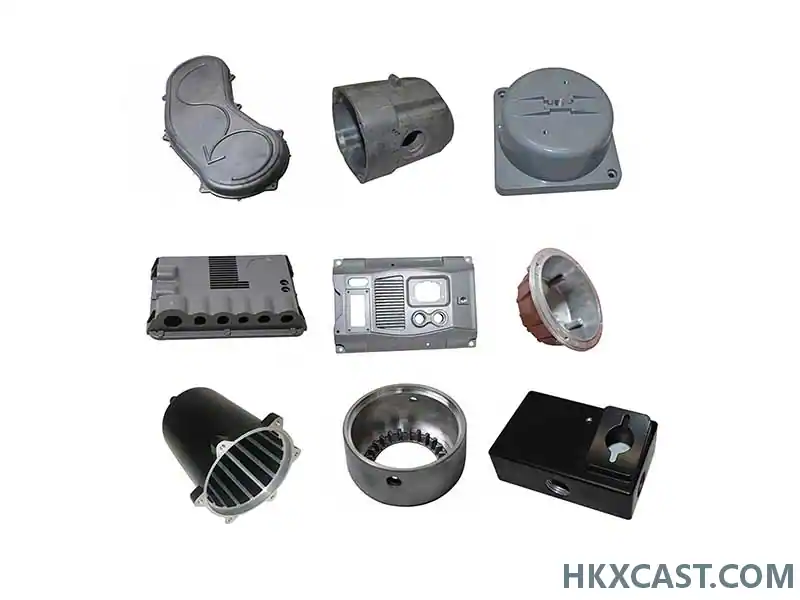
What is Aluminum Die Casting? Aluminum die casting is a metal manufacturing process where molten aluminum is injected under high pressure into a mold to form precise shapes—similar to plastic injection molding. However, it involves more complex systems, such as cores (for internal features), cooling channels, and ejection mechanisms. In simple terms, the process works by forcing liquid metal through a central injection port into a pre-designed cavity, where it solidifies into the desired part. It’s a high-efficiency method for producing strong, lightweight metal components.This article explores the fundamentals of aluminum die casting, including material selection, key technologies, and diverse applications across industries. Aluminum die-castings 1. Aluminum Die Casting Alloys and Material Composition The performance of die-cast aluminum products heavily depends on the alloy composition. Common aluminum die casting alloys like ADC12 and A380 are formulated with elements such as silicon, copper, and magnesium. These elements enhance properties like fluidity during casting, mechanical strength, and corrosion resistance. For instance, higher silicon content improves casting performance, while magnesium boosts structural integrity. Aluminum die-casting alloys can be divided into four main types based on their composition: These alloys are chosen based on required properties like strength, corrosion resistance, heat resistance, and castability. Selecting the right aluminum die cast material is critical. Factors like part complexity, intended use (e.g., structural components or heat-resistant cookware), and post-processing requirements influence the choice of die cast aluminum alloys. 2. The Aluminum Die Casting Process Explained The aluminum die casting process involves injecting molten alloy into a steel mold under high pressure. This method, known as high-pressure aluminum die casting, ensures precise filling of intricate molds, resulting in components with tight tolerances and smooth surfaces. Aluminum Die Casting Production Process Key equipment includes aluminum die casting machines, which control injection speed and pressure, and durable aluminum casting dies designed to withstand repeated thermal cycles. Advanced cooling systems within the…
 07/25/2025
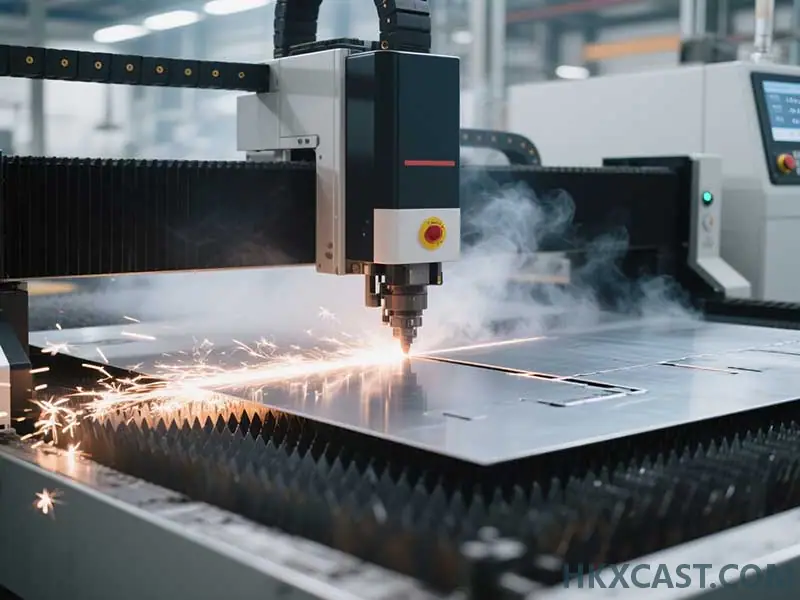
Metal fabrication is the backbone of modern manufacturing, and choosing the right cutting method can make or break a project. Two of the most common techniques are laser cutting and metal stamping. Whether you’re working with a steel sheet, producing intricate laser cutting metal parts, or managing high-volume production using a sheet metal stamping machine, selecting the right process is critical. This article offers a technical comparison to help engineers and manufacturers decide between laser cutting and stamping based on quality, cost, flexibility, and lead time. Understanding the Basics of Laser Cutting and Stamping What Is Laser Cutting? Laser cutting uses a high-powered laser for cutting steel and other metals with precision. It’s a non-contact process ideal for thin to medium materials, offering exceptional accuracy with minimal heat-affected zones. Modern sheetmetal laser cutting systems are programmable via CAD/CAM software, making them perfect for prototyping or producing custom laser cut sheet metal. In some cases, pliers for cutting metal may be used post-process to trim or adjust fine features manually. What Is Metal Stamping? Metal stamping uses dies and a metal stamp press machine to form or punch metal sheets into shape. It is widely used in steel sheet stamping applications, particularly in the automotive and appliance industries. For high-strength or specialized applications, high-temperature metal stamping enables shaping of heat-resistant alloys. This process is optimal for mass production, especially when tooling is done via a sheet metal stamping machine for consistency and throughput. Head-to-Head Comparison: Laser Cutting vs. Stamping Quality Comparison Table Feature Laser Cutting Stamping/Punching Remarks Workpiece Deformation No Yes Non-contact laser process applies no physical force Tool Wear No Yes Stamping tools degrade over time Tool Replacement Needed No Yes Dies require periodic replacement Material Hardness Cuts all hardness levels Requires calculations Stamping harder metals needs stronger tooling Post-Cut…
 07/23/2025
ADC12 (also called A383) is one of the most commonly used materials in die casting. It is a Japanese name for a recycled die-cast aluminum alloy. Known for its excellent casting performance, cost-effectiveness, and mechanical properties, ADC12 is widely used in the automotive industry and daily life. From this article, you will learn about: The chemical composition of ADC12Mechanical properties of ADC12Why Choose ADC12 for Die CastingTop Applications of ADC12 Aluminum AlloyADC12 vs. Other Aluminum Die-Casting AlloysConclusion Chemical composition of ADC12 ADC12, a Japanese JIS standard alloy (equivalent to China’s YL113 and the U.S.’s A383), is a high-silicon aluminum alloy specifically designed for high-pressure die casting. Below are its primary specifications: Element Composition (%) Key Role Si (Silicon) 9.5 – 12.0 Enhances fluidity, reduces shrinkage, and improves castability. Cu (Copper) 1.5 – 3.5 Increases strength, hardness, and machinability. Fe (Iron) ≤1.3 Controls ductility; excess reduces toughness. Mg (Magnesium) ≤0.3 Balances hardness and mechanical properties. Zn (Zinc) ≤1.0 Improves corrosion resistance; excess may cause intergranular corrosion. Mn (Manganese) ≤0.5 Neutralizes iron’s harmful effects and stabilizes high-temperature performance. Al (Aluminum) Balance Base metal providing lightweight properties and structural integrity. Additional Notes This table provides a concise reference for engineers and manufacturers working with ADC12 in die-casting applications. Mechanical properties of ADC12 Below is a horizontal table summarizing the mechanical properties of ADC12 aluminum alloy in English, formatted for clarity and technical documentation: Property Value/Description Testing Standard Remarks Tensile Strength 230–310 MPa JIS H 5302 Suitable for structural components Yield Strength (0.2%) 130–150 MPa ASTM B557 Ensures load-bearing capacity Elongation at Break 1–3% JIS Z 2241 Limited ductility, typical for die casts Hardness (Brinell) 80–100 HB ASTM E10 Balances wear resistance and machinability Density 2.68 g/cm³ — Lightweight advantage Thermal Conductivity 96–120 W/m·K ASTM E1461 Ideal for heat dissipation applications Fatigue Strength ~90 MPa (at 10⁷ cycles)…
 07/20/2025
Introduction This article covers die casting technology and its applications. You will learn about: What Is Die Casting? Die casting is a metal casting process. It works by melting metal and forcing it into a mold under high pressure and speed. The metal cools and hardens, then the mold opens, and the finished part is pushed out. The specific sequence we run is described in what the HKX die casting process is. Parts made with this method have a smooth surface finish (Ra 3.2 to 6.3 μm) and precise dimensions (Grade T11 to T13). Common metals used include aluminum, zinc, magnesium, lead, and tin.Depending on the metal, the process is called: This method is ideal for mass production due to its high efficiency and consistency. How Die Casting Works ? 1.Mold Preparation Each product has its own unique shape and structure. When designing a mold, key considerations include the number of cavities and the required press tonnage. Based on the product layout, molds can be categorized into: Single-cavity mold: The simplest type, producing only one product per casting cycle. Multi-cavity mold: More complex than single-cavity molds, with variations like double-cavity, triple-cavity, etc. Each cycle produces multiple identical products, making it ideal for high-volume production. Unit mold : Contains at least two different product types, producing one of each per cycle. Often used for matching product sets. Combination mold: A hybrid of family and multi-cavity molds, capable of producing multiple products (same or different types) in a single cycle. Suitable for mixed-quantity or large-scale production. Under the same press tonnage: Multi-cavity mold cost > Single-cavity mold cost Multi-cavity product cost < Single-cavity product cost Multi-cavity mold cost < (Single-cavity mold cost × 2) After manufacturing, molds must be cleaned, oiled, and treated for rust prevention to avoid corrosion, ensuring product accuracy and mold longevity. Before each production run, inspection and preheating are…
 04/05/2025
An aluminum alloy motor housing is shown in FIG. 1. The material is AlSi12(Fe), with a shrinkage rate of 0.55%. The external dimensions of the casting are 167 mm × 161 mm × 102 mm, the volume is 277 cm³, the mass is 748 g, and the heat treatment at (246 ± 16) °C is for 2.0 to 2.5 hours. The leakage requirement is a 50 kPa pressure test for 3 seconds with a leakage of 30 Pa or less. 1.Motor Housing The casting shape primarily consists of two parts: one is the main body of the motor housing, and the other is a hollow flange. The basic wall thickness of the motor housing body is 6 mm, the thickness of the hollow flange is 3 mm, the draft angle of the pre-die casting hole is 1.5°, and the draft angle of the rest is 2° to 3°, meeting the requirements for die-casting mold release. 2.Die-Casting Mold Parting, Pouring, and Exhaust System Design During forming, the side with the greater holding force of the motor housing is the forming side of the inner cavity, and the inner cavity and hollow flange are formed together. If the inner cavity of the motor housing is designed on the moving die side, the ejection force required for the formed casting is larger when it is ejected, and the casting does not have enough strength or sufficient space to design the ejector pin. Therefore, the inner cavity formation is designed on the slider. 2.1 Parting Design The parting design is shown in Figure 2. The parting line between the fixed die and the moving die is selected on the symmetrical surface of the motor housing, and the two flange faces of the motor housing are formed by the sliders on both sides. The…