HKXCAST One-Stop Aluminum Alloy Product Solutions Provider Email :hkxcast@163.com
 09/14/2025
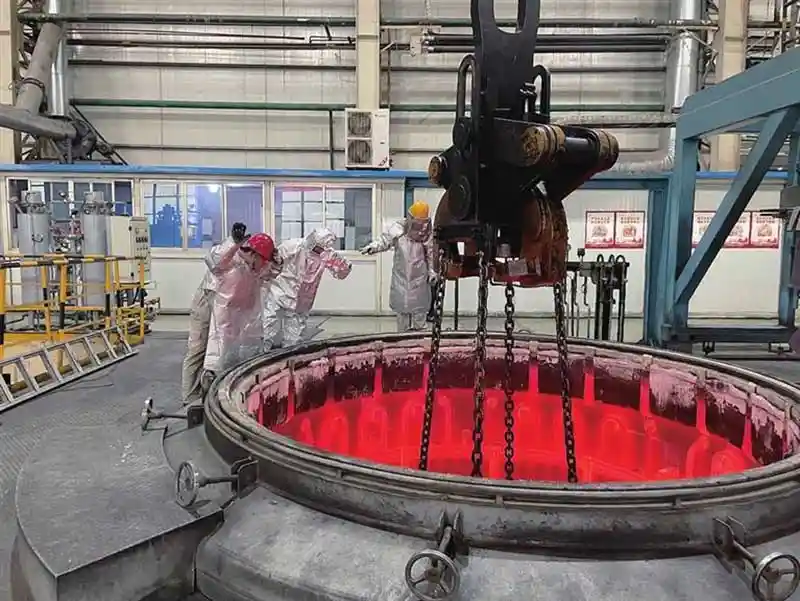
Annealing is a cornerstone technique in modern manufacturing, metallurgy, and materials engineering. Whether you’re dealing with steel beams, copper wires, or semiconductor wafers, annealing plays a vital role in shaping how materials behave under stress, respond to machining, and perform over time. By carefully controlling temperature, soak time, and cooling rates, annealing allows engineers to fine-tune material properties—balancing strength, ductility, conductivity, and internal stress. This guide unpacks the annealing process from a practical, engineering-focused perspective. Annealing is one of several heat treatments applied to cast aluminum. This page covers the process itself — the metallurgy, the furnace, the types and the trade-offs. For how annealing fits alongside solution treatment and aging on castings, and for the T4 / T5 / T6 designations, start from the overview: heat treatment of cast aluminum alloy. What Is Annealing? Annealing is a thermal treatment process that involves heating a material to a predefined temperature, holding it for a period (soaking), and then cooling it at a controlled rate. This process alters the microstructure of the material, typically softening it and relieving internal stresses induced during manufacturing steps like rolling, forging, machining, or welding. Common materials that undergo annealing include ferrous and non-ferrous metals (such as carbon steel, stainless steel, copper, and aluminum) and certain types of glass and ceramics. The main goals of annealing are: In short, annealing isn’t just a heat treatment—it’s a tool for restoring and optimizing the physical behavior of materials across a wide range of applications. How Does Annealing Work? The Three Stages Explained The annealing process can be broken down into three fundamental stages. Each of these stages plays a distinct role in altering the material’s internal structure and mechanical properties. 1. Recovery Stage During the initial phase, the material is heated to a temperature where dislocation motion becomes…
 09/11/2025
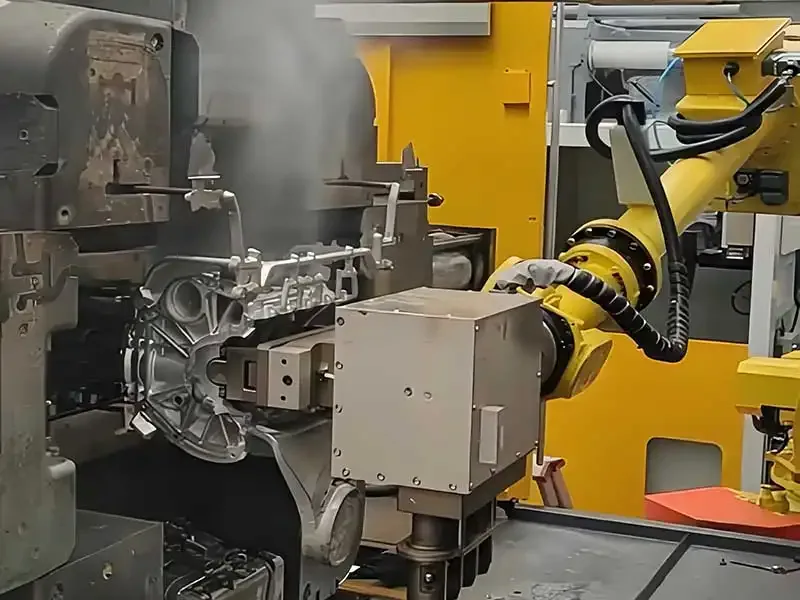
Metal casting has been a cornerstone of modern manufacturing, enabling the production of complex, high-strength components at scale. Among the many casting methods available, High Pressure Die Casting (HPDC) stands out as a critical process in industries that demand precision, efficiency, and high-volume production. This article explains the HPDC process in detail, covering its principles, advantages, limitations, materials, applications, and design considerations. The aim is to support engineers and designers in understanding the process and making informed decisions in material and process selection. High Pressure Die Casting What Is High Pressure Die Casting (HPDC)? High Pressure Die Casting is a manufacturing process in which molten metal is injected under high pressure into a hardened steel mold (die), where it rapidly solidifies to form a precise, high-quality part. Unlike low pressure die casting or gravity casting, HPDC employs pressures of up to 1500–2500 bar to force the molten metal into the die cavity at high speed. This allows for the production of intricate shapes with thin walls and excellent surface finish. HPDC is most commonly used with non-ferrous alloys, including: These materials are chosen for their castability, strength-to-weight ratio, and performance in demanding applications. How Does the HPDC Process Work? Basic Principles The core principle of HPDC is to use hydraulic pressure and fast injection speed to fill a steel mold completely before solidification begins. This ensures high dimensional accuracy and a dense, uniform microstructure. Process Steps Hot Chamber vs. Cold Chamber HPDC Advantages of High Pressure Die Casting HPDC offers numerous benefits that make it highly suitable for mass production in demanding industries: Limitations of HPDCWhile HPDC is a powerful process, it has some constraints: Common Materials Used in HPDC Several alloys are well-suited to the HPDC process: Applications of High Pressure Die Casting HPDC is widely used across industries…
 09/09/2025
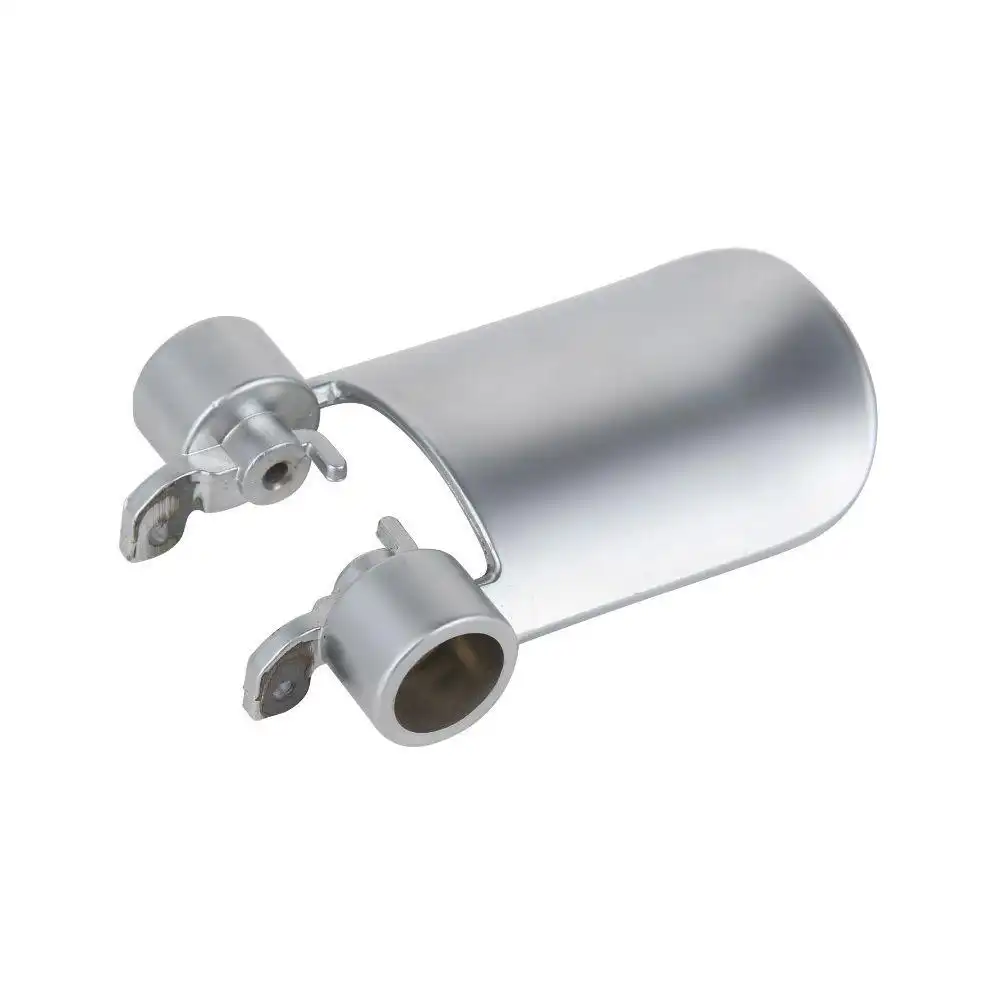
Die casting plays a pivotal role in high-volume manufacturing, especially when producing precision parts with tight tolerances. Among the most commonly used die casting metals, zinc and aluminum stand out for their unique material properties and wide application range. But when it comes to choosing between zinc die casting and aluminum die casting, there’s no one-size-fits-all answer. In this guide, we’ll compare these two materials across key factors like mechanical strength, cost, machinability, surface finish, and long-term tooling implications—so you can make an informed decision based on engineering needs rather than guesswork. Zinc Die Casting Overview Zinc Die Casting Zinc die casting is often favored for small, complex parts that demand dimensional stability and excellent surface quality. Commonly used alloys include Zamak 3, Zamak 5, and ZA-8, all known for their tight tolerance capabilities and exceptional castability. Advantages of Zinc Die Casting Zinc is often used in consumer electronics, automotive connectors, medical devices, and enclosures where tolerance and aesthetics matter more than structural strength. Aluminum Die Casting Overview Aluminum-Die-Casting Aluminum die casting is typically chosen for structural parts where weight, thermal performance, and corrosion resistance are critical. Common alloys include A380, ADC12, and A413. Advantages of Aluminum Die Casting However, aluminum requires thicker wall sections (typically ≥1.5 mm) and higher clamping force due to higher casting pressures. Zinc vs Aluminum: Feature Comparison Table Feature Zinc Die Casting Aluminum Die Casting Engineering Remarks Density 6.6 g/cm³ 2.7 g/cm³ Aluminum is much lighter—ideal for mobile components Tensile Strength ~300 MPa ~450 MPa (A380) Aluminum provides higher structural integrity Minimum Wall Thickness ~0.3 mm ~1.5 mm Zinc excels in fine-detail precision Die Life Up to 1,000,000 shots Typically 100,000–300,000 shots Lower casting temps extend zinc die life Surface Finish Very smooth, good for plating Good, often needs painting or coating Zinc better for…
 09/06/2025
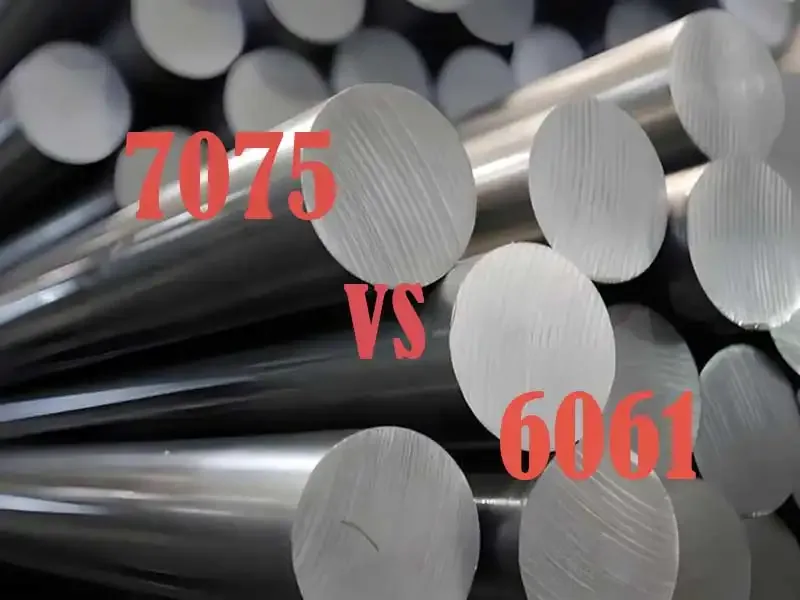
Aluminium alloys are among the most widely used materials in modern engineering, owing to their excellent strength-to-weight ratio, corrosion resistance, and formability. Among them, 7075 aluminium and 6061 aluminium are two of the most commonly specified grades for structural and industrial applications. This article provides a systematic comparison between 7075 and 6061 aluminium alloys, covering their chemical composition, mechanical properties, corrosion resistance, machinability, cost, and typical applications, to support engineers and designers in making informed material selection decisions. Overview of Aluminium Alloys Aluminium Alloy Classification Aluminium alloys are broadly classified into wrought (deformable) and casting alloys, and further categorized by series: Each series offers distinct combinations of mechanical and corrosion properties, tailored to specific industrial requirements. 7075 Aluminium Alloy 7075 is a high-strength, heat-treatable wrought aluminium alloy primarily alloyed with zinc, magnesium, and copper. It is standardized under specifications such as ASTM B209 and EN AW-7075. This alloy is renowned for its exceptional strength and is widely used in aerospace and defense applications. 6061 Aluminium Alloy 6061 is a medium-strength, heat-treatable aluminium alloy alloyed with magnesium and silicon, conforming to standards like ASTM B209 and EN AW-6061. It is recognized for its excellent corrosion resistance, good weldability, and versatile mechanical properties, making it suitable for a broad range of structural and industrial uses. Chemical Composition Comparison Major Alloying Elements Element 7075 (% by weight) 6061 (% by weight) Aluminium (Al) Balance Balance Zinc (Zn) 5.1 – 6.1 ≤ 0.25 Magnesium (Mg) 2.1 – 2.9 0.8 – 1.2 Copper (Cu) 1.2 – 2.0 0.15 – 0.40 Chromium (Cr) 0.18 – 0.28 0.04 – 0.35 Silicon (Si) ≤ 0.4 0.4 – 0.8 Iron (Fe) ≤ 0.5 ≤ 0.7 Influence of Composition The high zinc and copper content of 7075 contributes to its superior strength, but also reduces its corrosion resistance compared to…
 09/03/2025
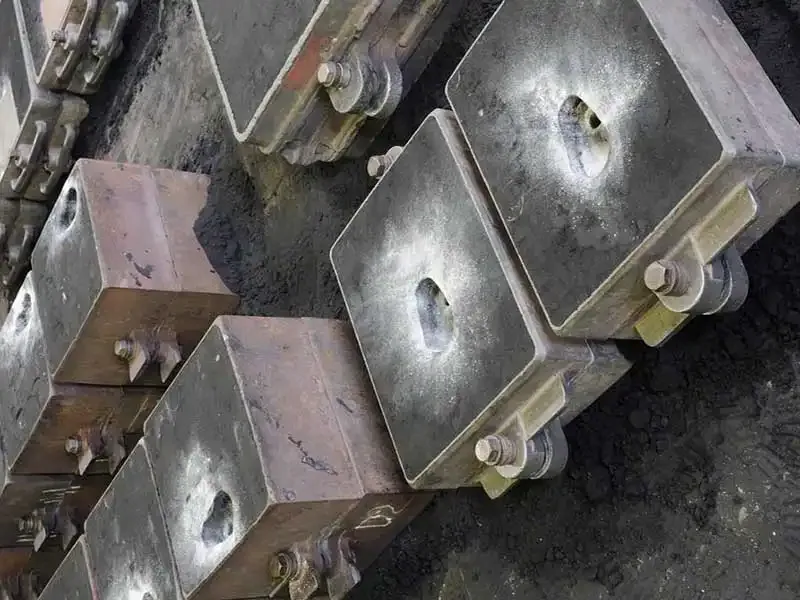
Sand casting is one of the most foundational and versatile metal casting techniques in manufacturing, capable of producing both small and extremely large components in a wide variety of metals. This guide, written from the perspective of a seasoned engineer, dives into the complete sand casting process—from the role of the pattern and the composition of the sand system to step-by-step process flows and inspection. Readers will learn the advantages, limitations, economic considerations, and real-world applications of sand casting, while also comparing it against other casting methods such as die casting, investment casting, gravity casting, and low-pressure die casting. Practical tables and technical insights make this an ideal resource for engineers, buyers, and anyone involved in foundry operations or metal product development. Sand casting mold What is Sand Casting? Core Principles & Foundry Basics Sand casting is one of the oldest and most widely used metal casting procedures. In the sand casting process, molten metal is poured into a sand casting mold shaped from a pattern. Once cooled and solidified, the sand cast part is removed, cleaned, and finished. Unlike permanent mold processes, the sand mould casting process uses expendable molds, making it highly versatile for one-off and low-to-medium volume production. The Foundry Sand System Explained Casting sand isn’t just dirt. It is an engineered material, typically made of silica sand mixed with binders (like clay or chemical resins) and additives to enhance performance. The properties of sand—grain shape, size distribution, thermal conductivity, and moisture content—greatly influence casting quality. Sand molding requires careful control of sand for molding to avoid defects like burn-on, erosion, or poor surface finish. The Reusable Mold Concept Unlike die casting, the sand casting mold is destroyed during the shakeout phase. This expendability allows for greater design freedom, enabling complex sand casting components. The trade-off is…
 09/01/2025
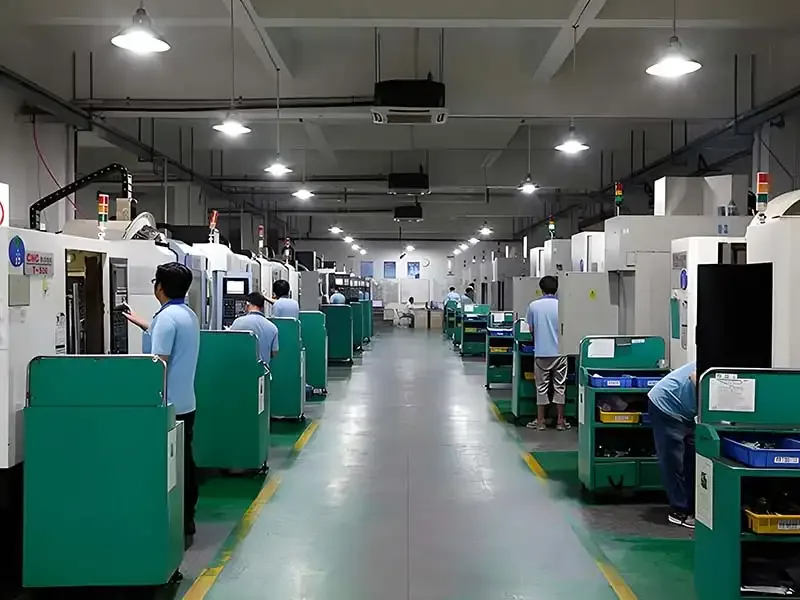
Understanding the real cost of CNC machining is critical for manufacturers, product designers, and procurement professionals. Whether you work in an engine machine shop or are evaluating automotive machine shops for a production run, this guide will help you grasp the cost drivers and practical strategies to reduce expenses while maintaining quality. What is CNC Machining? (A Quick Refresher) CNC (Computer Numerical Control) machining uses computer-controlled tools to remove material from a workpiece to create custom parts. It’s a staple process across industries—used in aerospace, electronics, and automotive machine shops. The process includes milling, turning, drilling, and grinding, all programmed via CAM software. Modern CNC machine shops, including machine workshop operations and metal machining shops, rely on precision programming to deliver parts with tight tolerances and high repeatability. Why CNC Machining Costs Vary: The Core Challenge No two machining jobs are the same, which is why CNC machining cost varies widely. Design complexity, material type, volume, and even the geographic location of your provider (e.g., machine shops in South Carolina vs. California) all contribute. As more businesses search for “auto machine shops near me,” understanding these cost drivers helps ensure accurate quotes and budget forecasting. Key Factors Influencing CNC Machining Costs (Deep Dive) 4.1 Material Selection & Cost Material costs can make up a significant portion of a machining quote. Basic aluminium is generally cheaper, especially when sourced in bulk, while specialty metals like titanium or stainless steel anodizing raise costs. Anodizing (or annodize/anotizing/anodyzed/anodisé) further adds value and durability but increases machining cost. Services like ace anodizing offer various finishes, often required in high-end consumer and aerospace applications. 4.2 Part Design & Complexity The more complex your part, the higher the machining cost. Tight tolerances, intricate geometries, undercuts, and deep cavities require longer machine time, specialized tooling, and more manual…
 08/29/2025
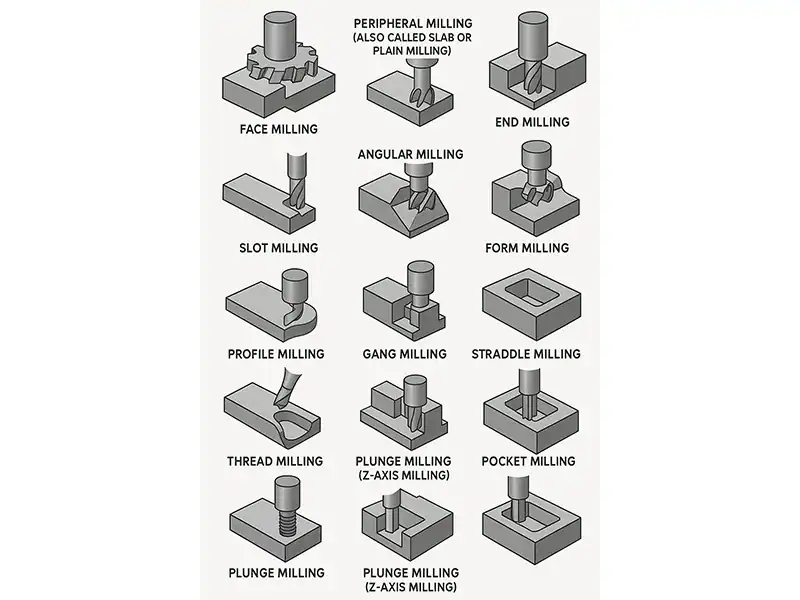
Milling is a critical machining process that uses rotary cutters to remove material from a workpiece. Known for its versatility and precision, it plays a vital role in manufacturing across industries like automotive, aerospace, mold-making, and general engineering. This guide explores the 12 essential types of milling operations, offering practical insights into how each technique works, where it applies, and how CNC enhances their effectiveness. How Milling Works Milling machines operate through coordinated movements along the X, Y, and Z axes. A workpiece is fixed in place while a rotating cutter moves across or into it, removing material to achieve the desired shape. These machines can be operated manually or controlled by CNC systems for high accuracy and repeatability. 1. Face Milling Face milling is a machining process that creates flat surfaces by cutting with the tool’s face—the bottom of a rotating cutter. The axis of the cutter is perpendicular to the workpiece surface, and the cutter typically has multiple replaceable carbide inserts arranged in a circular pattern. This operation is used primarily to smooth or level the top surface of a part. It allows for efficient material removal over large areas and produces a high-quality surface finish. Face milling is commonly used in the initial phases of part production to prepare the surface for more detailed machining. 2. Peripheral Milling (Also Called Slab or Plain Milling) Peripheral milling removes material using the cutter’s edge (periphery), with the tool axis parallel to the work surface. Unlike face milling, which targets flat faces, peripheral milling is ideal for machining long vertical surfaces such as shoulders, ledges, and side walls. The operation typically uses a plain milling cutter with straight or helical teeth. It’s efficient for removing bulk material and is often used to prepare parts for fitting, assembly, or further machining…
 08/26/2025
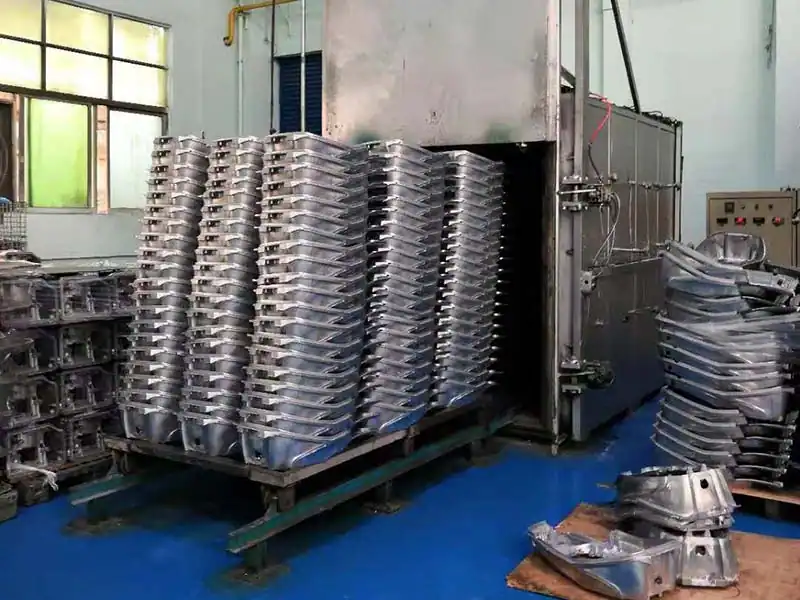
Start here. This page is the overview of heat treatment for cast aluminum alloys: what each process does, how the T4 / T5 / T6 states are built, and which defects show up on the shop floor. The individual processes have their own pages, and the table below says which one to read next. Process What it does to the casting Where to read more Annealing Relieves stress, softens the part, spheroidises silicon. No strength gain. What is annealing? Solution treatment (quench) Dissolves the alloying elements, then quenches fast enough to hold them in supersaturated solution. This is the T4 step. Section 2, below Artificial aging Precipitates fine particles and raises yield strength. Turns T4 into T6. Section 3, below Stabilising Low-temperature hold that locks dimensions in a part which will see service heat. Section 3, below Diffusion / homogenisation annealing Removes dendrite segregation from the as-cast structure before machining. Types of annealing The order matters, and the direction is not reversible. Annealing is a dead end for strength: you anneal when the part has to be soft or dimensionally stable, not when it has to be strong. Strength comes from solution treatment plus aging, and those two steps only work on alloys whose chemistry responds to them — ZL101A, ZL104, ZL105 and ZL107 among the gravity grades. The high-silicon die casting grades generally do not respond, and quenching a porous HPDC part blisters it. Which grade responds is decided by chemistry, not by the furnace. 1. Characteristics and Objectives of Cast Aluminum Alloy Heat Treatment As mentioned earlier, the metallurgical structure of cast aluminum alloys is coarser than that of wrought aluminum alloys, leading to differences in their heat treatment. The former requires longer holding times, generally exceeding 2 hours, while the latter requires shorter holding times, sometimes only…
 08/24/2025
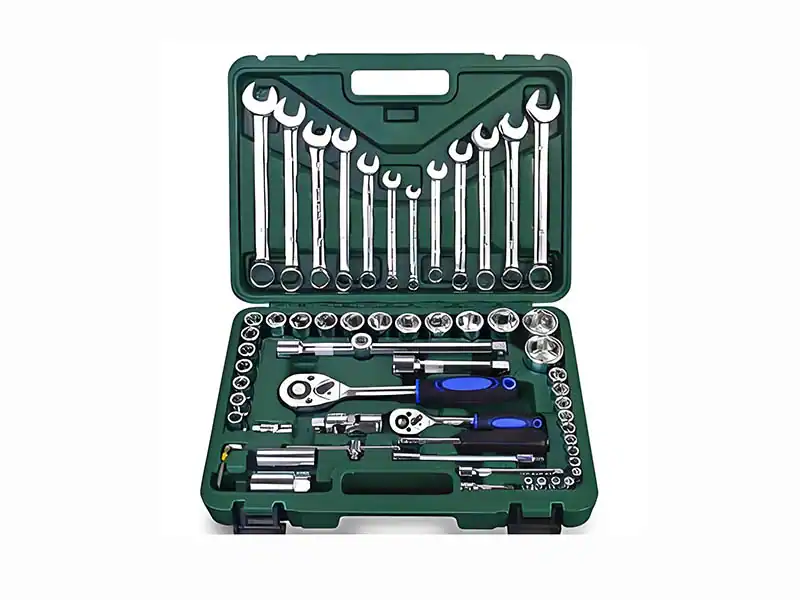
That satisfying whirr of a well-tuned lathe, the clean shaving of steel peeling away under a sharp cutter, the final part sliding perfectly into place with micron-level precision – this is the magic of machining. But behind every perfect cut and flawless fit lies a foundation of essential machinist tools. Whether you’re a weekend hobbyist building a model engine, a maker crafting custom motorcycle parts, or a seasoned pro setting up a new shop, having the right tools isn’t just convenient – it’s the difference between frustration and triumph, between wasted material and masterpiece, between safety and hazard. Feeling overwhelmed? Wondering where to start or if your workshop is truly complete? Stop guessing. This definitive 2025 checklist breaks down the must-have machinist tools into logical categories, covering everything from the absolute basics to precision-enhancing upgrades. We’ll prioritize based on need and budget, offering practical pro-tips along the way. Bookmark this guide – it’s your roadmap to a workshop built for precision and success. I. The Bedrock of Accuracy: Measurement & Layout Tools (Measure Twice, Cut Once!) Precision machining starts with precise measurement. Without accurate data, even the best cuts are just guesses. This category is non-negotiable for any level of machining work. II. Shaping Metal: Cutting, Forming & Finishing Tools (Making the Cut) These are the tools that directly remove metal, create shapes, add threads, and clean up edges. They turn measurement into reality. III. Holding It All Together: Workholding & Fastening Tools (Secure Your Work!) Precision and safety demand rock-solid workholding and the right tools for assembly. Your workpiece must be immovable. IV. Powering Up: Core Workshop Machinery (Level Up Your Capability) These machines dramatically expand your capabilities, efficiency, and the types of projects you can tackle. Investment increases significantly here. V. Precision & Protection: The Supporting Cast (The Finishing Touches & Non-Negotiables) These tools elevate your precision on machines…
 08/21/2025
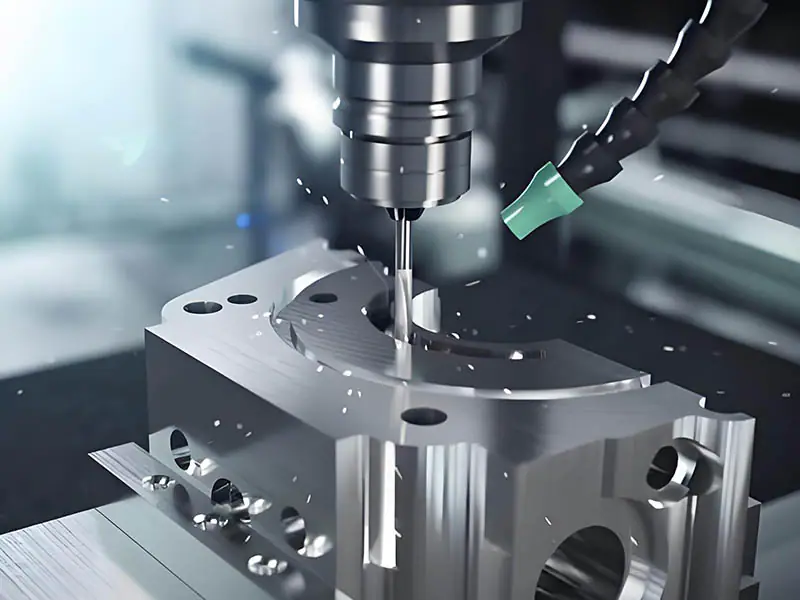
In manufacturing industries such as machinery equipment production and casting, we often encounter the term “CNC machining.” So, is CNC machining important in manufacturing? Yes, it is crucial. CNC (Computer Numerical Control) is a manufacturing technology that automates machine tools using pre-programmed software and code, enabling precise control over operations like cutting, shaping, drilling, or milling to produce parts. This article will delve into how CNC machines operate and explain why they are so indispensable in manufacturing components for automotive parts, general machinery, and beyond. What is CNC Machining? Computer Numerical Control Machine (CNC) is a processing tool that converts pre-designed graphics or 3D graphics of the parts to be processed into complex CNC mechanical movements using 3D programming software, including lathes, grinders, milling machines, drilling machines, etc. CNC machines can process materials or die-cast blanks by using the cutting paths generated by the programming software. Core Principle: CAD models → CAM-generated G-code → Machine execution. The History of CNC Machining The history of CNC processing began in the late 1940s, when John Parsons proposed the concept and collaborated with MIT to develop it. Initially, it was designed to solve the problems of manufacturing complex aviation components. The machine tools were controlled using punched paper tapes (referred to as NC). With the development of computer technology, in the late 1960s to the 1970s, small computers were integrated into the control unit, giving birth to the true CNC (Computer Numerical Control), which enabled program storage, editing, and more complex functions. Subsequently, the maturity of microprocessors, CAD/CAM software, the improvement of multi-axis processing capabilities, and the promotion of networked intelligence (Industry 4.0) transformed CNC from an expensive and complex specialized equipment into the core cornerstone of modern manufacturing for achieving high precision, high efficiency, and high flexibility automated production, completely changing the way of…
 08/18/2025
The manufacturing landscape employs diverse techniques to shape metals, balancing precision, strength, and efficiency. Casting methods like die casting (high-pressure injection into reusable molds) and sand casting (low-cost, expendable sand molds) cater to volume and size needs. Investment casting achieves intricate designs via wax patterns, while lost foam and centrifugal casting enhance efficiency and material integrity. Forging (die/drop) strengthens metals via compression, refining microstructure. Rolling (hot/cold) forms sheets/bars via rollers. Modern additive methods (SLM/SLS) enable complex geometries via laser-fused powders. Metal injection molding merges powder metallurgy with injection principles for small, precise parts. Stamping, drawing, and squeeze casting optimize sheet/semi-solid forming. Processes like continuous casting and roll forming streamline mass production, while grinding and machining (turning/milling) ensure precision. Innovations like metal deposition and die-cutting expand repair and shaping capabilities. Each technique addresses unique demands, driving advancements in aerospace, automotive, and industrial sectors.
 08/16/2025
When it comes to welding, two of the most popular methods are MIG (Metal Inert Gas) and TIG (Tungsten Inert Gas). Both techniques have their own strengths and are widely used in various industries. However, choosing between them can be a bit overwhelming, especially for beginners or those new to welding. In this article, we’ll break down the key differences between MIG and TIG welding, helping you decide which method is best suited for your needs. 🔍 Understanding MIG Welding What is MIG Welding? MIG welding, also known as Gas Metal Arc Welding (GMAW), uses a continuous solid wire electrode that is fed through a welding gun. The process involves an electric arc between the wire and the base material, melting both to create a strong bond. A shielding gas, typically argon or a mix of argon and carbon dioxide, protects the weld from atmospheric contamination. Key Features of MIG Welding Ideal Applications 🔍 Understanding TIG Welding What is TIG Welding? TIG welding, or Gas Tungsten Arc Welding (GTAW), uses a non-consumable tungsten electrode to produce the weld. Unlike MIG welding, TIG welding requires the welder to manually feed a separate filler rod into the weld pool. A shielding gas, usually pure argon, protects the weld area from oxidation. Key Features of TIG Welding Ideal Applications 🤔 How to Choose Between MIG and TIG Welding? Choosing between MIG and TIG welding depends on several factors, including your project requirements, skill level, and available resources. Here’s a breakdown to help you decide: 1. Project Complexity 2. Skill Level 3. Cost Considerations 4. Aesthetics 💡 Final Thoughts Both MIG and TIG welding have their place in the world of metalworking. MIG welding is versatile, fast, and beginner-friendly, making it suitable for a wide range of applications. On the other hand, TIG welding…