HKXCAST One-Stop Aluminum Alloy Product Solutions Provider Email :hkxcast@163.com
 07/23/2025
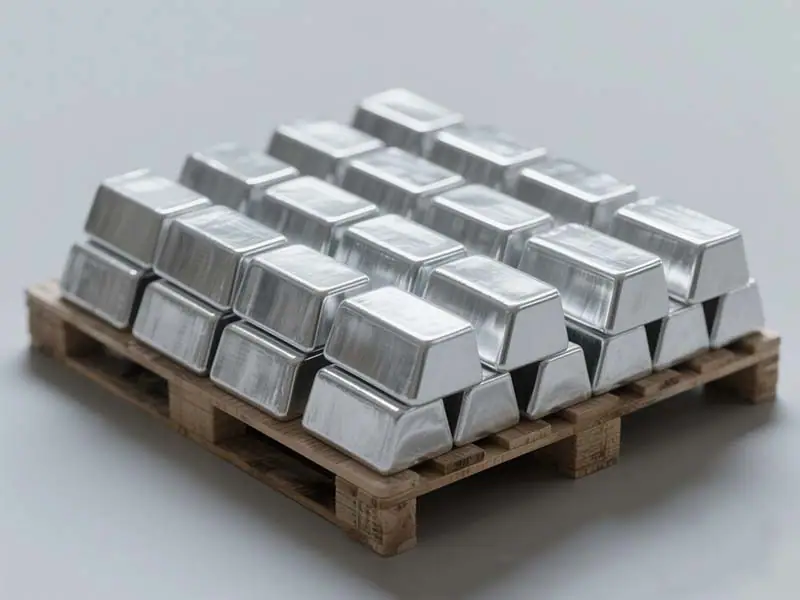
ADC12 (also called A383) is one of the most commonly used materials in die casting. It is a Japanese name for a recycled die-cast aluminum alloy. Known for its excellent casting performance, cost-effectiveness, and mechanical properties, ADC12 is widely used in the automotive industry and daily life. From this article, you will learn about: The chemical composition of ADC12Mechanical properties of ADC12Why Choose ADC12 for Die CastingTop Applications of ADC12 Aluminum AlloyADC12 vs. Other Aluminum Die-Casting AlloysConclusion Chemical composition of ADC12 ADC12, a Japanese JIS standard alloy (equivalent to China’s YL113 and the U.S.’s A383), is a high-silicon aluminum alloy specifically designed for high-pressure die casting. Below are its primary specifications: Element Composition (%) Key Role Si (Silicon) 9.5 – 12.0 Enhances fluidity, reduces shrinkage, and improves castability. Cu (Copper) 1.5 – 3.5 Increases strength, hardness, and machinability. Fe (Iron) ≤1.3 Controls ductility; excess reduces toughness. Mg (Magnesium) ≤0.3 Balances hardness and mechanical properties. Zn (Zinc) ≤1.0 Improves corrosion resistance; excess may cause intergranular corrosion. Mn (Manganese) ≤0.5 Neutralizes iron’s harmful effects and stabilizes high-temperature performance. Al (Aluminum) Balance Base metal providing lightweight properties and structural integrity. Additional Notes This table provides a concise reference for engineers and manufacturers working with ADC12 in die-casting applications. Mechanical properties of ADC12 Below is a horizontal table summarizing the mechanical properties of ADC12 aluminum alloy in English, formatted for clarity and technical documentation: Property Value/Description Testing Standard Remarks Tensile Strength 230–310 MPa JIS H 5302 Suitable for structural components Yield Strength (0.2%) 130–150 MPa ASTM B557 Ensures load-bearing capacity Elongation at Break 1–3% JIS Z 2241 Limited ductility, typical for die casts Hardness (Brinell) 80–100 HB ASTM E10 Balances wear resistance and machinability Density 2.68 g/cm³ — Lightweight advantage Thermal Conductivity 96–120 W/m·K ASTM E1461 Ideal for heat dissipation applications Fatigue Strength ~90 MPa (at 10⁷ cycles)…
 07/20/2025
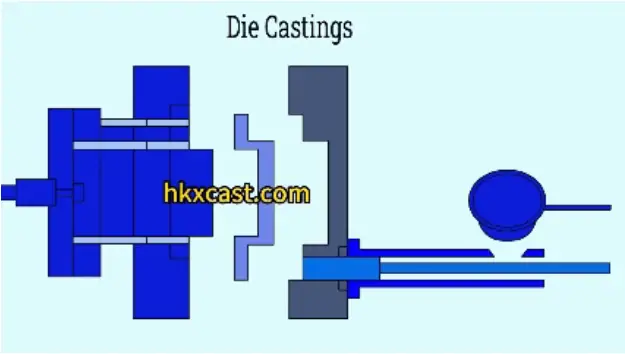
Introduction This article covers die casting technology and its applications. You will learn about: What Is Die Casting? Die casting is a metal casting process. It works by melting metal and forcing it into a mold under high pressure and speed. The metal cools and hardens, then the mold opens, and the finished part is pushed out. The specific sequence we run is described in what the HKX die casting process is. Parts made with this method have a smooth surface finish (Ra 3.2 to 6.3 μm) and precise dimensions (Grade T11 to T13). Common metals used include aluminum, zinc, magnesium, lead, and tin.Depending on the metal, the process is called: This method is ideal for mass production due to its high efficiency and consistency. How Die Casting Works ? 1.Mold Preparation Each product has its own unique shape and structure. When designing a mold, key considerations include the number of cavities and the required press tonnage. Based on the product layout, molds can be categorized into: Single-cavity mold: The simplest type, producing only one product per casting cycle. Multi-cavity mold: More complex than single-cavity molds, with variations like double-cavity, triple-cavity, etc. Each cycle produces multiple identical products, making it ideal for high-volume production. Unit mold : Contains at least two different product types, producing one of each per cycle. Often used for matching product sets. Combination mold: A hybrid of family and multi-cavity molds, capable of producing multiple products (same or different types) in a single cycle. Suitable for mixed-quantity or large-scale production. Under the same press tonnage: Multi-cavity mold cost > Single-cavity mold cost Multi-cavity product cost < Single-cavity product cost Multi-cavity mold cost < (Single-cavity mold cost × 2) After manufacturing, molds must be cleaned, oiled, and treated for rust prevention to avoid corrosion, ensuring product accuracy and mold longevity. Before each production run, inspection and preheating are…
 04/05/2025
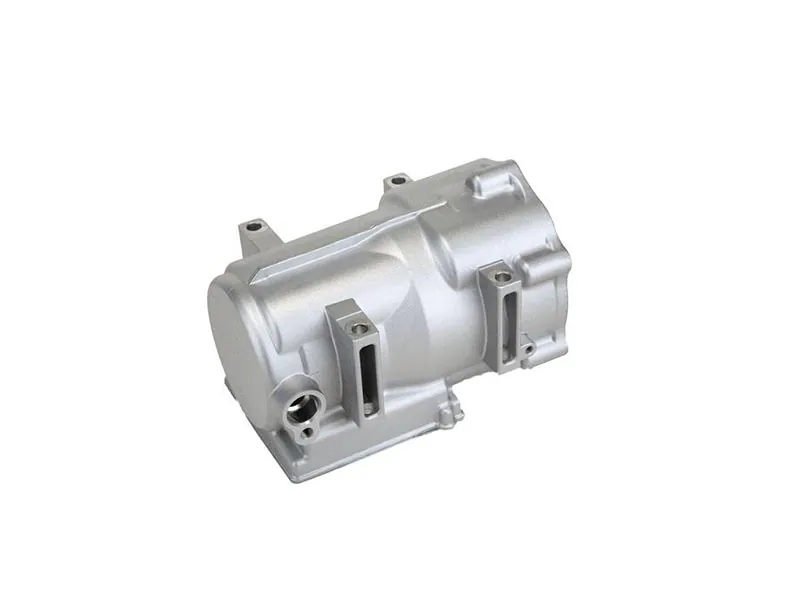
An aluminum alloy motor housing is shown in FIG. 1. The material is AlSi12(Fe), with a shrinkage rate of 0.55%. The external dimensions of the casting are 167 mm × 161 mm × 102 mm, the volume is 277 cm³, the mass is 748 g, and the heat treatment at (246 ± 16) °C is for 2.0 to 2.5 hours. The leakage requirement is a 50 kPa pressure test for 3 seconds with a leakage of 30 Pa or less. 1.Motor Housing The casting shape primarily consists of two parts: one is the main body of the motor housing, and the other is a hollow flange. The basic wall thickness of the motor housing body is 6 mm, the thickness of the hollow flange is 3 mm, the draft angle of the pre-die casting hole is 1.5°, and the draft angle of the rest is 2° to 3°, meeting the requirements for die-casting mold release. 2.Die-Casting Mold Parting, Pouring, and Exhaust System Design During forming, the side with the greater holding force of the motor housing is the forming side of the inner cavity, and the inner cavity and hollow flange are formed together. If the inner cavity of the motor housing is designed on the moving die side, the ejection force required for the formed casting is larger when it is ejected, and the casting does not have enough strength or sufficient space to design the ejector pin. Therefore, the inner cavity formation is designed on the slider. 2.1 Parting Design The parting design is shown in Figure 2. The parting line between the fixed die and the moving die is selected on the symmetrical surface of the motor housing, and the two flange faces of the motor housing are formed by the sliders on both sides. The…